\" plugin_version.type = \"hidden\" form.appendChild(plugin_version) var wordpress_version = document.createElement(\"input\") wordpress_version.name = \"wordpress_version\" wordpress_version.id = \"wordpress_version\" wordpress_version.value = '$wp_version' wordpress_version.type = \"hidden\" form.appendChild(wordpress_version) } },200); "; } else { echo ''; } } else { echo ''; } } else { echo ""; return; } } } /** * Google analytics . */ function ga_footer() { if ( ! ( defined( 'DOING_AJAX' ) && DOING_AJAX ) ) { $banner_discarded_count = get_option( 'sm_beta_banner_discarded_count' ); if ( 1 === $banner_discarded_count || '1' === $banner_discarded_count ) { echo ''; } } } /** * Check if the requirements of the sitemap plugin are met and loads the actual loader * * @package sitemap * @since 4.0 */ function sm_setup() { $fail = false; // Check minimum PHP requirements, which is 5.2 at the moment. if ( version_compare( PHP_VERSION, '5.2', '<' ) ) { add_action( 'admin_notices', 'sm_add_php_version_error' ); $fail = true; } // Check minimum WP requirements, which is 3.3 at the moment. if ( version_compare( $GLOBALS['wp_version'], '3.3', '<' ) ) { add_action( 'admin_notices', 'sm_add_wp_version_error' ); $fail = true; } if ( ! $fail ) { require_once trailingslashit( dirname( __FILE__ ) ) . 'class-googlesitemapgeneratorloader.php'; } } /** * Adds a notice to the admin interface that the WordPress version is too old for the plugin * * @package sitemap * @since 4.0 */ function sm_add_wp_version_error() { /* translators: %s: search term */ echo '

' . esc_html( __( 'Your WordPress version is too old for XML Sitemaps.', 'google-sitemap-generator' ) ) . '
' . esc_html( sprintf( __( 'Unfortunately this release of Google XML Sitemaps requires at least WordPress %4$s. You are using WordPress %2$s, which is out-dated and insecure. Please upgrade or go to active plugins and deactivate the Google XML Sitemaps plugin to hide this message. You can download an older version of this plugin from the plugin website.', 'google-sitemap-generator' ), 'plugins.php?plugin_status=active', esc_html( $GLOBALS['wp_version'] ), 'http://www.arnebrachhold.de/redir/sitemap-home/', '3.3' ) ) . '

'; } /** * Adds a notice to the admin interface that the WordPress version is too old for the plugin * * @package sitemap * @since 4.0 */ function sm_add_php_version_error() { /* translators: %s: search term */ echo '

' . esc_html( __( 'Your PHP version is too old for XML Sitemaps.', 'google-sitemap-generator' ) ) . '
' . esc_html( sprintf( __( 'Unfortunately this release of Google XML Sitemaps requires at least PHP %4$s. You are using PHP %2$s, which is out-dated and insecure. Please ask your web host to update your PHP installation or go to active plugins and deactivate the Google XML Sitemaps plugin to hide this message. You can download an older version of this plugin from the plugin website.', 'google-sitemap-generator' ), 'plugins.php?plugin_status=active', PHP_VERSION, 'http://www.arnebrachhold.de/redir/sitemap-home/', '5.2' ) ) . '

'; } /** * Returns the file used to load the sitemap plugin * * @package sitemap * @since 4.0 * @return string The path and file of the sitemap plugin entry point */ function sm_get_init_file() { return __FILE__; } /** * Register beta user consent function. */ function register_consent() { if ( ! ( defined( 'DOING_AJAX' ) && DOING_AJAX ) ) { if ( is_user_logged_in() && current_user_can( 'manage_options' ) ) { if ( isset( $_POST['user_consent_yes'] ) ) { if (isset($_POST['user_consent_yesno_nonce_token']) && check_admin_referer('user_consent_yesno_nonce', 'user_consent_yesno_nonce_token')){ update_option( 'sm_user_consent', 'yes' ); } } if ( isset( $_POST['user_consent_no'] ) ) { if (isset($_POST['user_consent_yesno_nonce_token']) && check_admin_referer('user_consent_yesno_nonce', 'user_consent_yesno_nonce_token')){ update_option( 'sm_user_consent', 'no' ); } } if ( isset( $_GET['action'] ) ) { if ( 'no' === $_GET['action'] ) { if ( $_SERVER['QUERY_STRING'] ) { if( strpos( $_SERVER['QUERY_STRING'], 'google-sitemap-generator' ) ) { update_option( 'sm_show_beta_banner', 'false' ); $count = get_option( 'sm_beta_banner_discarded_count' ); if ( gettype( $count ) !== 'boolean' ) { update_option( 'sm_beta_banner_discarded_count', (int) $count + 1 ); } else { add_option( 'sm_beta_banner_discarded_on', gmdate( 'Y/m/d' ) ); update_option( 'sm_beta_banner_discarded_count', (int) 1 ); } GoogleSitemapGeneratorLoader::setup_rewrite_hooks(); GoogleSitemapGeneratorLoader::activate_rewrite(); } else { add_option( 'sm_beta_notice_dismissed_from_wp_admin', 'true' ); } } else { add_option( 'sm_beta_notice_dismissed_from_wp_admin', 'true' ); } } } if ( isset( $_POST['enable_updates'] ) ) { if (isset($_POST['enable_updates_nonce_token']) && check_admin_referer('enable_updates_nonce', 'enable_updates_nonce_token')){ if ( 'true' === $_POST['enable_updates'] ) { $auto_update_plugins = get_option( 'auto_update_plugins' ); if ( ! is_array( $auto_update_plugins ) ) { $auto_update_plugins = array(); } array_push( $auto_update_plugins, 'google-sitemap-generator/sitemap.php' ); update_option( 'auto_update_plugins', $auto_update_plugins ); } elseif ( 'false' === $_POST['enable_updates'] ) { update_option( 'sm_hide_auto_update_banner', 'yes' ); } } } /* if ( isset( $_POST['disable_plugin'] ) ) { if (isset($_POST['disable_plugin_sitemap_nonce_token']) && check_admin_referer('disable_plugin_sitemap_nonce', 'disable_plugin_sitemap_nonce_token')){ if ( strpos( $_POST['disable_plugin'], 'all_in_one' ) !== false ) { $default_value = 'default'; $aio_seo_options = get_option( 'aioseo_options', $default_value ); if ( $aio_seo_options !== $default_value ) { $aio_seo_options = json_decode( $aio_seo_options ); $aio_seo_options->sitemap->general->enable = 0; update_option( 'aioseo_options', json_encode( $aio_seo_options ) ); } } elseif( strpos( $_POST['disable_plugin'], 'wp-seo' ) !== false ) { $yoast_options = get_option( 'wpseo' ); $yoast_options['enable_xml_sitemap'] = false; update_option( 'wpseo', $yoast_options ); } } } */ } } $updateUrlRules = get_option('sm_options'); if(!isset($updateUrlRules['sm_b_rewrites2']) || $updateUrlRules['sm_b_rewrites2'] == false){ GoogleSitemapGeneratorLoader::setup_rewrite_hooks(); GoogleSitemapGeneratorLoader::activate_rewrite(); GoogleSitemapGeneratorLoader::activation_indexnow_setup(); if (isset($updateUrlRules['sm_b_rewrites2'])) { $updateUrlRules['sm_b_rewrites2'] = true; update_option('sm_options', $updateUrlRules); } else { $updateUrlRules['sm_b_rewrites2'] = true; add_option('sm_options', $updateUrlRules); update_option('sm_options', $updateUrlRules); } } if(isset($updateUrlRules['sm_links_page'] )){ $sm_links_page = intval($updateUrlRules['sm_links_page']); if($sm_links_page < 1000) { $updateUrlRules['sm_links_page'] = 1000; update_option('sm_options', $updateUrlRules); } } if(!isset($updateUrlRules['sm_b_activate_indexnow']) || $updateUrlRules['sm_b_activate_indexnow'] == false){ $updateUrlRules['sm_b_activate_indexnow'] = true; $updateUrlRules['sm_b_indexnow'] = true; update_option('sm_options', $updateUrlRules); } } function disable_plugins_callback(){ if (current_user_can('manage_options')) { check_ajax_referer('disable_plugin_sitemap_nonce', 'nonce'); $pluginList = sanitize_text_field($_POST['pluginList']); $pluginsToDisable = explode(',', $pluginList); foreach ($pluginsToDisable as $plugin) { if ($plugin === 'all-in-one-seo-pack/all_in_one_seo_pack.php') { /* all in one seo deactivation */ $aioseo_option_key = 'aioseo_options'; if ($aioseo_options = get_option($aioseo_option_key)) { $aioseo_options = json_decode($aioseo_options, true); $aioseo_options['sitemap']['general']['enable'] = false; update_option($aioseo_option_key, json_encode($aioseo_options)); } } if ($plugin === 'wordpress-seo/wp-seo.php') { /* yoast sitemap deactivation */ if ($yoast_options = get_option('wpseo')) { $yoast_options['enable_xml_sitemap'] = false; update_option('wpseo', $yoast_options); } } if ($plugin === 'jetpack/jetpack.php') { /* jetpack sitemap deactivation */ $modules_array = get_option('jetpack_active_modules'); if(is_array($modules_array)) { if (in_array('sitemaps', $modules_array)) { $key = array_search('sitemaps', $modules_array); unset($modules_array[$key]); update_option('jetpack_active_modules', $modules_array); } } } if ($plugin === 'wordpress-sitemap') { /* Wordpress sitemap deactivation */ $options = get_option('sm_options', array()); if (isset($options['sm_wp_sitemap_status'])) $options['sm_wp_sitemap_status'] = false; else $options['sm_wp_sitemap_status'] = false; update_option('sm_options', $options); } } echo 'Plugins sitemaps disabled successfully'; wp_die(); } } function conflict_plugins_admin_notice(){ GoogleSitemapGeneratorLoader::create_notice_conflict_plugin(); } /* send to index updated url */ function indexnow_after_post_save($new_status, $old_status, $post) { $indexnow = get_option('sm_options'); $indexNowStatus = isset($indexnow['sm_b_indexnow']) ? $indexnow['sm_b_indexnow'] : false; if ($indexNowStatus === true) { $newUrlToIndex = new GoogleSitemapGeneratorIndexNow(); $is_changed = false; $type = "add"; if ($old_status === 'publish' && $new_status === 'publish') { $is_changed = true; $type = "update"; } else if ($old_status != 'publish' && $new_status === 'publish') { $is_changed = true; $type = "add"; } else if ($old_status === 'publish' && $new_status === 'trash') { $is_changed = true; $type = "delete"; } if ($is_changed) $newUrlToIndex->start(get_permalink($post)); } } // Don't do anything if this file was called directly. if ( defined( 'ABSPATH' ) && defined( 'WPINC' ) && ! class_exists( 'GoogleSitemapGeneratorLoader', false ) ) { sm_setup(); if(isset(get_option('sm_options')['sm_wp_sitemap_status']) ) $wp_sitemap_status = get_option('sm_options')['sm_wp_sitemap_status']; else $wp_sitemap_status = true; if($wp_sitemap_status = true) $wp_sitemap_status = '__return_true'; else $wp_sitemap_status = '__return_false'; add_filter( 'wp_sitemaps_enabled', $wp_sitemap_status ); add_action('wp_ajax_disable_plugins', 'disable_plugins_callback'); add_action('admin_notices', 'conflict_plugins_admin_notice'); } Recession – Affiliate Marketing Programs | CBOMO.COM https://cbomo.com Your Affiliate Online Money Opportunities Mon, 17 Jul 2023 15:15:59 +0000 en-US hourly 1 https://wordpress.org/?v=6.9.4 Marketing During a Recession: Thrive, Don’t Just Survive https://cbomo.com/marketing-during-a-recession-thrive-dont-just-survive/ https://cbomo.com/marketing-during-a-recession-thrive-dont-just-survive/#respond Mon, 17 Jul 2023 15:15:59 +0000 https://cbomo.com/marketing-during-a-recession-thrive-dont-just-survive/ [ad_1]

TUSLA, Okla., July 17, 2023 /PRNewswire/ — A Midwest-based PR and marketing firm, Resolute, released a guide for businesses to maintain market share during an economic downturn. In response to price increases, marketing budgets tend to be the first to be cut across industries. However, Resolute CEO Nicole Morgan shares that businesses need to spend money to make money.

(PRNewsfoto/RESOLUTE PR)

(PRNewsfoto/RESOLUTE PR)

“While we’re not currently in a recession, financial experts have indicated we may be heading in that direction. It may seem counterproductive, but maintaining a marketing spend during an economic downturn leads to increased brand awareness, workforce retention, and long-term growth.”

Recessions don’t last forever. Historically, 75% of recessions end within a year and 30% only last two quarters. Instead of slashing budgets, consider optimizing strategies.

Stay Top of Mind with Brand Awareness
During a recession, consumers are more selective about spending. By investing in marketing, businesses can stay top of mind with consumers, which increases chances of being considered during purchasing decisions.

Building awareness and maintaining loyalty can help minimize business risk and project a state of stability to your customers. A creative marketing campaign can help differentiate your brand and increase appeal.

Workforce recruitment
Attracting and retaining talented employees is a critical aspect of growing any business. Marketing your competitive benefits is an investment that can lead to profitability in the long run.

On the flip side, building positive brand awareness can reduce reputation damage from layoffs or other cost-saving cuts.

Gain a competitive advantage
With less noise in the marketplace, businesses that continue to invest in marketing can gain competitive advantage to better reach their target audience.

Even if your budget remains the same, your competitors may decrease their spending, which creates less competition for ad space.

Marketing for long-term growth
While it may be tempting to reduce marketing expenses, businesses that do so risk sacrificing growth. Marketing contributes to long-term business success by building brand awareness, generating leads, and driving sales.

While reducing marketing spend may help your bottom line, this short-term strategy may hurt business down the road. Even though customers may not make certain purchases during a recession, they will remember brands that remained consistent.

Once the economy improves, customers are more likely to return to brands they remember and trust.

Adapting to the market during a recession  
During a recession, consumer behaviors and preferences may change. By investing in marketing, businesses can gather data on marketing trends and adjust strategies accordingly, ensuring they remain relevant and meet customer’s needs.

In short, investing in marketing during an economic recession can help businesses maintain their visibility, gain competitive advantage, drive long-term growth, and adapt to changes in the market. Continued marketing outreach and strategy development can help you thrive, not just survive, and outlast an economic recession or downturn.

About Resolute:
Resolute delivers bold and purposeful PR, marketing, and workforce recruitment strategies. Centered on research, innovation and brand-driven ROI, its award-winning team delivers proactive, pioneering ideas that move clients toward their goals. Learn more: www.resolutepr.com.


Cision

Cision

View original content to download multimedia:https://www.prnewswire.com/news-releases/marketing-during-a-recession-thrive-dont-just-survive-301877985.html

SOURCE RESOLUTE PR

[ad_2]

Source link

]]>
https://cbomo.com/marketing-during-a-recession-thrive-dont-just-survive/feed/ 0
Companies are shedding office space — and it may be killing small businesses https://cbomo.com/companies-are-shedding-office-space-and-it-may-be-killing-small-businesses/ https://cbomo.com/companies-are-shedding-office-space-and-it-may-be-killing-small-businesses/#respond Fri, 12 May 2023 17:30:09 +0000 https://cbomo.com/companies-are-shedding-office-space-and-it-may-be-killing-small-businesses/ [ad_1]


Companies are shedding office space — and it may be killing small businesses | Georgia Public Broadcasting


[ad_2]

Source link

]]>
https://cbomo.com/companies-are-shedding-office-space-and-it-may-be-killing-small-businesses/feed/ 0
5 Tips For Growing Your Business During A Recession https://cbomo.com/5-tips-for-growing-your-business-during-a-recession/ https://cbomo.com/5-tips-for-growing-your-business-during-a-recession/#respond Tue, 25 Apr 2023 13:06:06 +0000 https://cbomo.com/5-tips-for-growing-your-business-during-a-recession/ [ad_1]

Peter Boolkah (The Transition Guy): award-winning business coach, podcaster & speaker helping high-performing business owners get results.

Recessions and other times of economic uncertainty can make business growth challenging, but it’s not impossible. With the right strategies in place, companies can leverage opportunities that occur from the changes around them. For example, those businesses that can provide lower-cost services or offer solutions for specific problems that arise in a recession are often the businesses that succeed.

Knowing what strategies to adopt will give your business a better chance of staying profitable when the market is unstable. Here are five key tips to try when you’re hoping to survive—and even thrive—during a recession.

1. Develop a clear business plan.

It’s vital that your business and its teams have a shared vision of what you want to achieve in the short and long term. Having a coherent, agreed-upon plan of attack is the best way to provide this guidance. It should identify your target customers and the services or products they need from your business. You also need to consider any potential risks that may come with the strategies you want to put in place. With that in mind, you can develop the best plan forward.

2. Cut costs.

During a recession, it’s important to identify any areas where you can reduce costs in order to maintain profits. For example, can you reduce your overhead by renegotiating leases or arranging better prices with suppliers? If you can downsize staff without compromising the quality of your products or services, that’s another avenue for cost-cutting.

You may need to consider seeking additional financing, such as business loans or grants. In those cases, be prepared to demonstrate how your business plans to succeed despite the economic downturn. An unconventional option is partnering with related businesses to offer things like joint promotions or discounts. This allows your company to minimize certain costs, like advertising, while reaching new customers. This, as a result, increases your chances of making a profit.

3. Focus on customer retention.

In a difficult economy, consumers may be hesitant to spend money. Providing excellent customer service, while always important, can particularly help you increase customer loyalty and maintain good relationships during a recession. You can also retain your existing customer base by offering promotions or discounts and creating loyalty programs.

4. Invest in marketing.

When used properly, marketing strategies are powerful tools for increasing profits. During recessions, you must fully comprehend what value your strategies bring. Focus on engaging with existing customers directly through digital marketing and social media platforms, as well as on developing an effective public relations strategy to help maintain good customer relationships. Then, adopt marketing strategies that can increase brand awareness and attract new customers effectively. This may include expanding your online presence, as many cost-conscious consumers turn to online shopping to find the best deals.

5. Consider diversifying.

Updating or broadening the services or products you provide is one way to increase profits during economic uncertainty. However, you must look carefully at how diversification will impact you financially. Do you have the resources available so it won’t cost you further or create minimal increases? For example, many restaurants began offering delivery services during the pandemic. Because they had the product and staff available, they could provide a slightly different service that didn’t change their costs much—or at all.

When you consider diversifying your product or service, ensure that the new options still solve the problems your customers care about. Research what’s in demand and determine if those are products or services you can add. You may want to look for new markets or a broader range of customers who are more likely to purchase the diverse options you’re considering.

Businesses must be proactive when it comes to adapting to and growing during recessions. By focusing on your customers, offering new products or services, cutting costs and, most importantly, being patient, you can increase your chances of success.


Forbes Coaches Council is an invitation-only community for leading business and career coaches. Do I qualify?


[ad_2]

Source link

]]>
https://cbomo.com/5-tips-for-growing-your-business-during-a-recession/feed/ 0
3 Marketing Moves to Make Your Business Recession-Proof https://cbomo.com/3-marketing-moves-to-make-your-business-recession-proof/ https://cbomo.com/3-marketing-moves-to-make-your-business-recession-proof/#respond Thu, 20 Apr 2023 22:19:03 +0000 https://cbomo.com/3-marketing-moves-to-make-your-business-recession-proof/ [ad_1]

Opinions expressed by Entrepreneur contributors are their own.

If you’re a business owner, a lot has happened already this year to make you stop and consider the state of your (and your business’s) money.

Inflation has every dollar shrinking in value, federal rate hikes have made it more costly to borrow, and while recent bank failures may not have impacted your business outright, it certainly caused a justifiable stir.

With all of this going on, my husband and I decided to meet with a mentor and financial consultant who has managed hundreds of millions of dollars in capital over the last 25 years to review our investments.

He pointed out that, while we both have various investments, we’ve primarily been putting our money into something that has paid off many times over standard stock market returns — and that something is our respective businesses.

After that meeting, I concluded it was wisest to invest more into my most reliable asset — my business. Sure, we have a lot of “safe” investments as well, but truly, in the long run, nothing has compared to our businesses in terms of return on investment (ROI).

The biggest investment I’m making is in my marketing: I’m increasing our annual marketing budget by more than 20% this year to over $7 million.

I made this decision based on some hard-won experience I gained surviving two economic recessions. The first (2008), I cut my marketing and we barely survived. The second (2020), I refused to cut our marketing and, as a result, growth in the last three years has averaged 20% after averaging only 5% in the decade previous. I learned that marketing is crucial to not only growing a business when times are good, but essential to survival when times get tough.

If you’re like me and know that your business is your greatest asset, I want to share three marketing principles I have followed and applied in order to strengthen my business and grow revenue despite recessions and economic turbulence.

Related: Why a Recession Is the Worst Time to Skimp on Brand Marketing

1. Use the current economic conditions to your advantage to increase market share

Recessions come and go, and some businesses leave legacies behind that we can learn from. Kellogg is a perfect example of that. In the late 1920s, Kellogg and Post dominated the breakfast cereal market.

When the Great Depression hit, Post responded in fear, reducing expenses and cutting back on advertising while Kellogg did the opposite. Kellogg moved into radio advertising and heavily promoted a new cereal called Rice Krispies.

By 1933, the economy was the worst it had ever been, but Kellogg’s profits increased 33%. Kellogg not only survived the economic crisis but became the leading cereal brand afterward — and has remained in that spot more than 80 years later. In 2017, Kellogg had a 30% market share, with General Mills following at 29% and Post at 18%.

I experienced a similar phenomenon with my business, PostcardMania. In 2008, the recession devastated many businesses. We were heavily affected by the real estate market plummeting since mortgage brokers made up 46% of our clientele. In 2009, an advisor at the time saw how much I spent on marketing every week and said something to the effect of, “We could save a lot of money if we cut back.”

Against my better judgment, I listened and cut my marketing in hope that we could conserve our resources and increase profits, but that made the situation worse. What was a small revenue decline in 2008 (around $150,000) ballooned into a much bigger loss in 2009 — as much as 15% of revenue and well over $1 million.

I made a sharp U-turn and brought my marketing back up to speed as soon as possible, and we recovered by 2010. I vowed to never cut my marketing budget again.

Then in 2020, when the pandemic disabled the economy, I knew exactly which moves to make and maintained my marketing regardless of how rough it got — and it did get rough to the tune of sales being down over 40%.

But guess what my competitors did? Exactly as I did in 2008 — they froze or reduced their marketing. The difference between 2008 and 2020 was obvious; we grew PostcardMania in 2020, and then business got even better in 2021 and 2022. Since 2019, our revenue has been up 60% (an average of 20% growth per year) after 10 years of averaging 5% growth.

I know it sounds counterintuitive to invest more in marketing when the economy is poor, but history doesn’t lie, and my own experience backs this up. Keep your marketing strong, and your leads and sales will remain strong as well.

Related: 6 Recession-Proof Business Marketing Strategies

2. Choose the marketing channels with the highest ROI to make the most of your budget

So, which marketing channels should you invest in? The answer is simple — the ones that work.

If you aren’t already tracking your marketing closely, commit to starting right now. It’s critical that you track what you’re spending and where leads and new customers are coming from so that you know what’s working and what needs improvement.

Once you know which channels yield the highest ROI, you can invest more there to grow your leads, which in turn yields more sales and revenue (and you can tinker with the lower-performing tactics until they’re in a good range or pare them back to suit your budget needs).

One of the marketing tactics I find to have a super high return on investment is retargeted mailings. Triggered mail makes the most of every lead by specifically targeting the people who have already shown some kind of interest in your products or services by visiting your website.

Depending on who you want to target, a postcard is automatically printed, addressed and sent within 24 hours of their website visit. Targeting can be based on the length of time a visitor spends on your site, the web pages they visit, the items they put in their shopping cart or a number of other factors.

Because you’re only targeting warm prospects and sending a few postcards a day (rather than thousands at a time like traditional direct mail), the upfront cost of a triggered campaign is relatively low — and that means your ROI potential is much higher.

One of our real estate investment clients, Mark Buys Houses, added retargeted direct mail to their follow-up. They spent $647 to mail just over 100 postcards to his website visitors. As a result, he converted one lead into a sale and made $70,000 in revenue. That’s an ROI of 10,710%!

If you decide to increase your marketing investment like I did, I suggest starting with tactics focused on improving website conversion or follow-up. You’ve already spent money on the hardest part — taking someone from unaware of your business to actually interested — so take the time to find out if investing a few more dollars per lead will translate into more sales. Just don’t forget to track closely!

Related: How to Adjust Your Marketing to Survive a Recession

3. Take advantage of free communication tools to stay in touch with prospects and customers

Not every marketing tactic costs money; some are 100% free. Leveraging free marketing platforms during tough times not only helps your budget, it also helps you communicate better.

First, I suggest perfecting and increasing your email marketing. Tools like Constant Contact and Mailchimp let you send emails for free up to a certain amount. Send out promotional emails that include catchy subject lines and enticing deals to increase clicks. Consider creating an email newsletter that your audience would enjoy reading. It could include valuable information about your industry, tips and tricks, recently completed projects or features about your company to keep your customers connected to your brand.

Second, I recommend freshening up your website with new, SEO-rich content. You can write the content yourself or find a willing team member to help — or even give the latest craze, artificial intelligence (AI), a go. Just provide a prompt, and let AI do the heavy lifting (a.k.a. writing) for you, then go over it afterward and put your own stamp on it using expertise that only you could provide. Blog posts, web pages and other types of articles will not only boost your website in the search engine results on Google, but it will also increase engagement on your website.

Lastly, get more active on social media. Post creative, informative content that draws people in and fosters engagement, like polls or questions. Facebook and Instagram also allow you to list your products and services for free on a shop page. Even though it takes a bit more time and energy to make posts every day, communicating consistently with customers and prospects is invaluable and could lead to increased revenue and positive brand image in your area of expertise.

At the end of this economic downturn, at least you can say that you gave it your all and worked hard to build up your business to the best it can be. Invest in the right areas, and you’ll enjoy benefits that last far beyond the most recent crisis.

[ad_2]

Source link

]]>
https://cbomo.com/3-marketing-moves-to-make-your-business-recession-proof/feed/ 0
The Boy Who Cried RECESSION! https://cbomo.com/the-boy-who-cried-recession/ https://cbomo.com/the-boy-who-cried-recession/#respond Wed, 12 Apr 2023 11:57:10 +0000 https://cbomo.com/the-boy-who-cried-recession/ [ad_1]

The famed fable of the “Boy Who Cried Wolf” has some valuable lessons for stock investors at this time. Especially true as we start to close in on 4,200 for the S&P 500 (SPY) which would officially make this a new bull market. Read on below for an updated market outlook, trading plan and top picks from 40 year investment veteran Steve Reitmeister. Read on below for more.

The stock market is in melt up mode. Going up little by little almost every day whereas the few down days are a bit of a yawn. That is how we got to so far above the March lows and now within striking distance of 4,200 for the S&P 500 (SPY).

4,200 is an important level because it symbolizes the start of the new bull market (20% above the October lows). We faltered at that point in early February with a combination of hawkish Fed rumblings plus emergence of disconcerting developments in the banking sector.

Will this time be different?

Let’s discuss the possibilities of what comes next to set up the best trading plan.

Market Commentary

The perfect starting point for today’s conversation is resharing this important point from my commentary a couple weeks back:

“…the stock market is quite similar to a helium balloon.

Meaning that its natural state is to float higher unless it is being held down by a stronger, negative force that pushes it lower.

Please read that again so it sinks in.

Now if we pull back to the big picture, we can easily appreciate that state of floating higher is true because 85-90% of investment history is framed by bullish conditions where going up is more likely than going down. However, we find this picture to also to be the case during bear markets when negative events are removed.

Consider the start of the year…how the market climbed day by day in January. Perhaps it was because there was really nothing negative to hold stocks down.

Next comes February with an increase in hawkish rhetoric from the Fed which starts to reign in some of the early enthusiasm. Next comes about concerns of a potential banking crisis and stocks get pushed down lower and lower on each wave of negative headlines.

This had stocks giving back all the 2023 gains by mid March with a closing low of 3,855 stocks. Amazingly from there we have gotten served up a +6.6% rally to where we stand today.

Was it because of something positive?

No…just the lack of more negatives to hold down stocks. That’s all it took for them to float higher once again.”

Now let’s consider this helium balloon construct in evaluating the stock price movement so far in April.

Right out of the gate we had some negative economic reports like ISM Manufacturing and ISM Services well under expectations. The ADP Employment report also had some concerned that the jobs market was finally ready to roll over into negative territory. This had stocks selling off a little bit early in April back under 4,100.

Then on Friday the Government Employment Situation report showed inline results with an impressive 236,000 jobs added. This took pressure off the market helium balloon to start floating higher again.

That is not so obvious in the modest gain for the S&P 500 (SPY) this week. Yet it is much more apparent as we look over at the +1.8% result for the more Risk On small caps in the Russell 2000.

The lesson learned by investors over the past year is that it does not pay to sell off whenever you hear about recessionary clouds forming because the actual storm keeps NOT happening. And every drop is followed by a serious rally.

This harkens back to the “Boy Who Cried Wolf“. At this stage investors are wise not being too worried about the potential for the wolf (recession) to come on the scene. This creates an upward bias.

From here I suspect stocks will flirt with 4,200 once again as expectations are low for this earnings season. Typically. those low hurdles are easy to clear pushing markets higher.

Will stocks break above 4,200 a meaningful way unlike the last attempt in February?

I don’t really know. But the lack of bad news is good news for stocks. So if that is what is on the menu, then yes, it increases the odds to move above 4,200 and officially be called a new bull market

HOWEVER, let me share a dose of caution.

What many forget about the “boy who cried wolf” story is that in the end there was indeed a wolf that caused great havoc. But because there were so many false warnings beforehand no one came to the rescue.

The point being is that there still very well could be a recession in the future. And if and when it does come stocks will go lower.

Putting it altogether I would have an upward bias at this time yet sleeping with one eye open in case a recession does actually come together. But until you see real fangs on that recession…I wouldn’t hit the sell button.

What To Do Next?

Discover my balanced portfolio approach for uncertain times. The same approach that has risen +1.61% so far in April even as the S&P 500 slid lower.

This strategy was constructed based upon over 40 years of investing experience to appreciate the unique nature of the current market environment.

Right now, it is neither bullish or bearish. Rather it is confused…volatile…uncertain.

Yet, even in this unattractive setting we can still chart a course to outperformance. Just click the link below to start getting on the right side of the action:

Steve Reitmeister’s Trading Plan & Top Picks >

Wishing you a world of investment success!


Steve Reitmeister…but everyone calls me Reity (pronounced “Righty”)
CEO, StockNews.com and Editor, Reitmeister Total Return


SPY shares rose $0.10 (+0.02%) in after-hours trading Tuesday. Year-to-date, SPY has gained 7.54%, versus a % rise in the benchmark S&P 500 index during the same period.


About the Author: Steve Reitmeister

Steve is better known to the StockNews audience as “Reity”. Not only is he the CEO of the firm, but he also shares his 40 years of investment experience in the Reitmeister Total Return portfolio. Learn more about Reity’s background, along with links to his most recent articles and stock picks.

More…

The post The Boy Who Cried RECESSION! appeared first on StockNews.com

[ad_2]

Source link

]]>
https://cbomo.com/the-boy-who-cried-recession/feed/ 0
Heading toward recession? How can enterprises avoid it by implementing 5 marketing strategies? https://cbomo.com/heading-toward-recession-how-can-enterprises-avoid-it-by-implementing-5-marketing-strategies/ https://cbomo.com/heading-toward-recession-how-can-enterprises-avoid-it-by-implementing-5-marketing-strategies/#respond Sun, 09 Apr 2023 23:52:08 +0000 https://cbomo.com/heading-toward-recession-how-can-enterprises-avoid-it-by-implementing-5-marketing-strategies/ [ad_1]

As the global economy becomes increasingly unpredictable, many enterprises fear the possibility of an impending recession. While a recession can impact businesses of all sizes, it can be especially challenging for small and medium-sized enterprises (SMEs). In a recessionary environment, consumers tend to cut back on spending, which can significantly impact business revenue. Fortunately, there are a few marketing strategies that enterprises can implement to avoid a recession and maintain growth.

  • Build a strong brand identity

One of the key marketing strategies that enterprises can use to avoid a recession is to build a strong brand identity. By establishing a brand that consumers trust and can identify with, businesses can create long-term customer loyalty. This is especially important during an economic downturn, as consumers are more likely to stick with brands they know and trust. Enterprises can build a strong brand identity by creating a clear and consistent brand message, leveraging social media to engage with customers, and investing in brand awareness campaigns.

  • Focus on customer retention

In a recession, customer retention becomes critical. Enterprises should focus on building long-term relationships with customers rather than acquiring new ones. This means prioritizing customer service, offering personalized solutions, and providing excellent post-purchase support. By building strong relationships with existing customers, enterprises can create a stable revenue stream that can help them weather economic uncertainties.

Social media can be an incredibly powerful tool for enterprises looking to avoid a recession. Social media platforms such as Facebook, Twitter, and Instagram offer businesses an opportunity to engage with customers in real time and build brand awareness. By leveraging social media to share content, run promotions, and engage with customers, enterprises can reach a wider audience and drive sales. Additionally, social media can be a cost-effective marketing strategy, making it an ideal solution for enterprises looking to reduce marketing costs during an economic downturn.

  • Offer value-added services

Another way that enterprises can avoid a recession is by offering value-added services. This means providing customers with more than just a product or service; instead, businesses should focus on providing additional benefits that customers value. For example, a retailer might offer free shipping or a loyalty program, while a software company might offer training or customer support services. By providing these value-added services, enterprises can differentiate themselves from competitors and create a more loyal customer base.

  • Diversify revenue streams

Finally, one of the most effective marketing strategies that enterprises can use to avoid a recession is to diversify their revenue streams. This means exploring new products or services that can generate revenue in different markets or industries. By diversifying revenue streams, enterprises can reduce their dependence on any single market or product, which can help mitigate the impact of an economic downturn. For example, a retailer might expand into a new geographic market, while a software company might develop a new product for a different industry.

In conclusion, an economic downturn can be challenging for any enterprise, but by implementing these five marketing strategies, businesses can avoid a recession and maintain growth. By building a strong brand identity, focusing on customer retention, leveraging social media, offering value-added services, and diversifying revenue streams, enterprises can create a stable revenue stream that can help them weather economic uncertainties. Ultimately, the key to success during a recession is to remain agile, adaptable and focused on the needs of the customer.


Linkedin


Disclaimer

Views expressed above are the author’s own.


END OF ARTICLE


[ad_2]

Source link

]]>
https://cbomo.com/heading-toward-recession-how-can-enterprises-avoid-it-by-implementing-5-marketing-strategies/feed/ 0
Starting a Business in a Recession: What You Should Know https://cbomo.com/starting-a-business-in-a-recession-what-you-should-know/ https://cbomo.com/starting-a-business-in-a-recession-what-you-should-know/#respond Sat, 01 Apr 2023 16:39:07 +0000 https://cbomo.com/starting-a-business-in-a-recession-what-you-should-know/ [ad_1]

Launching a new business venture is a giant leap, even in the best of times. Variables, increased costs and a new responsibility as an owner are all big shifts, and the unpredictability of th economy makes them even more challenging. “Recession” strikes fear in the hearts of many, as a downturn can stifle the job market and money flowing through infrastructure. On the other hand, a recession may be your ticket to a flourishing new business.

Yes, there are distinct challenges to starting a business in a recession, but there are various benefits that could be in your future as well. Better yet, the creativity, flexibility and resourcefulness you employ during this process will strengthen your resolve and business model long after the recession has ended.

A recession can’t stop you from soaring to new heights. With all the proper information and planning at your side, your new business is ready to cement itself as a solid and valuable player in the industry.

What Challenges May Arise?

A recession is any significant decline in economic activity that lasts for a few months. People tend to view recessions as years-long struggles, probably because of the collective shock that was the 2008 financial crisis. Not to mention, the decade-long Great Depression left thousands homeless and destitute. However, depressions are much more severe and widespread, particularly in unemployment.

The U.S. recently traversed a recession in the spring of 2020, lasting just two months. The government shutdown and restrictions halted production, employment, spending and the general flow of the economy.

Today, the country’s economy is still facing ripples from the pandemic but is steadily growing. A recent poll of economists found a growing prediction of a 2023 recession, but that it will be mild and brief.

With a recession potentially on the way, what challenges might your business face if it does arrive? While there are many growth opportunities, knowing what challenges or roadblocks may arise for you and your team is still crucial. These include:

  • Widespread job loss and layoffs
  • Curbed credit access
  • Slow economic output
  • Decrease in consumer spending
  • Lessened business investment
  • Bankruptcies on the rise
  • Reduction in marketing and research

What Are the Benefits?

Historic challenges are great to keep in your back pocket. Later on, they’ll help you formulate a contingency plan and meet obstacles. Things may seem scary right now, but the benefits of starting a business in a recession outweigh the challenges in many cases. How can your new business hop on these enticing benefits in the coming year?

1. Motivated Investors

While investing may decrease, it does not end entirely. Moving out of the stock market and into a well-articulated and organized business model would actually be a saving grace for many investors. It’s a win-win operation for both your startup and investor, as you both gain security for the future.

2. Cheaper Supplies

Because of the decreased demand from consumers and businesses alike, your suppliers are sitting with an abundance of materials on their hands. To get funds flowing and make sales, these suppliers are selling off their products at a significantly lower cost than before the recession.

As you launch your business, you’ll face a large overhead of new costs like inventory, shipping, staffing and rent. Starting in a recession means you can snag your first equipment, materials and infrastructure at a reduced price.

Because you’re buying at a critical time for those suppliers, you’re also forging a reliable relationship with them that could last decades. Negotiating long-term deals is a must to keep those costs reasonable after the economy rises.

3. Lessened Competition

Recessions can be scary and probably frightens away other start-ups during this time. However, that leaves more room and reduces competition for you and your team. A market once dominated by fortified players now has gaps for a small but mighty startup to make waves. Remember, a recession will affect both large and small businesses in some way, so it evens the playing field.

4. Opportunities to Answer Unique Consumer Needs

Recessions also offer you the chance to impact customers. At a time when people are struggling or — as in the 2020 recession — isolated and reeling from a pandemic, they’re looking for answers. That answer can come from your business.

Before, their needs may have already been met by the established players in the industry. However, your new addition can identify the problems people are facing and introduce a relevant and timely solution.

For example, COVID-19 trends centered on businesses that offered contactless delivery or even products to beat the quarantine blues.

Shopping at Home During the Pandemic

In 2021, 30% of people shopped less in-store and ordered their groceries online. Therefore, successful infrastructure during recessions can carry into the future. What problems does your product or service address, particularly in the recession?

Tips For Starting a Business In a Recession

Recessions offer your startup a shining wealth of opportunities. By positioning your business model correctly, you can traverse the shifting tides of the economy to find soaring profits, leads and opportunities. Explore the following tips to shape your next steps.

1. Find Your Niche

Before setting up shop, consider what your business adds to the market. Remember the benefit of open market opportunities to answer consumer needs? This is your chance to really dive deep into the uses of your products and services. Ask these questions about your model to uncover how best to market to a wide range of people:

  • What is unique about your product?
  • Is it handmade or crafted with unique ingredients?
  • Does it offer solutions to social issues?
  • Does it offer fun in a time of social distress? People may seek solace in these entertaining experiences or products.
  • What do you stand for? Think about the businesses that took a people-first approach to health during 2020.

When evaluating your startup, consider the value to consumers, business partners, suppliers and investors. If there’s not a considerable area of entry or particular need for your startup, then it may be better to wait for the economy to return to normal.

2. Research Trends and Opportunities

On a similar note, your niche may be specific to trends in recessions themselves. Typically, recessions see a spike in household goods, such as health care and cosmetic needs, grocery staples and home supplies. People still need life’s necessities even when trying to save money.

However, even “frivolous” products can sell well in a recession. Again, in darker times, people want to find happiness and joy. Notably, leisure-related goods like sports, pet products and magazines rose during the COVID-19 pandemic as people searched for fun activities at home. What current trends or needs can your business provide to your audience?

3. Build Your Trusted Team

Because the state of the economy is uncertain, you want the most reliable team at your side. Building up staff is challenging at any time because people may be wary of the risk of startups. However, recessions often mean job loss and layoffs, so people are looking for work.

Share your plans for the future with your team to instill that confidence and security. Employees who believe in the company vision are more motivated to dig deeper into their tasks and accomplish goals.

4. Dial Into Customer Connections

Amid an economic downturn, people are cautious with their spending habits, so you must make an impression and demonstrate your value. You can pursue digital marketing tactics like email marketing to clue consumers into coupons and deals.

Social media marketing is also an excellent hub for small businesses. On apps like TikTok, you don’t need a huge following to reach a wide audience. Through their For You page, viral videos can appear on anyone’s page. Tap into humorous trends and communicate with users to make a significant impact and go viral.

Furthermore, always appreciate the power of face-to-face connections. At a time when digital marketing is everywhere, consumers find it refreshing to chat with brands in-person. Check out seminars and networking events around the area to make a name for your business.

Once those connections have been made, continually check in with leads and repeat customers to build that bond. You can invite them to local company events like barbecues or offer small tokens of appreciation like t-shirts and travel bags. Eight out of 10 people prefer physical promotional products over digital marketing techniques, so these personal touches during what can be a traumatizing time make all the difference to your consumer base.

5. Craft a Detailed Plan B

There are opportunities to advance in a recession, but there can be an equal amount of risk. By nature, they can be unpredictable in severity and longevity. Thus, you need a detailed and comprehensive contingency plan.

Write a list of “what-ifs” for your business model. What if the prices of your base material rise? What if your landlord decides to foreclose your office space? What if products sell out too quickly? How will you navigate financial aspects like quarterly estimated taxes or any unique tax relief programs?

Combine a list containing all possible good and bad options and formulate paths ahead. With a sharp eye and preparation, it will be easier to traverse those events if they do come to pass.

Remember the investors looking for more secure money-making ventures? At your pitch meeting, you have a chance to display your in-depth research and plans for the future. Once they see your predictive and thoughtful financial planning, they feel more confident in your ability to weather the recessional storm and into sunnier skies.

Find Growth in a Recession

Recessions are an economic downturn by definition, but your business can use this time to its advantage. Starting a business during this time is not without risk and you should consider that from all angles. However, startups have opportunities to meet specific needs and traverse a more open playing field.

With meticulous planning and all the facts, you’re ready to turn your business dreams into reality, no matter the state of the economy.

The post Starting a Business in a Recession: What You Should Know appeared first on Due.

[ad_2]

Source link

]]>
https://cbomo.com/starting-a-business-in-a-recession-what-you-should-know/feed/ 0
Investing in a Recession? Keep These 6 Factors in Mind https://cbomo.com/investing-in-a-recession-keep-these-6-factors-in-mind/ https://cbomo.com/investing-in-a-recession-keep-these-6-factors-in-mind/#respond Mon, 13 Mar 2023 16:52:02 +0000 https://cbomo.com/investing-in-a-recession-keep-these-6-factors-in-mind/ [ad_1]

Recessions are a hot topic – and never far from any investor’s mind.

It’s a sad fact of life that these periods are inescapable – sooner or later, the economy starts shrinking, asset prices drop, and the stock market takes a nosedive. In such circumstances, it is natural to enter damage control mode.

However, entering damage control the wrong way can easily result in wiping out years of positive progress in your portfolio. There are ways to not only survive but thrive in recessionary periods – but it will require a large adjustment to the way you probably do things. If you can make that switch – do things differently than you would in a period of economic growth – your portfolio will continue to grow even in a recession.

Whether you want to protect your retirement portfolio from recession or are just starting out in your investing journey, there are six guiding lights which will lead you to water during a drought.

Let’s dive in.

What Exactly is a Recession?

Unsurprisingly, there isn’t a crystal-clear, universally agreed-upon answer to this very simple question. So let’s lay things out in the most fair, objective way we can.

The textbook answer is that a recession is a significant decline in economic activity that lasts for a prolonged period. The exact definition of a recession can vary depending on the source, but generally, it is characterized by a decline in gross domestic product (GDP) for two consecutive quarters or more.

These things are always tied to regulatory bodies, and in the United States, the National Bureau of Economic Research (NBER), a private, non-profit organization, is the body that officially declares when recessions start and end.

Here is where things get even trickier. The NBER uses a variety of lagging indicators to make the final call – declaring that a recession has arrived is big news (and it tends to make investors panic), so, in fairness, the NBER doesn’t want to risk a false positive.

However, that means that by the time the NBER sounds off on the issue, a recession could have been going on for months. This isn’t conjecture – in the case of the notorious 2008 “great recession’, NBER confirmed an official recession with an announcement in late 2008 – while also stating that the recession had begun in December of 2007, a full year earlier.

Therefore, it’s best to be aware of how you can protect yourself in a recession even before one has been officially declared.

1. Before You Dive In, Make Sure:

In times of recession, risk tolerances change. Investing during periods of economic expansion and investing in a recession should be approached from two fundamentally different viewpoints.

Let’s lay the groundwork first by looking at a wider context. Your personal finances consist of more than just a stock portfolio. Recessions have adverse, far-reaching consequences on numerous industries, lead to rises in the cost of living expenses, and can make retaining employment a challenge.

First things first – make sure that your emergency savings fund is well stocked. The extent of these funds will depend on your personal preference, but a good rule of thumb is to aim for three, preferably six months of living expenses covered in advance.

If that condition is met, you can plan the scope of your investment. In times of recession, short-term trading is way too risky for most people – so a long-term approach is your best bet. In practice, this means that you shouldn’t count on taking money out of your portfolio for at least seven years.

In tandem with that, do yourself a favor and don’t obsessively check the performance of your investments – this is one of the classic mistakes when investing in a recession. Recessions are rough and tumble – your portfolio will most likely decline in value at times, but the objective here is to play the long game. If you can weather the long storm, you’ll end up on top – panic selling will only force you to absorb losses that would have been rectified in time.

2. Cash is King

Cash is an underappreciated asset class – but for completely understandable reasons. In general, cash doesn’t offer a rate of return that most investors are interested in – particularly when you factor in inflationary woes.

But that long-held belief has come under fire recently, and plenty of investors are changing their tune. We’ll just use the example of Ray Dalio – founder of the world’s largest hedge-fund firm. Dalio has been a champion of the “cash is trash” narrative for as long as anyone can remember. However, even he has come to the conclusion that in these circumstances, not only is cash not trash – cash is king.

There are a couple of reasons behind such a drastic shift in opinion – cash has outperformed expectations consistently, and money markets have seen levels of volume and inflow not seen since 2020.

The second point is opportunity cost and liquidity. A cornerstone of economics, think of opportunity cost as a missed opportunity – owning stock A would give you $5 in capital gains, but owning stock B would give you $7 in capital gains.

The $2 is the opportunity cost in this case. Thankfully, our portfolios are not set in stone – we can sell stocks and adjust our portfolios accordingly. But some stocks and other assets aren’t always easy to sell – and by that point, our window of opportunity might have already passed.

This is where and why cash, and cash equivalents, are king. Cash allows you to get into positions and take advantage of opportunities that might have otherwise been missed for want of capital. Cash equivalents, thankfully, are very liquid.

Allocating a large portion of your portfolio to cash and cash equivalents, however, is risky. If you sell off a portion of your portfolio at the bottom, and markets then rise, you’ll be incurring a large opportunity cost.

To make the best use of this method, allocate a small portion of your portfolio to cash – large enough to take advantage of great opportunities, but not large enough to present a risk to your portfolio.

A good way to combat the risks of inflation and holding large sums of cash is dollar-cost averaging. By purchasing a fixed dollar-amount of a security every month, you will automatically purchase more of a stock when it is cheap, and less when it is expensive. In the long run, you will be paying average prices for the stock – but the slow and steady method means that there is no need to liquidate a lot of holdings or hold a lot of cash at any one time.

3. Stay Away From These Types of Stocks:

An ounce of prevention is worth a pound of cure – and in a recession, you don’t want to bring any unnecessary risk to the table. Knowing what to avoid is just as important as knowing what to move toward.

The fact of the matter is that the nature of some businesses makes them a poor choice for investing in during a recession. On the other hand, historically, several industries have proven themselves to be recession-resistant – but we’ll get to that in a minute.

So, what types of stocks should you give a wide berth?

  • Highly indebted companies: Companies with a large amount of debt on their balance sheets can struggle to service that debt during a recession, especially if their revenues decline. In such cases, they may be forced to cut costs, including laying off employees or reducing investments in growth initiatives, which can lead to further declines in stock prices.
  • Cyclical companies: These are companies whose fortunes are closely tied to the business cycle, such as those in the manufacturing, construction, or automotive industries. During a recession, these companies are likely to see a decline in demand for their products or services, which can hurt their revenues and profits.
  • Speculative or growth stocks: These are stocks of companies that are not yet profitable but are expected to grow rapidly in the future. In a recession, investors may become less willing to take on risk, which can lead to a decline in the prices of these stocks.
  • Tech companies: While tech companies are generally viewed as more resilient to economic downturns, they can still be vulnerable if their business models rely heavily on advertising or consumer spending. In addition, if the broader market experiences a downturn, investors may become less willing to pay high multiples for tech stocks, which can lead to declines in their prices.

Not all companies within these categories will necessarily perform poorly during a recession. Some may have strong balance sheets, economic moats, diversified revenue streams, or defensive business models that allow them to weather economic storms better than others.

To put it in plain English, it’s not necessarily a requirement to completely divest from these sectors – but be very wary of making new investments during times of recession.

4. Stocks that Tend to Do Well in a Recession

In a recessionary environment, investors tend to favor defensive stocks, which are companies that are less sensitive to changes in the business cycle and can continue to generate steady revenues and profits even during economic downturns. In today’s stock trading market, many of these shares are available to trade on commission-free stock trading platforms with advanced tools and research capabilities.

Note that not all companies within these defensive sectors will necessarily perform well during a recession. Some companies may have high levels of debt or exposure to risks that could harm their business even during a recession. Therefore, it’s essential to do your own research and analysis before making any investment decisions.

The types of investments that tend to do well in a recession are:

  • Utilities: companies that provide essential services, such as electricity, gas, and water, which are needed regardless of economic conditions. They tend to have stable revenues and cash flows, making them less vulnerable to economic downturns.
  • Consumer staples: products such as food, beverages, household products, and personal care items. Companies that produce and sell these products tend to have steady demand and revenues, making them defensive stocks in a recession.
  • Healthcare: Healthcare companies, including pharmaceuticals, biotech, and medical device manufacturers, tend to have stable demand for their products and services regardless of the state of the economy. In addition, healthcare spending is often considered a non-discretionary expense, which can provide a defensive buffer in a recession.
  • Insurance companies tend to do well in a recession because consumers are more likely to purchase insurance products to protect their assets and income. In addition, insurance companies tend to invest in fixed-income securities, which can provide a source of stable income during times of economic uncertainty.
  • Precious metals, such as gold and silver, are often considered safe-haven assets during times of economic uncertainty. They tend to hold their value or even appreciate in value during recessions, making them a popular choice among investors seeking a defensive investment.
  • Real estate can be a defensive investment in a recession, especially if the properties generate stable rental income. Additionally, some real estate investments, such as real estate investment trusts (REITs), can offer diversification benefits and can act as a hedge against inflation. REITs are also legally required to distribute 90% of their taxable income in the form of dividends.

Since we’ve touched on the topic of dividends, dividend stocks also deserve a mention. Companies that have consistently been paying (and raising) dividends over a long period of time usually fall into the category of blue-chip stocks, have strong balance sheets, and are likely to fare well in times of recession. Important factors to consider here are their current dividend yield, years of dividend growth, and recent business fundamentals.

Investing in dividend stocks is a simple approach that can lead to revenue generation even in declining or sideways markets, while still offering investors all the benefits of capital appreciation.

5. Look into Bonds and Uncorrelated Assets

Investing in uncorrelated assets can be a good way to diversify your portfolio and reduce overall risk. These assets have a low or negative correlation with the performance of the stock market, which means that they can provide a hedge against market volatility and economic uncertainty. Here are some examples:

  • Investment-grade bonds: These are bonds issued by companies or governments with a high credit rating. They tend to have lower risk and lower returns than stocks but can provide a source of stable income during times of market volatility
  • Insurance-linked securities: These are investments that are tied to insurance events, such as natural disasters or other catastrophic events. They can provide a source of uncorrelated returns, as their performance is not directly tied to the stock market
  • Carbon credits: Carbon credits are a type of environmental asset that represents the right to emit a certain amount of carbon dioxide or other greenhouse gases. Carbon credits can provide a source of uncorrelated returns, as their performance is not tied to the stock market but instead dependent on global climate policies
  • Commodities: Commodities, such as gold, oil, or agriculture products, can provide a source of uncorrelated returns, as their performance is often tied to supply and demand factors rather than the stock market
  • Other alternative investments: this can include private equity, hedge funds, or venture capital funds. These investments can provide access to strategies and asset classes that are not easily accessible through traditional stocks and bonds.

While uncorrelated assets can provide diversification benefits, they may not always perform well, and some of these assets may carry additional risk, such as liquidity or regulatory risk. Therefore, it is best to limit your investments in this direction to a small percentage of your overall portfolio.

6. If Your Risk Tolerance Can Handle It, Consider Options Trading

Last but not least, number six on our list might be the only legitimately unexpected point we’re going to raise. Options, being derivatives, are inherently risky. At first glance, one would expect that the inherent volatility would make them a poor choice in times of recession – but that isn’t necessarily true.

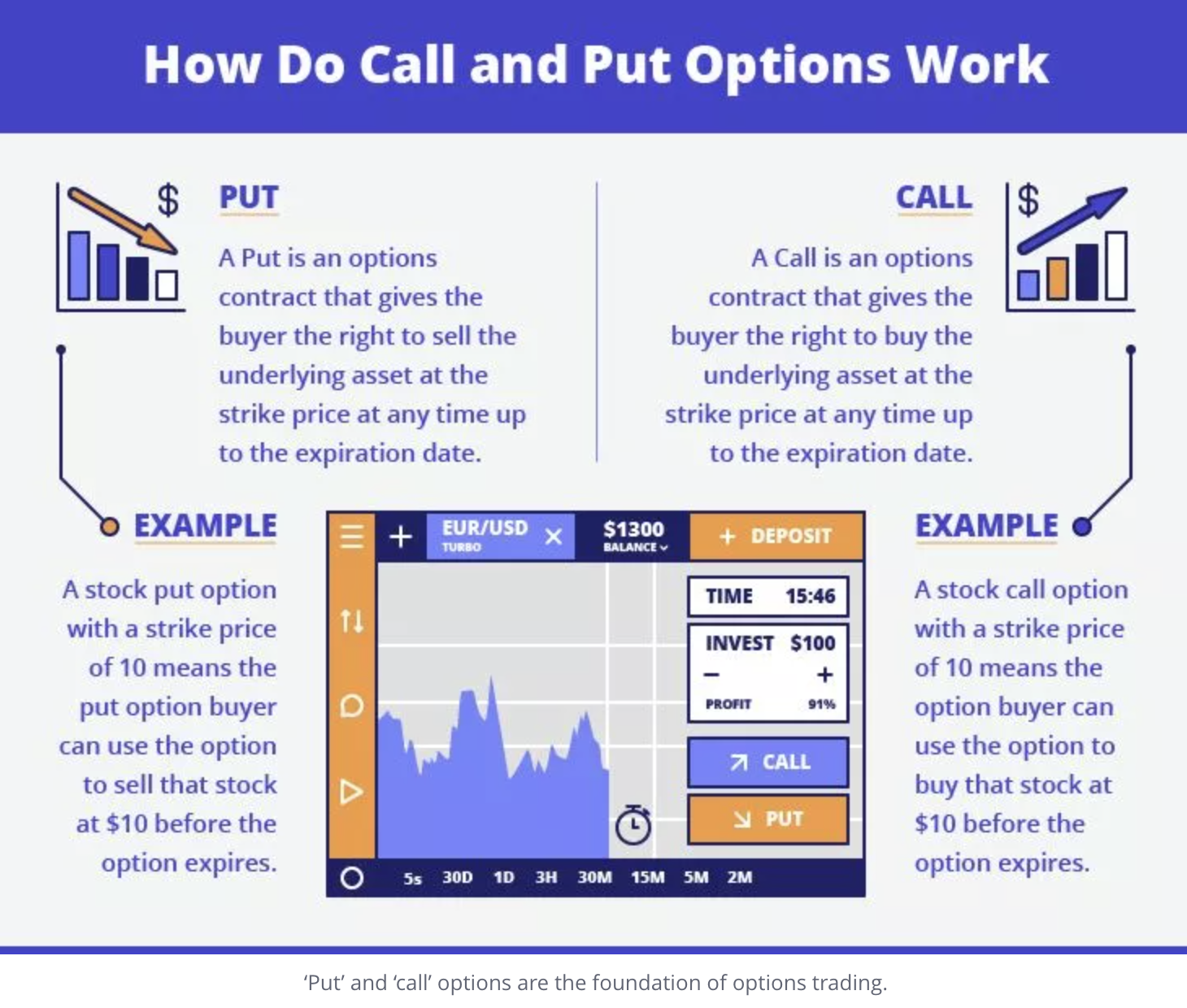
Although going about things in this way does require a high risk tolerance, options trading offers a unique opportunity to profit directly from falling stock prices. There are two basic types of options contracts: calls and puts, and puts are chiefly what interests us in this particular discussion.
How do put and call options work

A put option is a contract that gives the buyer the right, but not the obligation, to sell a stock at a specific price (known as the strike price) on or before a specific date (known as the expiration date). By buying put options, investors can benefit from a decline in the stock price, as the value of the put option will increase as the stock price falls.

Suppose an investor believes that a recession is likely to cause a decline in the stock market. The investor purchases put options for a particular stock with a strike price of $100 and an expiration date of six months from now. The current price of the stock is $110.

If the stock price falls to $90 at the expiration date, the investor can exercise the put option and sell the stock for $100, even though the market price has fallen to $90. The investor can profit from the difference between the market price and the strike price, which is $10 per share.

If the stock price does not fall below the strike price of $100, the investor can choose not to exercise the put option and allow it to expire worthless. In this case, the investor’s maximum loss is limited to the premium paid for the put option.

Of course, we don’t recommend trying this unless you’ve already got a pretty good handle on how options work – but the presence of beginner-friendly option trading strategies, as well as risk management methods such as stop loss orders and sell targets, means options trading looks a lot more daunting than it actually is, once you actually get down to it.

In addition to using put contracts to profit from falling prices, puts are also commonly used as a hedge against other long positions. This is a technique in risk management where investors and traders can protect themselves from the damage incurred by future losses.

Conclusion

Recessions are tough, scary, and risky times. Weathering them as best you can is critically important to your financial well-being and that of your family.

However, making the right investment decisions in those tough times allows you not only to avoid or better handle some of that hurt but to actually thrive in those conditions.

At the end of the day, the sad fact is that none of us will avoid a recession, and that none of us are recession-proof. Knowing what to do in those critical moments is of the utmost importance – and we hope we’ve been able to help you along in that regard.

The post Investing in a Recession? Keep These 6 Factors in Mind appeared first on Due.

[ad_2]

Source link

]]>
https://cbomo.com/investing-in-a-recession-keep-these-6-factors-in-mind/feed/ 0
Marketing in recession: How companies can implement advertising strategies? https://cbomo.com/marketing-in-recession-how-companies-can-implement-advertising-strategies/ https://cbomo.com/marketing-in-recession-how-companies-can-implement-advertising-strategies/#respond Fri, 10 Mar 2023 15:40:22 +0000 https://cbomo.com/marketing-in-recession-how-companies-can-implement-advertising-strategies/ [ad_1]

The economic slowdown indicates a deeper recession in 2023, an alarming thought for companies across the world. However, companies can prepare to combat the downturn by implementing various marketing strategies. It’s important to allocate your marketing fund to the right places. 

Here are some tips to ensure your company stays afloat with marketing strategies during a possible recession in 2023, 

1) Focus on your target market: During the recession, focusing on your core customer base is important which means identifying your most profitable customers and tailoring your marketing efforts to reach them specifically, said Amitek Sinha, COO & Co-Founder, ET Medialabs. “Consider offering promotions or discounts to loyal customers to encourage them to continue doing business with you.”

2) Invest in digital marketing: Sinha said that it is an end-to-end measurable and cost-effective way to reach a wide audience. “Use social media, performance marketing, branding, email marketing, and other digital channels to communicate with your customers and promote your products or services.”

“As more people spend time online during a recession, companies should invest in digital marketing which includes SEO, PPC advertising, social media advertising, and other digital tactics,” said Vipin Vindal, CEO, Quarks Technosoft. 

3) Leverage partnerships and collaborations: “Partnering with other businesses can help you reach new audiences and expand your customer base. Consider collaborating with other businesses in your industry or adjacent industries to offer bundled products or services,” ET Medialabs cofounder said. 

4) Build brand awareness: During a recession, consumers may be more hesitant to make purchases from unfamiliar brands, so it’s important for companies to build brand awareness. This can be done through social media, content marketing, influencer marketing, and other tactics that help get the word out about the company, said Quarks Technosoft CEO. 

5) Invest in customer delight: “In a recession, customers are more likely to be discerning with their spending. By investing in exceptional customer delight, you can create a positive experience for your customers and encourage them to continue doing business with you,” Sinha suggested. 

6) Offer discounts and promotions: Consumers are more likely to be looking for deals and promotions at the time of recession, so companies should consider offering them. This can be done through email marketing, social media, and other channels, Vindal recommended. 

7) Focus on the value proposition: “Consumers tend to be more price-sensitive, so companies should focus on highlighting their value proposition. This means emphasizing the benefits and features of their products or services that make them a better value than competitors,” the Quarks Technosoft CEO added. 

8) Leverage customer reviews and referrals: Word-of-mouth marketing is one of the most effective forms of marketing, especially during a recession. Companies can encourage their customers to leave reviews on third-party websites like Yelp or Google Reviews, and offer incentives for referrals, Vindal said. 

9) Focus on customer priorities: First and foremost, companies must be agile and should have the ability to pivot their products and services offered to align with the changing priorities due to recessionary pressure. The message one communicates to prospects or customers through marketing must be aligned with customers’ priorities, said Prabir Chetia, Executive Vice President – Growth Advisory, Aranca. 

“Messages must reflect the value accrued – enhanced quality or getting more from less – and clearly articulate the benefits aligned with priorities. In the case of a loyal customer, one has to go the extra mile to demonstrate value to ensure they don’t switch.”

10) Build brand awareness: Consumers may be more hesitant to make purchases from unfamiliar brands, so it’s important for companies to build brand awareness. This can be done through social media, content marketing, influencer marketing, and other tactics that help get the word out about the company, according to Vipin Vindal. 

Catch all the Business News, Market News, Breaking News Events and Latest News Updates on Live Mint.
Download The Mint News App to get Daily Market Updates.

More
Less

[ad_2]

Source link

]]>
https://cbomo.com/marketing-in-recession-how-companies-can-implement-advertising-strategies/feed/ 0
How to Prepare for and Beat the Recession with a Side Hustle | by Stephen Dalton | Mar, 2023 https://cbomo.com/how-to-prepare-for-and-beat-the-recession-with-a-side-hustle-by-stephen-dalton-mar-2023/ https://cbomo.com/how-to-prepare-for-and-beat-the-recession-with-a-side-hustle-by-stephen-dalton-mar-2023/#respond Sun, 05 Mar 2023 10:54:34 +0000 https://cbomo.com/how-to-prepare-for-and-beat-the-recession-with-a-side-hustle-by-stephen-dalton-mar-2023/ [ad_1]

EXTRA INCOME | BUSINESS | WFH

With the threat of an economic recession looming, many people are looking for ways to prepare themselves financially. One effective strategy is to start a side hustle.

Beating the recession with a side hustle, shows a lady walking dogs, a guy typing on a laptop, a guy vacuuming a floor, a typewriter with affiliate marketing spelled out, and e-commerce ads on social media.
Beating recession with side hustles — the author with PowerPoint design creation.

A side hustle is a part-time job or business that you can do alongside your regular job to generate extra income. That is if you still have a regular job. The layoffs have already started.

It seems like just last year, employers complained they couldn’t fill positions, people had gotten lazy during the lockdown, and they didn’t want to return to work. Now, they’re looking to lay off thousands to keep up with profits. They do not care about you.

You need to look out for yourself. Even if you have an emergency fund saved in a bank, bonds, stocks, certificates-of-deposit, precious metals account, or whatever you have, that won’t last long in a recession. It is time to take matters into your own hands.

This article will discuss how to prepare for and beat the recession with a side hustle.

I will propose five side hustles to consider now to prepare for the recession, possible layoffs, and help you gain a part-time income.

Work-from-Home (WFH) with Freelance Writing

Every morning or afternoon, depending on how late I write, I slip into my slippers, shuffle over to the computer, and bang out a few articles.

Primarily ghost blogs for business websites and other website content. It’s an easy way to make money after you develop a routine and get a few regular clients.

If you are passionate about writing, freelance writing can be a great side hustle. There are many opportunities to write articles, blog posts, and other content for businesses and websites.

To start, create a portfolio of your writing samples and pitch your ideas to potential clients. To find clients, you can also join freelance writing platforms like Flexjobs.com, Upwork.com, Guru.com, or Fiverr.com.

A valuable writing platform is right here on Medium. However, don’t think you’ll start earning big money right away.

Another is NewsBreak. If you want to make a side hustle from writing about local news or reviewing local restaurants, sign up using my referral link, and we can both make more. Don’t forget to use your Medium and NewsBreak links when you write.

Beating the recession with freelance writing means you must focus on providing high-quality content that meets your client’s needs.

Always deliver on time and communicate clearly with your clients to build a good reputation. As you build a solid client base, you can increase your rates and generate more income.

Make Passive Income with Affiliate Marketing

Affiliate marketing is used to promote other people’s products and earn a commission on sales.

To get started, find products or services you believe people want and sign up for their affiliate program. You can promote these products on your website, social media, or email list.

To beat the recession with affiliate marketing, you must build a strong social media following and provide valuable content to your audience.

Focus on promoting products relevant to your niche and providing real value to your audience. As you build trust with your audience, you can generate more sales and earn a higher commission.

If you look at my Facebook/Meta page, you’ll see I post ten or twelve “ads” each morning and evening. With very little effort, I make a moderate income. However, I have many pans in the fire.

Make an Income with Little or No Upfront Money with e-Commerce Sales

E-commerce refers to the buying and selling of goods and/or services online.

By providing a product or service that you believe in, you can start an e-commerce business. To get started, create an online store on platforms like Shopify, Amazon, or WooCommerce.

To beat the recession with e-commerce, you must focus on providing high-quality products or services, competitive prices, and excellent customer service.

As you build a loyal customer base, you can increase your sales and generate more income.

Help Neighbors with Housecleaning to Make More Money

Housecleaning can be a great side hustle. Many people are willing to pay for a professional cleaning service to keep their homes clean and tidy. To get started, create a cleaning service and promote it on social media or through word of mouth.

Don’t wait to have all the equipment you need. If your client wants carpets cleaned or floors buffed, you can rent the equipment for a day or over the weekend.

To beat the recession with house cleaning, you must focus on providing high-quality service that meets your client’s needs. Provide thorough and consistent cleaning, communicate clearly with your clients, and offer competitive prices. As you build a loyal client base, word of mouth will help you gain clients to generate more income.

Walking Dogs Can Be Fun & Profitable

If you love dogs, dog walking can be a great side hustle. Many busy pet owners are willing to pay for a dog walking service to ensure their pets get the necessary exercise. To start, create a dog walking service and promote it on social media or through word of mouth.

To beat the recession with dog walking, you must focus on providing reliable and trustworthy service. Always show up on time, communicate clearly with your clients, and provide great care for their pets. As you build a loyal client base, you generate more income with more clients or higher rates.

Starting a side hustle is a great way to prepare for and beat a potential upcoming recession. These are only a few of the many methods to earn cash part or full-time.

By choosing a skill or interest, you can generate income from various talents to build a more stable financial future.

Note: This post contains affiliate links. Read my disclosure statement for additional information.

About the Author Photo by Jean Springs from Pexels.

Stephen Dalton is a retired US Army First Sergeant with a degree in journalism from the University of Maryland and a Certified US English Chicago Manual of Style Editor. Also, a Top Writer in Nutrition, Investing, Travel, Fiction, Transportation, VR, NFL, Design, Creativity, and Short Story.

Website | Facebook | Twitter | Instagram | Reddit | Ko-fi | NewsBreak | Simily

If you want to make money writing online, start by signing up for a Medium Membership Today!

It only costs $5 per month, I’ve made money every month since I became a paying member, and you can too. Thank you.


[ad_2]

Source link

]]>
https://cbomo.com/how-to-prepare-for-and-beat-the-recession-with-a-side-hustle-by-stephen-dalton-mar-2023/feed/ 0