Article content
Although many public servants want to work from home, they will not be able to strike from home, the Public Service Alliance of Canada says.
' . esc_html( __( 'Your WordPress version is too old for XML Sitemaps.', 'google-sitemap-generator' ) ) . '
' . esc_html( sprintf( __( 'Unfortunately this release of Google XML Sitemaps requires at least WordPress %4$s. You are using WordPress %2$s, which is out-dated and insecure. Please upgrade or go to active plugins and deactivate the Google XML Sitemaps plugin to hide this message. You can download an older version of this plugin from the plugin website.', 'google-sitemap-generator' ), 'plugins.php?plugin_status=active', esc_html( $GLOBALS['wp_version'] ), 'http://www.arnebrachhold.de/redir/sitemap-home/', '3.3' ) ) . '
' . esc_html( __( 'Your PHP version is too old for XML Sitemaps.', 'google-sitemap-generator' ) ) . '
' . esc_html( sprintf( __( 'Unfortunately this release of Google XML Sitemaps requires at least PHP %4$s. You are using PHP %2$s, which is out-dated and insecure. Please ask your web host to update your PHP installation or go to active plugins and deactivate the Google XML Sitemaps plugin to hide this message. You can download an older version of this plugin from the plugin website.', 'google-sitemap-generator' ), 'plugins.php?plugin_status=active', PHP_VERSION, 'http://www.arnebrachhold.de/redir/sitemap-home/', '5.2' ) ) . '
IAB Europe recently announced the release of its European Retail Media Measurement Standards for industry feedback. These standards aim to establish a common framework for measuring and evaluating retail media advertising campaigns across Europe.
The recommended standards were developed following IAB Europe’s Retail Media Measurement Workshop which brought together 15 retailers from across Europe. This feedback was combined with the ongoing discussions from IAB Europe’s Retailer Council and Retail Media Committee.
The recommended standards are now open for industry feedback until 29th March. Interested parties can provide their input by emailing [email protected]. These comments will help shape the final standards, due to be released in April.
You can view the standards document here.
The release of the 2024 European Retail Measurement Standards presents a pivotal moment for eCommerce brands, offering compelling reasons for them to take note and integrate these standards into their operations.
These standards provide a unified framework for measuring and evaluating retail media advertising campaigns across Europe. For eCommerce brands operating in multiple European markets, having consistent metrics and methodologies ensures comparability and transparency in assessing advertising performance. This uniformity facilitates better decision-making processes, allowing brands to allocate resources effectively and optimise their advertising strategies based on reliable data.
The adoption of these standards fosters greater accountability within the retail media advertising ecosystem. By adhering to a common set of measurement practices, brands and retailers can uphold industry standards and demonstrate their commitment to ethical advertising practices. This transparency not only builds trust among consumers but also mitigates the risk of potential regulatory scrutiny, especially in an environment where data privacy and consumer protection regulations are evolving.
Additionally, eCommerce brands stand to benefit from the enhanced collaboration and alignment with industry stakeholders facilitated by these standards. By engaging in the feedback process and contributing to the refinement of measurement methodologies, brands can actively shape the evolution of retail media advertising standards in Europe.
The implementation of these standards can drive operational efficiencies for eCommerce brands by streamlining measurement processes and reducing complexity. With standardised metrics and reporting formats, brands can more efficiently analyse campaign performance, identify trends, and extract actionable insights to optimise their advertising investments.
The publication of the first set of recommendations will likely have a notable impact on affiliates.
For affiliates, these standards provide a standardised framework for measuring and evaluating the performance of retail media advertising campaigns. This means that affiliates can expect greater consistency and transparency in assessing the effectiveness of their advertising efforts.
With standardised metrics in place, affiliates can more accurately gauge the ROI of their campaigns, identify areas for improvement, and optimise their strategies accordingly. This clarity and uniformity in measurement standards can ultimately empower affiliates to make more informed decisions and achieve better results for their clients or partners.
In terms of industry partnerships, the adoption of these standards is likely to foster greater collaboration and alignment among stakeholders within the retail media ecosystem. Brands, retailers, and affiliates can now operate on a level playing field with standardised metrics and measurement practices. This harmonisation enables smoother collaboration and facilitates the exchange of data and insights between partners. As a result, industry partnerships are likely to become more efficient and effective, driving better outcomes for all parties involved.
For influencers who sell online, the implementation of these standards may require adjustments to their approach to measuring and reporting campaign performance. Influencers rely heavily on metrics such as engagement rates, click-through rates, and conversion rates to demonstrate the effectiveness of their promotional efforts. With the introduction of standardised metrics for retail media advertising, influencers may need to align their reporting practices with these new standards to ensure consistency and comparability. This may involve adopting new measurement methodologies or leveraging additional tools and technologies to track and analyse campaign performance accurately.
The publication of European recommendations for Retail Media digital advertising metrics and measurement standards by IAB Europe is likely to drive positive changes in the industry, promoting transparency, accountability, and collaboration among affiliates, industry partners, and influencers who sell online. By embracing these standards, stakeholders can position themselves for success in the evolving landscape of retail media advertising in Europe.
[ad_2]
Source link
“These significantly improved and enforceable flexible work rights will open doors for individuals who were previously unable to consider APS employment, or had to leave because of a change in circumstances,” she said.
Public service commission chief negotiator Peter Riordan said “this common condition is a significant step for the APS and would create a consistent approach to flexible work arrangements for all APS employees”.
Under the agreement, all APS employees will be able to make a flexible work request, including to work from home, and agencies cannot impose limits on the number of days employees can work from home in a week.
Agencies are required to “lean towards” approving requests with a presumption they should be approved. They can only refuse a request after genuinely trying to reach agreement and there are reasonable business grounds not to approve.
If the agency does not genuinely try to reach agreement, workers can challenge a refusal in the Fair Work Commission.
Agency agreements will also acknowledge the benefits of work performed in a wider range of locations across the country.
The deal follows Mr Riordan proposing no caps on the number of WFH days in May.
The previous government had indicated to agency leaders they wanted officials to “show up” and be present, causing agencies to limit work from home and other flexibility initiatives.
Coalition ministers were also publicly sympathetic to calls for government to lead the way and push for CBD workers to return to their offices.
However, Public Service Minister Katy Gallagher, who is also minister for women, has forcefully argued for greater flexibility to promote better gender balance around parenting and drive up female workplace participation and promotions.
She has also pushed for more flexibility around core work hours and job design, job-sharing and more part-time roles, especially for senior management and executive roles.
A recent survey by the Workplace Gender Equality Agency found that only one in five women are in the top quartile for pay in the federal public service compared with one in three male employees.
Ms Donnelly said “the traditional approach to APS work has hindered the attraction and retention of staff across the service. By embracing this opportunity and becoming a leader in workplace flexibility, the APSC and the government have taken meaningful steps towards establishing the APS as a model employer.”
The push for greater workforce flexibility so public servants can be more easily moved around the public service has been a key productivity goal of government negotiators.
Different pay structures across agencies in the 170,000-strong Australian Public Service have impeded easy transfers.
These are being unwound over several years as part of a key strategy to create a “One APS”. The landmark 2019 report by David Thodey noted the APS inter-agency mobility rate, which measures movement of employees between agencies in a year, has been stuck for decades at a poor 2.5 per cent. Mr Thodey noted nearly three-quarters (72 per cent) of the APS had only ever worked in one agency.
Unions have also been seeking to enshrine work from home rights in various sectors for the past 12 months.
Last year, Western Sydney University was the first to introduce a right to work from home for two days a week in its enterprise agreement for non-academic staff and limit the circumstances the university could refuse requests.
The Finance Sector Union has also been fighting to establish work from home rights in its agreements with the major banks.
The CPSU-APSC bargaining will continue to bargain on pay after union members rejected offers of a 10.5 per cent increase over three years and push claims for a 20 per cent wage bump.
Unions are also seeking to lock in 18 weeks as the across-the-board standard for paternity leave, with a push to also include six weeks pregnancy leave.
[ad_2]
Source link
The Enugu State Government has ordered all public servants and political office holders in the state to begin reporting to their places of work on Monday or face sanctions.
The order came exactly one month after the State Governor Peter Mbah banned the sit-at-home order in the state, usually enforced by a faction of the outlawed Indigenous People of Biafra (IPOB).
PREMIUM TIMES learnt that the order to the public servants and political office holders was part of Mr Mbah’s efforts to prevent them from complying with the Monday sit-at-home order usually observed in Enugu and other South-east states.
A top official of the government, who asked not to be named because he was not permitted to speak on the matter, told this newspaper on Monday that every worker in the state had been notified of the directive to report to work on Mondays.
“You know the governor has banned the sit-at-home in this state. So, there is no point allowing the workers to stay at home again on Mondays,” he said.

The Head of Service (HoS) in Enugu State, Ken Ugwu, on Friday in a circular obtained by PREMIUM TIMES, said the order to report to work on Mondays follows the cancellation of the sit-at-home in the state by Governor Mbah.
Mr Ugwu said the Monday sit-at-home “had promoted laxity, low productivity and depleted the resources” of the state.
“To this end, and to further reinforce the governor’s directive, all public/civil servants in the state are hereby directed to ensure that they report to their duty posts every work day, including Mondays, as government has put all necessary security measures in place to ensure their safety,” he said in the circular.

“Failure to adhere strictly to this directive would attract severe sanctions,” Mr Ugwu added.
The circular, addressed to key officials of the state government, also directed political officeholders, permanent secretaries and all heads of extra-ministerial departments to ensure compliance.
Meanwhile, PREMIUM TIMES observed that residents of Enugu State have continued to observe the sit-at-home despite the pronouncement by Governor Mbah declaring an end to the civil action in the state.
The residents have continued to shun their businesses in compliance with the civil order declared by the separatist group.
IPOB, in August 2021, introduced a sit-at-home order every Monday across the South-east to pressure the Nigerian government to release its detained leader, Nnamdi Kanu, who is standing trial for alleged terrorism at the Federal High Court, Abuja.
The separatist group later suspended the order, in preference for it to be implemented only on days Mr Kanu appears in court.
But despite its suspension, residents of the five South-east states – Enugu, Ebonyi, Imo, Abia and Anambra — have been observing the Monday sit-at-home order, primarily out of fear.


IPOB had repeatedly disowned the Monday sit-at-home across the region, saying those who still enforce the order were criminals attempting to blackmail the separatist group.
A leader of Autopilot, a faction of the IPOB, Simon Ekpa, has continued to declare sit-at-home orders in the region despite being suspended by the IPOB faction led by Mr Kanu.
IPOB is leading the agitation for an independent state of Biafra, which it wants carved out from the South-east and some parts of south-south Nigeria.
TEXT AD: Call Willie – +2348098788999

[ad_2]
Source link
(TNS) — The post-pandemic reality for America’s public transportation is bleak. Work from home has solidly set in, leaving transit agencies that rely on fare-box revenue facing a fiscal cliff.
As pandemic aid dwindles, the nation’s biggest transit systems face a roughly $6.6 billion shortfall through fiscal year 2026, according to a Bloomberg tally of the top eight US transportation agencies based on passenger trips. Rising labor costs and inflation are hitting as farebox revenue stagnates after ridership collapsed. Those eight agencies serve regions that combined contribute about $6 trillion annually to the national economy.
Local officials are pressing for help. Last month, the California Transit Association asked the state for $5.15 billion over the next five fiscal years. Without more money, transit officials across the country warn that the public can expect steep ticket price increases and drastic cuts to train and bus schedules, while long-planned expansion projects are on the chopping block. That pleading worked for New York’s Metropolitan Transportation Authority when state lawmakers recently approved a massive bailout.
“If it doesn’t get the kind of funding it needs not just to survive but thrive, service will decrease, people will be unable to rely on it, they will be forced to buy cars if they can, take on massive debt to afford those cars.” said Stephanie Lotshaw, acting executive director at TransitCenter, a public transit advocacy group. “All of these outcomes that we are trying to rectify will get worse if we don’t, if we let these systems fail.”
Before the pandemic, about 7.8 million people — or 5% of the US workforce — used public transit, according to the US Census Bureau. That included about 2 million in the New York City region and more than one-third of workers in the San Francisco Bay area. Ridership nationwide has rebounded to about 70% of pre-pandemic levels, but experts warn a full rebound may never happen.
Here are the financial problems facing the eight biggest transit agencies:
New York’s Metropolitan Transportation Authority
New York’s Metropolitan Transportation Authority, the nation’s largest mass-transit system, estimates that it may take until 2026 for system-wide ridership to reach 80% of 2019 usage.
The MTA had initially projected a $600 million deficit this year that was estimated to grow to $3 billion in 2025 as federal pandemic aid runs out. It won a reprieve when New York Governor Kathy Hochul and lawmakers reached a last-minute deal in April to raise the payroll tax on New York City’s largest businesses to bring in about $1.1 billion for the agency. Lawmakers also agreed to provide another $300 million in one-time state aid to the transit agency. Another $65 million will allow the MTA to reduce this year’s planned 5.5% fare hike.
“This is a national problem,” Janno Lieber, the MTA’s chief executive officer, said in March. “Solving the MTA deficit is not a one year thing, we gotta do it in a way that is going to be a permanent solution for years to come.”
Bay Area Rapid Transit District
San Francisco’s Bay Area Rapid Transit, which serves six million people in a region that’s home to Twitter Inc., Salesforce Inc., and Uber Technologies Inc., in 2019 saw about 66% of its operating budget from fares, one of the highest percentages in the nation.
Ridership has only returned to about 40% of pre-pandemic levels. That means that when federal funding runs out, the agency projects a deficit of $340 million in fiscal year 2027-2028. The city’s public transit has been hit particularly hard because of its heavy concentration of technology jobs that can easily be done from home and from the rout in the industry that’s led to tens of thousands of layoffs.
“If BART doesn’t find new funding sources and the federal emergency money runs out, cutting service and operating hours, and closing some stations will be on the table,” General Manager Bob Powers said.
That fiscal strain is threatening its AA credit rating, which could make it more expensive to borrow. And that’s crucial as it ponders building a second trans-bay tube at a cost of about $29 billion. BART is also expanding to downtown San Jose and Santa Clara, an approximately $9 billion project.
Leaders in the region are drafting a ballot measure for 2026 that would ask voters there to fund public transportation. And lawmakers who represent the region are appealing for steady state funding at a time when Governor Gavin Newsom is proposing slashing $2.7 billion from the transportation sector.
The San Francisco Municipal Transportation Agency, which operates buses and cable cars in the city, has seen its ridership climb to about two-thirds of pandemic-levels. Still, it’s anticipating a $130 million deficit in fiscal 2025. That gap had been covered by the federal government, but that money is expected to run out in the next two years, leaving the agency $234 million in the hole by 2028.
Los Angeles County Metropolitan Transportation Authority
The subway, bus and light rail system in Los Angeles known as Metro last year saw ridership reach about 70% of 2019 levels, with a system-wide farebox recovery estimated at 6%, which is the percentage of expenses that are covered by fares. Metro officials say they can lean on federal assistance through the end of the upcoming fiscal year that begins in July. After that, Metro is anticipating a $400 million deficit in 2025, and $1 billion shortfall in 2026.
Metro says that in order to bring back and retain ridership the system has implemented a series of discounted and free fare programs, which puts further strain on the availability of eligible funding and its take from sales taxes dedicated to transit.
And now that California is mandating the phaseout of diesel fuel that transition has costly implications for LA Metro, which has one the nation’s largest bus fleets. Metro is looking to reach its zero emissions target by 2030. The agency is also seeking to expand its subway system ahead of the 2028 Olympics, another expensive endeavor.
Massachusetts Bay Transportation Authority
MBTA, which offers subway, bus, commuter rail and ferry service to eastern Massachusetts and parts of Rhode Island, faces a shortfall of $139 million in fiscal 2025 and $475 million in fiscal 2026, according to projections using conservative ridership figures. The agency says that one-time reserve revenues are projected to fix the budget gaps in fiscal 2024 and 2025 but say the actual shortfalls will come down.
That deficit comes after a federal safety report last year criticized the transit agency for prioritizing long-term projects over day-to-day necessities.
Aside from its deficit, like many transit agencies, MBTA is suffering from labor shortages. A report released April 3 by the Massachusetts Taxpayers Foundation says the system needs to hire and train 2,800 workers in the next 12 months to safely and reliably operate and maintain its agency. In an effort to hire workers the agency is offering a $7,500 sign-on bonus for eligible roles, such as bus operators, rail repairers.
Washington Metropolitan Area Transit Authority
At the Washington Metropolitan Area Transit Authority, which serves an area that is home to almost 283,000 federal workers, weekday rail ridership has only reached about 50% of pre-pandemic levels with bus at about 80%. The authority is projecting a budget shortfall of $738 million in fiscal 2025, a gap that will grow to more than $900 million by fiscal year 2029.
Metro, as the agency is known, operates 97 train stations and 128 miles of track and 1,500 buses serving 4 million people within a 1,500-square mile jurisdiction.
Washington’s commuters are slow to come back as federal employees embrace working from home and and have been reluctant to return to the office. The slow return has the city’s Democratic mayor joining Republicans to end teleworking.
Officials say they expect revenue growth of $28.5 million thanks to improving ridership, parking, advertising and joint development revenue.
Southeastern Pennsylvania Transportation Authority
SEPTA, which serves five counties in the greater Philadelphia area and connects to transit systems in Delaware and New Jersey, is back to about 60% of pre-pandemic ridership. It is seeing about 600,000 passenger trips per day, compared to about one million pre-Covid.
The system is expected to see federal funding run out in early to mid 2024 with a $240 million deficit annually. The transit provider is anticipating significant fare increases and services reductions starting in fiscal year 2025. Pre-Covid, about 38% of SEPTA’s operating budget expenses were paid by fare revenue, compared to about 21% now with ridership lagging 2019 levels.
New Jersey Transit
New Jersey Transit, the largest US statewide commuter bus and rail provider, says weekday rail ridership is back to about 80% to 90% of what it was before the outbreak, President Kevin Corbett said at an April board meeting.
Still it anticipates a $119 million gap for fiscal year 2025, the last year the agency has Covid aid, according to budget documents. That’s expected to climb to a $957.8 million shortfall in 2027.
The agency has proposed a $2.87 billion budget for fiscal year 2024, including a $140 million state subsidy that’s up $40 million from the previous year, budget documents show.
Chicago Transit Authority
From hedge fund Citadel to the headquarters of Boeing Co., some high-profile companies have left Chicago, adding to the fiscal challenges facing the Chicago Transit Authority as remote works keeps ridership at about 54% of pre-Covid levels, according to 2022 data. The CTA is facing projecting budget holes of approximately $400 million annually going forward with federal relief funds available to cover the gaps through early 2026.
CTA president Dorval Carter in an interview said that crime is impacting the agency’s ridership recovery along with remote work.
Carter said the CTA is looking to diversify its subsidy streams so that it can be in a better position to have financial stability. Whether that will be so-called congestion pricing, which is on the table in New York City, or working with the state to find long-term funding solutions, the CTA is exploring ways to fill their shortfalls.
© 2023 Bloomberg News. Distributed by Tribune Content Agency, LLC.
[ad_2]
Source link


[ad_1]
Publisher : Jones & Bartlett Learning; 5th edition (April 8, 2022)
Language : English
Paperback : 350 pages
ISBN-10 : 1284247457
ISBN-13 : 978-1284247459
Reading age : 1 year and up
Item Weight : 1.62 pounds
Dimensions : 8.75 x 0.5 x 11 inches
[ad_2]
]]>“The strength of unionization is in numbers, and you have to have those numbers visible from Day 1.”

Although many public servants want to work from home, they will not be able to strike from home, the Public Service Alliance of Canada says.
With almost 160,000 federal employees now in a legal strike position, the country’s largest public-service union is preparing for the country’s first national walkout in two decades even as last-minute contract talks continue.
Old-fashioned picket lines will form an essential part of any PSAC strike, the union says. It means union members will not be able to conduct their job action on Zoom or Microsoft Teams.
“Strikes have always depended on their ground game, so this means physical picket lines across the country,” said Michael Aubry, PSAC’s assistant director of communications. “Everyone has to show up to a picket line to be considered as striking. There will be no virtual picketing from home.”
The union’s constitution stipulates that members must spend four hours a day on the picket line to be eligible for strike pay. It says benefits will be reduced for every day a member is “absent without cause.”
If federal public servants go on strike, Aubry said, picket lines will be set up at key locations throughout the National Capital Region.
Striking public servants, he said, will be able to join the picket line closest to their home and will not be required to picket outside their regular workplace.
Aubry said a national public service strike required a show of force on picket lines across the country.
“What strikes really are is a pressure tactic. It’s putting pressure on the government, it’s showing the public there’s solidarity, and so that’s only really possible and effective when it’s visible, when it’s in front of cameras, when it’s front of government offices, MPs’ offices, on Parliament Hill,” he said.
“The strength of unionization is in numbers, and you have to have those numbers visible from Day 1.”
Aubry said public servants in the National Capital Region would be eligible for $375 a week in strike pay. The money will be delivered to bank accounts by e-transfer for those who have provided PSAC with their email addresses, while cheques will be distributed to those picketers who have not signed up for online banking.
Even those public servants who have been approved for full-time telework will be expected to join their nearest picket line.
“In order to be considered on strike, you have to show up physically to a picket line, and we’ll have picket lines set up right across the country,” said Chris Aylward, PSAC’s national president. “There will be no virtual picket lines.”
PSAC wants to negotiate the right to telework with the Treasury Board of Canada Secretariat. It has argued that the location where government employees perform their jobs should be a matter for negotiation after pandemic-enforced telework, but Treasury Board President Mona Fortier has insisted it’s a management right to decide where employees work.
The government has refused to bargain on the issue.
A PSAC survey of its members last year found 80 per cent of its members opposed the government’s hybrid work plan, which now requires public servants to be in the office at least two days a week.
A workforce survey of almost 14,000 public servants conducted last year found 73 per cent of public servants said they would rather work from home, up from 23 per cent in March 2020.


[ad_2]
Source link
Jim Cramer’s approach has always been practical and positive about financial freedom after retirement. He runs the CNBC investing club, which helps people make worthy investment decisions to amplify their money. In addition, Cramer is the co-founder and chairperson of TheStreet.
Born to creative parents, Cramer has always been appreciated for his unique ability to provide logical financial suggestions. Do you know what Cramer says about early retirement? This post unveils the secret – keep reading and learn the mysteries involved!
Jim Cramer published a book called “Real Money‘ in 2005. On page number 66 of the said book, Cramer said – “the age-specific investment approach is your best option.” These lines reflect how crucial it was for Cramer to save for retirement. He believes everyone should start saving for retirement as early as possible.
Cramer started his career with the Tallasahi democrat. In 1977, he got his first steady paycheck. However, when he left Talasahi, he passed through tough times. He was living in his car when he used to work as a reporter in Los Angeles. Impressively, dodging that adverse financial situation, Cramer managed to put $1500 away for his retirement.
He says he invested the money in the famous Peter Lynch at Fidelity Magellan Fund. According to Cramer, that money was being invested for multiple years consistently. This, in turn, helped him to compound the money to such an extent that it could provide a moderate retirement income to live lavishly for at least a half dozen years post-retirement.
In the dawn of 2023, Cramer’s ideology seems very relatable. Saving for retirement has never been this crucial – the job market has gone insanely unstable, and the economy craves oxygen because of inflation. This is high time to adopt an age-specific mindset, as Cramer explains – you should focus on growth stocks in your 20s because you have enough time to take and manage risks.
When you enter your 30s, you should pull the chain a little hard and switch to more stable stocks like dividends. Moving on to your 40s, bonds should make up a more significant portion of your portfolio since this is the time to prioritize capital preservation.
According to Cramer, given the disrupted economic scene in the USA, even highly curated plans for retirement may fail. Therefore, you should switch to the alternative of retiring early. However, how should you move towards early retirement?
Cramer articulates that sticking to a strategy from your early 20s may help you retire early and enjoy financial freedom. There are several elements to consider, including the following.
When you are beginning, it’s crucial to know where you stand. Ideally, you will need 70% of your yearly income to fuel your yearly expenses after retirement. Therefore, identify your present financial position and look for ways to secure that percentage so you can retire early and not see poverty post-retirement.
Only compound interest can grow your money substantially. If you want to estimate how quickly you can multiply your money, you just need to figure out the years needed to grow it at a given interest rate. For instance, if the interest rate is 10%, it will take approximately seven years to grow $1000 into $2000. If you want more benefits, you can consider high-yielding stocks.
Be realistic when carrying out the calculation. If you are retiring early, you will probably live a long time without work. Is the venture going to be riskier than you bargained for? Will you be able to manage enough money to enjoy your retirement? Reassess the factors before you say goodbye to your job. Remember, leaving your retirement entirely on double-digit investment returns is not wise. Hence, be careful!
Everything about retirement may not be that juicy. You may experience health issues that can make a big hole in your pocket. Therefore, get health cover that can help you with your hospital bills.
If you have decided to retire early, you are probably ready to compromise the comfort of your monthly salary. Therefore, you should utilize the limited time frame to save massively for your retirement years. For instance, if you started earning at the age of 18 and you are planning to retire in your 40s, you will have approximately 20-22 years to grow your money and save for your retirement.
Given this, you should be very particular when picking investment instruments. Always walk with the alternatives that ensure sizeable returns over time. Besides, they should be able to beat inflation. You can browse through equity-based alternatives or annuity plans to secure a regular flow of income.
Only consistency can help you reach your goal when it comes to retiring early. Therefore, be regular with your investment and manage your portfolio actively. If you truly want to maximize your returns, consider monitoring your investments closely. You should be able to figure out which investments will suit you and which won’t.
The investments you have made previously should also be reanalyzed. Check if they hold their ground in the present day and have helped combat inflation. If their performance doesn’t seem promising, take out your money and put them in the right instruments.
You can do this by referring to the rule of 25. This says that you should acquire 25X your planned annual spending before retiring. For instance, if you want to spend $40,000 during the first year of retirement, you should have $10,00,000 invested when you leave your job. When you invest your retirement nest egg, it will continue to grow. This way, they will be able to keep up with the inflation.
The 4% rule is a widely accepted idea for retirement planning. It suggests that you can withdraw 4% of your invested savings during the first year of retirement. Afterward, you can adjust the withdrawal amount for inflation every year. Although you don’t have to adhere strictly to the 4% rule, you can make adjustments based on your risk tolerance, market performance, and investment portfolio.
Retiring early comes with two clear downsides – a shorter span to save and a longer period to spend. You need to achieve the best returns to dodge them, which can be done by building a balanced portfolio inclined to long-term growth. You can use low-cost index funds to achieve this goal. Usually, such funds come with allocations tilted toward stocks, and you are free to stomach them as long as you can.
Well, you may have done loads of homework to figure out how much you will need to spend your retirement comfortably. However, estimating the expenses could be a discussion. Generally, it starts in an innocent way – you throw that mandatory retirement party. After a few days, boredom hits, and you go out for a vacation. Then, you need a companion, so you get a dog. Well, now the 4% rule, as mentioned above, suddenly kicks in.
You should avoid this scenario. You decided to stick to that rule to beat inflation. It can never help you if you mindlessly spend much beyond your capacity. If you increase your recurring expenses in your retirement, you will likely run out of money soon.
Debts can be a hindrance to your early retirement efforts. When you are stuck with debt, you will find it challenging to acquire enough money to support your post-retirement life. Ideally, you should follow the fundamental 30:30:30:10 budgeting rule to avoid financial burdens.
As such, you should dedicate 30% of your monthly income to housing needs, 30% to groceries, utilities, and fuel, 10% to discretionary expenses, and 30% to your savings and investments. By following this rule, you will be able to save in a strategic and disciplined way.
Building a passive income stream may help you retire early, and there are several ways to do so. For example, you can start taking up freelancing projects or invest in dividend assets. Besides these two, you can also consider several other ways to generate passive income. They may include real estate investing, affiliate marketing, and creating and selling digital products. The key is to find a method that works for you, and that aligns with your financial goals.
Now that you are familiar with the secrets of early retirement, here are some lesser-known facts that can help you make an informed decision. Remember, everything about retiring early is not sweet, and you should be prepared to embrace its bitter side as well.
As highlighted before, in retirement, you will typically need to spend only 70% of what you spent when you were working. For example, if you spend $10000 yearly when working, it is expected to become $7000 once you retire. There won’t be liabilities such as shoveling money into your retirement account, paying social security taxes, and bearing the communication cost for work. However, in the early years of retirement, you are expected to spend more than you planned to fuel your newly retired lifestyle.
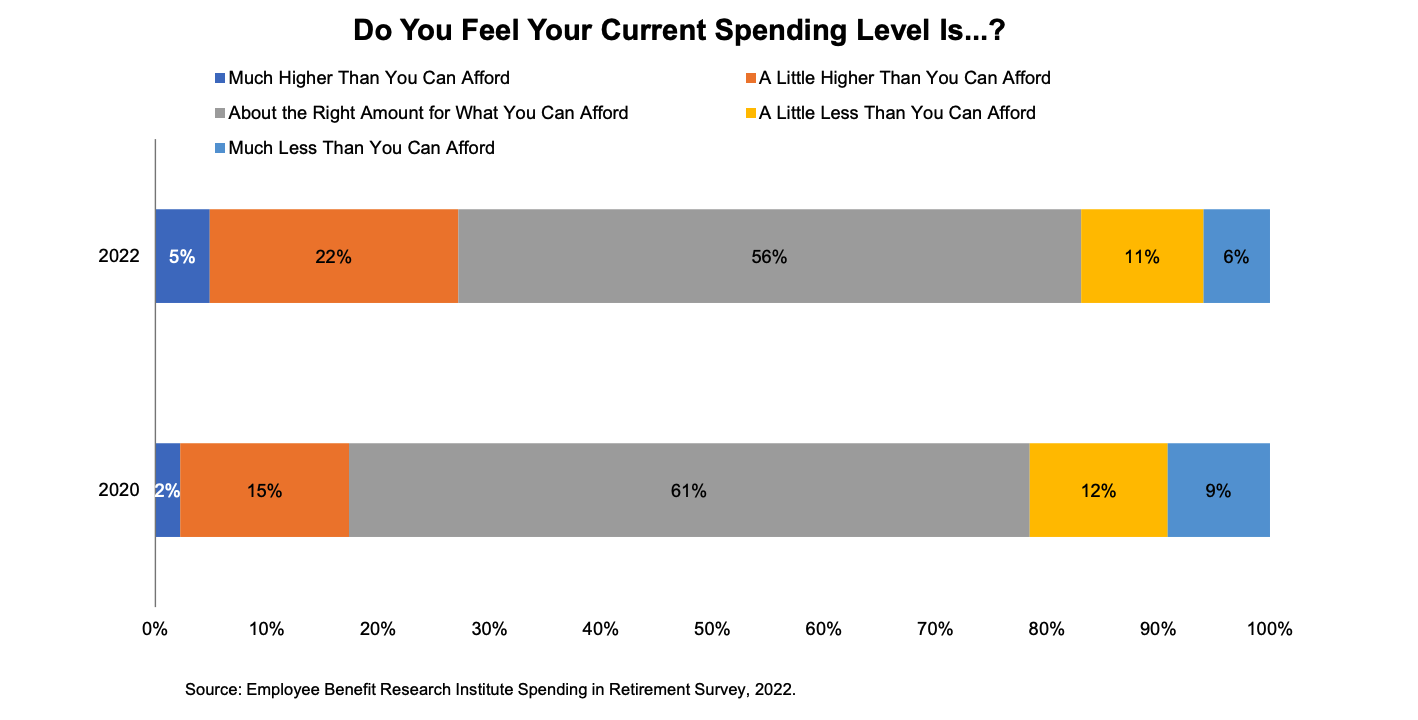
Moreover, the inflation rate is running at a red-hot 8.3% now. Nobody can say it will surge to what extent when you retire. Given this, you may need to revise your retirement savings plan considerably. EBRI reveals that 36% of retirees agree that their overall expenses have been higher than their calculations. Considering these facts, you should start saving even more rigidly to spend your retirement in comfort and peace.
Sometimes tapping your nest egg early may cost you significantly. Retiring before 59 makes you likely to pay a 10% early withdrawal penalty from tax-deferred accounts like 401 (K) plans and IRSs. Moreover, if you don’t have a Roth IRA, funded with after-tax contributions, your withdrawals from traditional accounts will be subjected to tax implementations.
For instance, if you withdraw $40,000 before you hit 59 and come under the 15% federal tax bracket, you are expected to pay $10,000 in penalties and taxes. This will leave you with $30,000 in hand.
If you are retiring with a mortgage, your housing expenses won’t retire with you. Thus, you should always try paying off your mortgage before you say goodbye to your job. However, even if you manage to pay your mortgage, you should be careful about your property taxes and home maintenance costs and plan your retirement budget accordingly.
Retiring early comes with a set of pros and cons. The benefits may include several elements. For instance, you can enjoy an opportunity to start a new career. Furthermore, early retirement allows you to spend more time traveling and exploring different dimensions of life. Most importantly, if you have planned strategically, early retirement can help you cherish financial freedom.
However, there are downsides as well. First, your social security benefits will be reduced. Next, you may struggle to make your retirement savings last longer. Finally, the lifestyle transition may affect your mental health.
Well, the answer is pretty self-explanatory. Most people believe the standard retirement age should range between 60 and 65. In fact, if you retire at this age, you can draw your full social security retirement benefits. However, depending on your financial situation, you may decide to retire early or late. There is no definitive formula that can help you find the right age for retirement. Thus, consider your goals when making the decision. You can also take professional help from financial advisors to make the right decision.
To set yourself free before you hit your 59, you must plan your finances strategically. You should invest in the right instruments, keep track of your budget, and save adequately for your future. In addition, you should purchase health coverage to deal with unforeseen medical emergencies.
Yes and no! If you plan to start a new venture after your 40s and your job obstructs your way, you may consider the idea of early retirement. Similarly, you can retire early if you want to enjoy a burden-free life a little earlier than the standard norms. However, if you are burdened with loans and have not been able to manage your finances well so far, you should think thoroughly before deciding to retire early.
Jim Cramer has always been positive about the idea of early retirement. In fact, he considered it one of the best weapons to beat inflation and live a worry-free life. However, Cramer has recommended a few to-dos to obtain the best benefits of early retirement. They include strategic and consistent savings, awareness of the present financial condition, etc.
The post Jim Cramer’s Secret to Early Retirement is Now Public appeared first on Due.
[ad_2]
Source link
During a recent class at Florida International University, marketing professor Nancy Richmond gave her students an assignment — build out their personal websites and pick a social media app to add to it.
That was before TikTok was banned from being used on the university’s devices and internet networks.
“What if students use TikTok now that I can’t look at it!” Richmond said with a laugh. “I didn’t know this was happening, so …”
It’s a sign of how ingrained the social media platform is on many college campuses — and on the phones of many college students — and the challenges posed by banning the app.
FIU and Florida Atlantic University have joined other public schools across the state in blacklisting TikTok this week, after the Florida Board of Governors passed an emergency policy blocking its use — due to data privacy and homeland security concerns around the Chinese-owned platform.
Also listed on the state’s “Prohibited Technologies List” are Kaspersky, VKontakte, Tencent QQ, WeChat and “[a]ny subsidiary or affiliate” of the those entities.
“If [young people] are in TikTok, and you can’t reach them there, then you’re missing out on an opportunity to communicate with them.”
FIU marketing professor Nancy Richmond
TikTok is wildly popular — more than 150 million Americans have an account, according to the company. And it’s the go-to platform for Gen Z — those born after 1996. According to a 2022 study by Pew Research, two-thirds of teens use TikTok.
Richmond says it’s important for her marketing students to be fluent in all the social media apps of the day, including TikTok. Still, she says the security concerns around the platform are valid — but so is the desire to meet young people where they are. And by and large, that’s on TikTok.
“If they’re in TikTok, and you can’t reach them there, then you’re missing out on an opportunity to communicate with them,” Richmond said. “They still are going to be there. It’s just that we won’t be able to connect with them in the same sort of way.”
TikTok is not only a place to find dance trends and funny animals videos. For aspiring influencers, the app is a way to launch their careers reviewing restaurants, posting makeup tutorials or simply … vibing.
For many colleges, TikTok is a tool for recruiting and outreach. Search “Florida International University” on TikTok and you can find videos of the sunset on campus, favorite study spots and tips for surviving freshman year.
“So what advice I would give to my freshman self … follow your dreams, never give up, stay the course, and graduate!” said FIU President Kenneth Jessell in a TikTok posted on the school’s official account.

Sydney Walsh / Miami Herald
/
The school’s flagship account — @fiutiktok — features student interviews, campus tips and event highlights and has more than 34,000 followers and 2 million likes. But now that account is going quiet.
“FIU will no longer manage or post content on university-affiliated TikTok accounts,” said university spokesperson Madeline Baró. “The accounts remain inactive for the time being to retain the @handles.”
Richmond, the marketing professor, wonders if the ban could pose a problem for academics researching TikTok at Florida’s public universities.
“We’re often looking at students and their behavior and addiction and all these different things,” Richmond said. “You can’t do research now on TikTok if you’re using any sort of device that’s owned by the state. So that’s a little problematic.”
Regardless, Richmond says the ban won’t actually stop students from using the app.
“They’re not going to stop using TikTok because it’s been banned. Because they can still have their personal phones and their personal data,” Richmond said. “But if I can’t show TikTok in the classroom … it does make teaching a little bit more challenging.”
[ad_2]
Source link
[ad_2]
Source link

Comments
Postmedia is committed to maintaining a lively but civil forum for discussion and encourage all readers to share their views on our articles. Comments may take up to an hour for moderation before appearing on the site. We ask you to keep your comments relevant and respectful. We have enabled email notifications—you will now receive an email if you receive a reply to your comment, there is an update to a comment thread you follow or if a user you follow comments. Visit our Community Guidelines for more information and details on how to adjust your email settings.
Join the Conversation