Words: Talar Malakian, CMO of Phonexa
It’s no secret that affiliate marketing is an impressively growing avenue for businesses to expand their reach and drive higher sales, all the while increasing brand awareness for companies.
But promises come with pains. (I alliterate and I’m proud of it).
In this case, I’m talking about affiliate fraud – the lurking thief ready to plunder profits for everyone.
I’m no stranger to this. As CMO of Phonexa, a performance marketing software that is made for affiliate marketers, by affiliate marketers, I see it all too often.
For information’s sake, let me cite some numbers…
About 45% of all affiliate traffic today stems from fraudulent activity. The losses amount to billions every single year.
If you’re not familiar with affiliate marketing fraud, it’s a type of online fraud that occurs when someone tries to take advantage of an affiliate marketing program by generating fake leads or claiming sales attribution they didn’t contribute toward. This can be done through a variety of methods, but the symptoms for the recipient of the traffic or leads feel like:
- Fake leads that don’t convert
- Wasted ad spend
- Reduced customer acquisition overall
- Chargebacks
- Losing really incredible affiliates
- Compliance violations
With our tech teams, the topic of conversation often revolves around building proactive measures that safeguard the integrity of the entire ecosystem.
When running an affiliate program, I can tell you that halfhearted oversight of an affiliate program won’t cut it, but you know what will? Digging into your affiliate data and operational procedures to effectively detect and address fraud in real-time.
So how do we mitigate it? How do we prevent it?
3 Ways to Avoid Affiliate Fraud
“If you’re on time, you’re late,” they say. The same concept directly applies to affiliate fraud. And despite our natural human instincts to “cross the bridge when we get there,” avoiding affiliate fraud is much easier than dealing with it when it knocks on your door.
1. Thoroughly Screen Each Affiliate
Our number one rule is always to screen affiliates before onboarding them or accepting them into our affiliate programs. But telling you to “screen” affiliates, versus actually doing it, are two different things. What should you look for when vetting potential affiliates? Always look at performance KPIs important to your organisation, check out their compliance track record, conversion rates, traffic sources, and other metrics.
But the key here is not doing it once and forgetting about it, but rather setting a structure that will help you periodically monitor these data points that can help you flag suspicious behavior or traffic that comes through the affiliate pipeline, even after signing with them.
2. Track Affiliate Activities, Especially Early On
I briefly touched on this in my previous point, but I want you to keep in mind that even after thorough screening, there’s no actual guarantee that your new affiliates will continue to operate within legal and honest boundaries.
While on the other hand, having transparency and being able to monitor affiliate activities will give you the peace of mind you need to secure an honest operation.
3. Implement Automated Fraud Prevention Software
Manual verification for fraud doesn’t make sense for high volume consumer industries, especially. And building your own Frankenstein-ed system is costly.
Sure, standalone affiliate fraud detection tools are available, but what we see working the best is when clients and partners opt-in for affiliate marketing and tracking software with built-in fraud detection capabilities.
Integrating the Phonexa suite with advanced fraud detections tools like Anura and our own built in-solution solution called iClear have been one of the best product decisions we’ve made for our clients.
With both, our clients get unparalleled defence against diverse threats, including bots, human fraud, and malware, ensuring the cleanliness, integrity, and compliance of their lead data.
With a robust system, you should be able to identify fraudulent visitors in real-time, pinpoint sources for this traffic, verify and validate real visitors, and subsequently increase each campaign’s return as a result, allowing you and your publishers more visibility across the board.
Leaning into a subscription with a reliable affiliate software is more cost effective, compliant, and manageable over building in-house solutions or using a complex suite of standalone products to do the job.
If you’re wondering about whether you even have an issue with fraud, use this free fraud calculator we put together to determine how affiliate fraud is impacting your business.
This quiz is designed to evaluate your understanding of and practices related to preventing fraudulent activity in affiliate and marketing campaigns.
To learn more about how you can fight fraud with Phonexa’s all-in-one solution, schedule a consultation, email [email protected], call (818) 800-0000, or click here to take a self-guided interactive tour.
Talar Malakian Professional Bio

As the Chief Marketing Officer at Phonexa, Talar is in charge of planning, developing, and executing marketing and advertising initiatives for the global performance marketing software company. From advising on go-to-market strategies to leading demand generation efforts, she’s helped B2B enterprise SaaS and emerging tech companies build strong brands and accelerate their pipelines both in-house and as a consultant. Prior to joining Phonexa, she was busy leading go-to-market and marketing for companies in the NFT and blockchain space. She has a Bachelor of Arts degree in English from UC Irvine, and an EMBA from Pepperdine. Her favorite pastime includes being outside with her family of four. She will take coffee at any hour. Connect with her on all things marketing via Linkedin.
This promoted content is produced by an advertiser of Affiverse. This is paid-for Advertorial content supplied by the Advertiser. Affiverse allows affiliates, operators, agencies and SaaS providers to share their news, opinion and insights with Affiverse’s audience both online and via our newsletters. To advertise with us, contact: [email protected]
[ad_2]
Source link








Price: [price_with_discount]
(as of [price_update_date] – Details)

[ad_1]
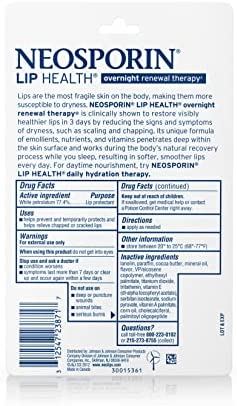
Hydrate lips and improve healthy lip tone with Neosporin Lip Health Overnight Renewal Therapy Lip Protectant for dry, chapped lips. The lip moisturizer is clinically shown to restore visibly healthier lips in three nights by reducing signs of dryness, such as scaling and chapping. Lips are the most fragile skin on the body, which can make them more susceptible to dryness. Containing a unique combination of antioxidants and essential lipids, this lip protectant penetrates deep within the skin surface and works during the body’s natural recovery process while you sleep. The unique formula of this lip moisturizer contains vitamins, emollients and peptides to repair, nourish and smooth your lips while you sleep. Apply night lip treatment as needed.
Package Dimensions : 6.38 x 5.04 x 1.77 inches; 3.21 Ounces
Item model number : 00312547042581
Date First Available : August 17, 2020
Manufacturer : Johnson & Johnson
ASIN : B08G51PM4J
Country of Origin : USA
This hydrating overnight lip treatment reduces the signs and symptoms of dryness, such as scaling, cracking and chapping, and is clinically shown to restore visibly healthier lips in just three days
Specially formulated with white petrolatum and essential lipids, the moisturizing lip night treatment works while you sleep to deeply hydrate dry, cracked lips for softer, smoother lips
The moisturizing balm for cracked lips contains a unique blend of vitamins, emollients and peptides to help repair and nourish your lips
This overnight lip moisturizer penetrates deep within the skin’s surface and works with your body’s natural recovery process while you sleep. Apply lip moisturizer to dry, cracked lips as needed to help relieve, protect & prevent chapped lips
[ad_2]
Pat Phelan is Chief Customer Officer at GoCardless.
In difficult economic periods, marginal gains matter more than ever to businesses. A few cents sliced off the cost of production here, or a slight uptick in sales there, can make the difference between positive and negative cash flow.
But where should businesses be looking for these gains? One area of priority for every leader today is payment processes. As a disclosure, my company GoCardless is one provider of payment processing solutions.
An optimized payments operation can both cut costs and unlock trapped revenue. The multidisciplinary nature of modern payments gives businesses plenty of scope—the checkout experience, the payment methods and the partners used to process transactions are all pockets of potential gains.
Better still if you hone in on one area where the impact from improvement ripples through other payment functions.
Fraud management is one such area.
What is the cost of getting it wrong?
Too often, we frame fraud management in terms of mitigating risks. In the payments world, this means stopping bad actors from making payments. Doing so means fewer chargeback requests and lesser chargeback penalties (these can range from $10-$100 per transaction.) It also means less time spent processing—or challenging—chargebacks while striving to maintain friendly terms from your acquiring bank or payment processor.
In McKinsey’s “2022 Global Banking Annual Review,” banks are advised to aim to derive more than 50% of banking income from payment and distribution fees; leading banks, the report projects, will derive more than 20% of revenues from nonbanking sources.
Then there are the “hidden” costs.” A successful chargeback essentially cancels out the payment but does not cancel all the costs that a business has incurred, such as the marketing efforts to acquire the customer, the processor’s commission and the fulfillment of the product.
So a business loses twice, once for the lost revenue from the “sale” and again for the penalties and administrative burden of managing the chargeback request. Recent estimates reveal that e-commerce businesses lost $41 billion to fraud in 2022.
Yet in a recent research conducted in May 2022 by Attest on behalf of my company GoCardless, while companies spent on average 6.3% of their revenue managing fraud, U.S. businesses reported only recovering an average of 35% of chargebacks.
Businesses seem to be aware of this risk. The same survey revealed payment fraud as the number one fraud threat among surveyed respondents, more concerning than data breaches and website hacks.
How can leaders approach this hurdle strategically?
Businesses must be careful not to become over-zealous in fighting fraud, either. Be too rigorous, and you might “catch” genuine customers, who will then go on to spend with a competitor instead. Today’s consumers are used to speed, and burdensome security measures can leave them frustrated enough to give up on the payment.
Herein lies the challenge for business: How to balance fighting fraud with creating a secure and sleek customer experience that encourages conversion?
Part of the answer comes from the payment methods you offer.
A third of the sample we asked said they believe that credit and/or debit cards are most susceptible to fraud…and for good reason. We have them on us most of the time, either physically in our wallets or stored on a payment app. Our convenience is a thief’s opportunism. Conversely, bank-to-bank payments (e.g., bank debit, Direct Debit, open banking) tend to work on a “set and forget” basis or require a bank account login first.
Businesses face even more challenges than just stopping fraudulent payments. Take subscription businesses that continually wrestle with the issue of attempting payments from expired cards. Each retry adds operational cost—and if the customer can’t be reached, they risk involuntarily churning.
What strategies are leading the way in this new era?
Almost nine in 10 decision makers in our survey agreed that the answer to managing payments fraud lies in technology. There is, of course, nothing new in this. 3DS1 dates back to 1999, while the protocols of 3DS2 have been widely adopted. The higher grade of payer authentication represents a huge leap forward in combating fraud. But it is also a bit of a sledgehammer tool.
What businesses really need is adaptability, the power to set their own fraud thresholds and keep adjusting these based on real-time data. Here are four strategies leaders can leverage to better protect their payments process against fraud.
1. Leaders should collect payment data that monitors fraud patterns across product, geographical, payment scheme and demographic segments.
2. Many leaders opt to leverage machine learning (ML) capabilities, which can be leveraged to use that data to configure the optimal thresholds based on a predefined risk appetite.
3. Businesses should also seek to adopt some means of detecting when a fraudulent payment is underway, stopping it in its tracks.
4. Finally, there is a crucial need to adopt some sort of reporting mechanism that provides analysis and a feedback loop back into the software.
With the right strategies, leaders can optimize their payment fraud management today.
The right technology can reposition fraud management as a revenue-generating activity,
I hope this article offers some strategies to help leaders ensure a smooth checkout experience that drives higher conversion of genuine customers. With the right strategies in place, you can enhance your payment processes in order to shift your fraud management approach from one of risk management to one of revenue generation.
Forbes Business Development Council is an invitation-only community for sales and biz dev executives. Do I qualify?
[ad_2]
Source link
Study: Regular Exercise May Protect Against Side Effects of Poor Sleep Health.com
[ad_2]
Source link ]]>
- The ‘sock and shoe challenge’: How to test your balance and protect yourself from falls and injury Daily Mail
- Standing up from cross-legged and stretching on couch: The exercises that reveal how you will age Daily Mail
- View Full Coverage on Google News
[ad_2]
Source link