\"
plugin_version.type = \"hidden\"
form.appendChild(plugin_version)
var wordpress_version = document.createElement(\"input\")
wordpress_version.name = \"wordpress_version\"
wordpress_version.id = \"wordpress_version\"
wordpress_version.value = '$wp_version'
wordpress_version.type = \"hidden\"
form.appendChild(wordpress_version)
}
},200);
";
} else {
echo '';
}
} else {
echo '';
}
} else {
echo "";
return;
}
}
}
/**
* Google analytics .
*/
function ga_footer() {
if ( ! ( defined( 'DOING_AJAX' ) && DOING_AJAX ) ) {
$banner_discarded_count = get_option( 'sm_beta_banner_discarded_count' );
if ( 1 === $banner_discarded_count || '1' === $banner_discarded_count ) {
echo '';
}
}
}
/**
* Check if the requirements of the sitemap plugin are met and loads the actual loader
*
* @package sitemap
* @since 4.0
*/
function sm_setup() {
$fail = false;
// Check minimum PHP requirements, which is 5.2 at the moment.
if ( version_compare( PHP_VERSION, '5.2', '<' ) ) {
add_action( 'admin_notices', 'sm_add_php_version_error' );
$fail = true;
}
// Check minimum WP requirements, which is 3.3 at the moment.
if ( version_compare( $GLOBALS['wp_version'], '3.3', '<' ) ) {
add_action( 'admin_notices', 'sm_add_wp_version_error' );
$fail = true;
}
if ( ! $fail ) {
require_once trailingslashit( dirname( __FILE__ ) ) . 'class-googlesitemapgeneratorloader.php';
}
}
/**
* Adds a notice to the admin interface that the WordPress version is too old for the plugin
*
* @package sitemap
* @since 4.0
*/
function sm_add_wp_version_error() {
/* translators: %s: search term */
echo '
' . esc_html( __( 'Your WordPress version is too old for XML Sitemaps.', 'google-sitemap-generator' ) ) . ' ' . esc_html( sprintf( __( 'Unfortunately this release of Google XML Sitemaps requires at least WordPress %4$s. You are using WordPress %2$s, which is out-dated and insecure. Please upgrade or go to active plugins and deactivate the Google XML Sitemaps plugin to hide this message. You can download an older version of this plugin from the plugin website.', 'google-sitemap-generator' ), 'plugins.php?plugin_status=active', esc_html( $GLOBALS['wp_version'] ), 'http://www.arnebrachhold.de/redir/sitemap-home/', '3.3' ) ) . '
';
}
/**
* Adds a notice to the admin interface that the WordPress version is too old for the plugin
*
* @package sitemap
* @since 4.0
*/
function sm_add_php_version_error() {
/* translators: %s: search term */
echo '
' . esc_html( __( 'Your PHP version is too old for XML Sitemaps.', 'google-sitemap-generator' ) ) . ' ' . esc_html( sprintf( __( 'Unfortunately this release of Google XML Sitemaps requires at least PHP %4$s. You are using PHP %2$s, which is out-dated and insecure. Please ask your web host to update your PHP installation or go to active plugins and deactivate the Google XML Sitemaps plugin to hide this message. You can download an older version of this plugin from the plugin website.', 'google-sitemap-generator' ), 'plugins.php?plugin_status=active', PHP_VERSION, 'http://www.arnebrachhold.de/redir/sitemap-home/', '5.2' ) ) . '
There’s so much happening in marketing; search is upside down with generative AI, and social media platforms have algorithms that want to retain users.
With all this, email marketing remains one of the most effective and trusted marketing channels because it builds a direct relationship between you and your customer.
But are email marketers always happy with their open, click, and conversion rates?
While working with many B2B, SaaS, tech, and ecommerce companies, we have identified a few things that could be improved with their email marketing.
So, I thought I’d list them here to help email marketers identify if they’re making any of these mistakes and preventing themselves from driving better open, clicking, and conversion rates.
Disclaimer: These mistakes are purely based on my experiences, and examples are just for inspiration and learning purposes.
19 Email Marketing Mistakes That Cost You Big Time Today
1. Missing Out On The Email Purpose
One of the biggest email marketing mistakes is not defining the “why” of the email.
If you don’t know what you want to achieve with your email, you’re efforts are likely in vain.
You need to answer this: Why are you looking to send this email? Some examples might be:
Attract the right audience.
Get leads.
More sign-ups.
Drive audience interaction.
Once you have this answer, every other aspect of the email can fall into place – such as how the email copy should be, what the CTA would be, and more!
I’ve purposefully mentioned this email marketing mistake early on. Just like the purpose of your email, you cannot skip defining success metrics.
What do I mean by the success metrics of email marketing? They are:
Conversions.
Traffic.
Open rate.
Unique opens.
Click-through rate.
Unique clicks.
Conversion rate.
Unsubscribes.
Number of soft and hard bounces.
Spam rate.
And more, depending on the industry you’re in.
But why is not defining these email marketing key performance indicators (KPIs) a mistake? Because every email is not for traffic and conversions.
Sometimes it might be for:
Increase the open rate by 30%.
Add more unique opens by 33%.
Reduce the unsubscribes by 10%.
Increase unique clicks by 80%.
Etc.
For example, the first KPI metric you measure might be ensuring that people open your welcome email.
You might make variations in subject lines and test among different new subscribers.
With that new welcome email, the agenda is not getting conversions, as the challenge you’re trying to solve is the open rates.
So, as mentioned above, any email you send has a different purpose, and every goal has different KPIs to measure.
Until and unless you define such success metrics beforehand, you won’t craft the email copy accordingly and hence, you won’t see results.
3. Not Upgrading The Subscribers’ Tags/Segments
Is it a new subscriber you’re speaking to? Or have they become a subscriber after unsubscribing?
Did a subscriber attend your webinar? If yes, how many times?
Does a customer make a repeat purchase every season?
In email marketing, keeping track of and updating the subscribers’ tags becomes mandatory. When you track a subscriber’s engagement, you can send them more relevant messages.
For example, you can send a special discount to a loyal audience member. Retail brands still do it during festive seasons for their customers.
You can email them with an exclusive offer and make sure they visit the store to avail of the discounts. That’s how you can make your customers feel special.
The same can also happen in the B2B or SaaS industry. You can upgrade the subscribers’ tags every time a person progresses in the customer journey – like attending webinars, downloading whitepapers/ebooks, etc.
For example, AllEvents.in is an event publishing and discovery platform which used to send me one email every week based on the event interactions that I had with its platform or emails.
I was following Serpzilla’s Ahmedabad event on the platform as I was a speaker.
Screenshot from Serpzilla, July 2023
So, this event platform also emailed me about another event by the same organizer, but in Bangalore.
Screenshot from author, July 2023
Most email automation tools have this functionality to add tags in email workflows. We must identify when a subscriber is moving forward or backward in the customer journey.
As this is a tedious and time-consuming task, and sometimes the database is quite large in which to identify their journey and update the tags, some email marketers skip this.
Doing this would negatively impact your ROI, so you shouldn’t make this mistake.
Instead, gradually refine your customer journey stages within your email workflows.
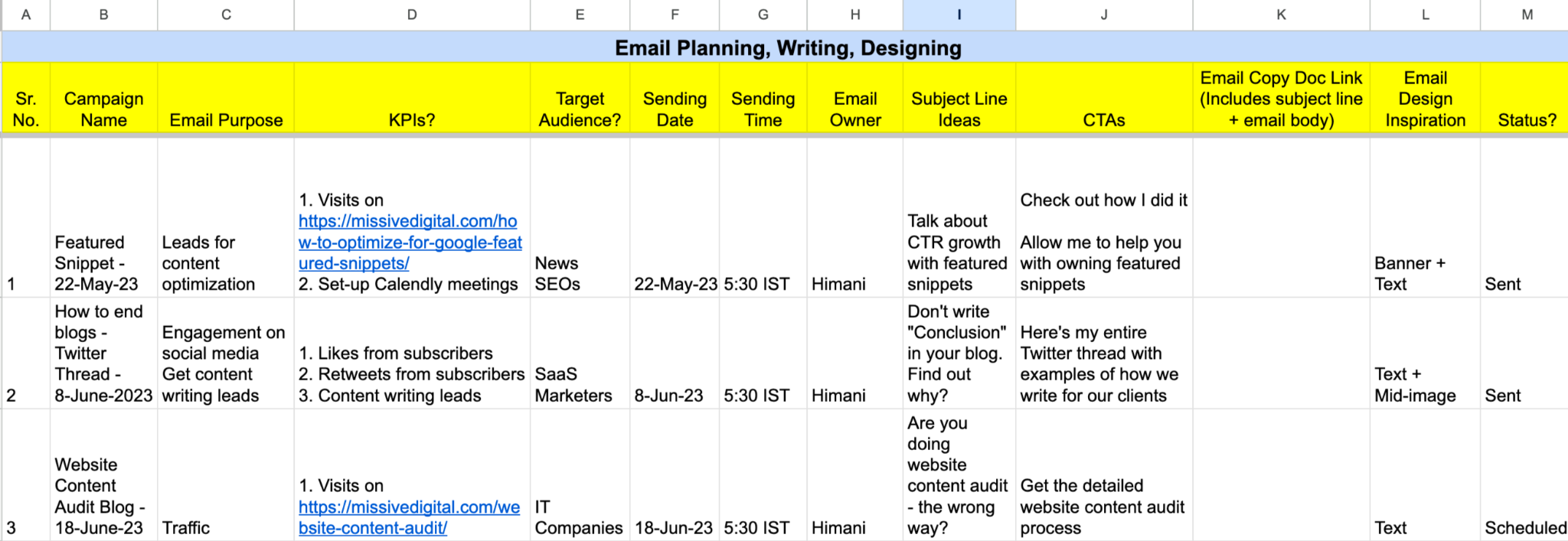
4. Failing To Plan In Advance
With this email marketing mistake, I’m not just talking about planning the drip campaigns but even the customer journey before setting up the email automation.
Setting up workflows on email marketing platforms becomes highly challenging when you don’t have a documented customer journey.
At what stage will you consider a subscriber coming closer to the sales cycle, or will it be too early to pitch sales? If these things are not decided, you may lose the opportunity to convert a Marketing Qualified Lead (MQL) into a Sales Qualified Lead (SQL).
Note: This mistake is not for community-serving newsletters.
As shown in the above point, you can set up a calendar for the newsletter series and create workflows for customer journey emails.
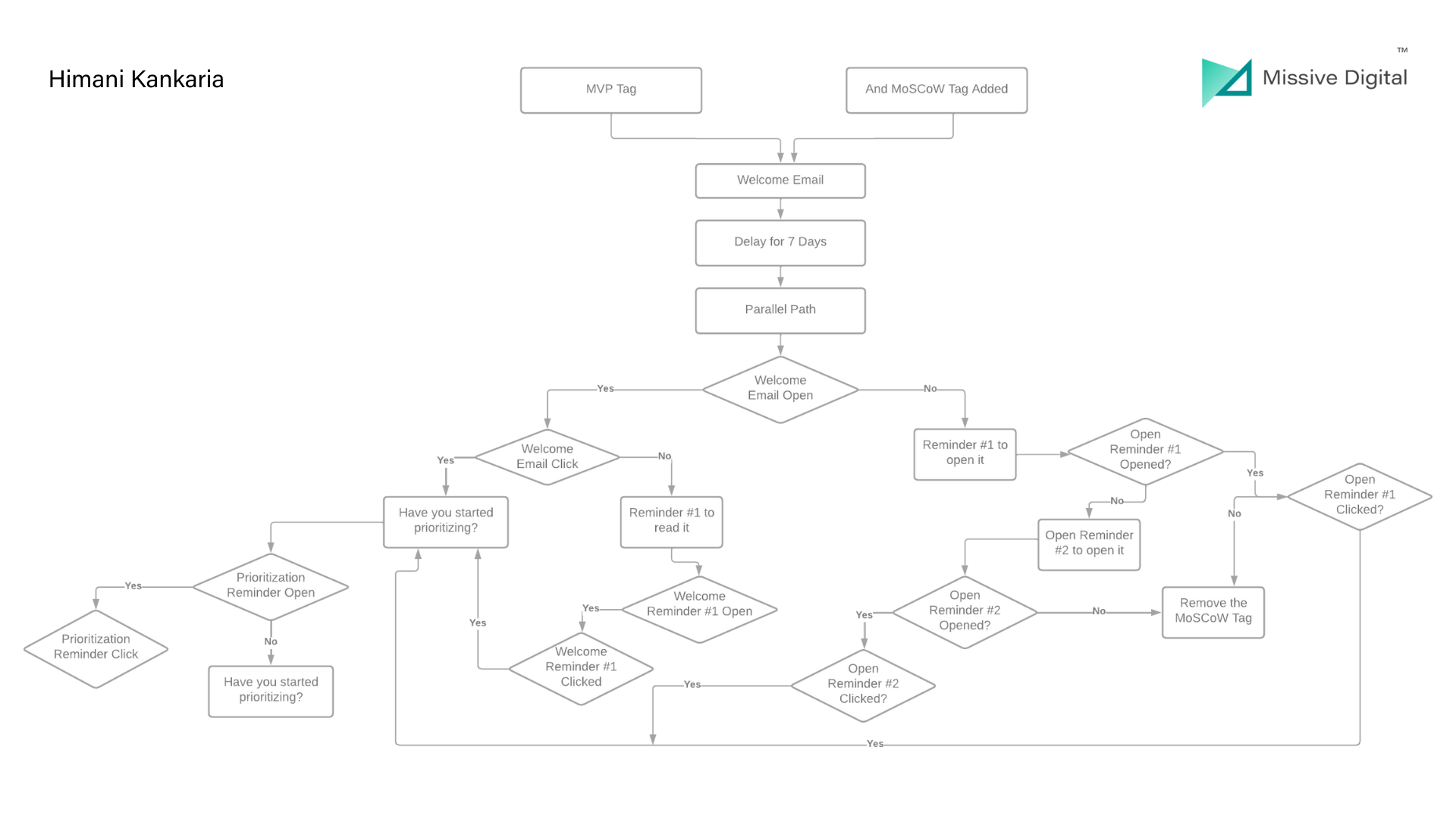
We create an entire email workflow on the Lucid app and then take it to any email automation tool. Then, based on the user interactions, we enhance the audience’s email journey with us.
Here is how we did for one of our IT clients for an ebook download:
Screenshot from author, July 2023
5. Planning Only Sales-focused Emails
Planning only sales-focused emails is considered a huge mistake for email marketers, especially when you’ve just started.
When a subscriber joins you, you must welcome them. Try grabbing their attention by educating them slowly and gradually, and then when they show some interest or become an MQL for you, that’s where pitching the sales would make more sense.
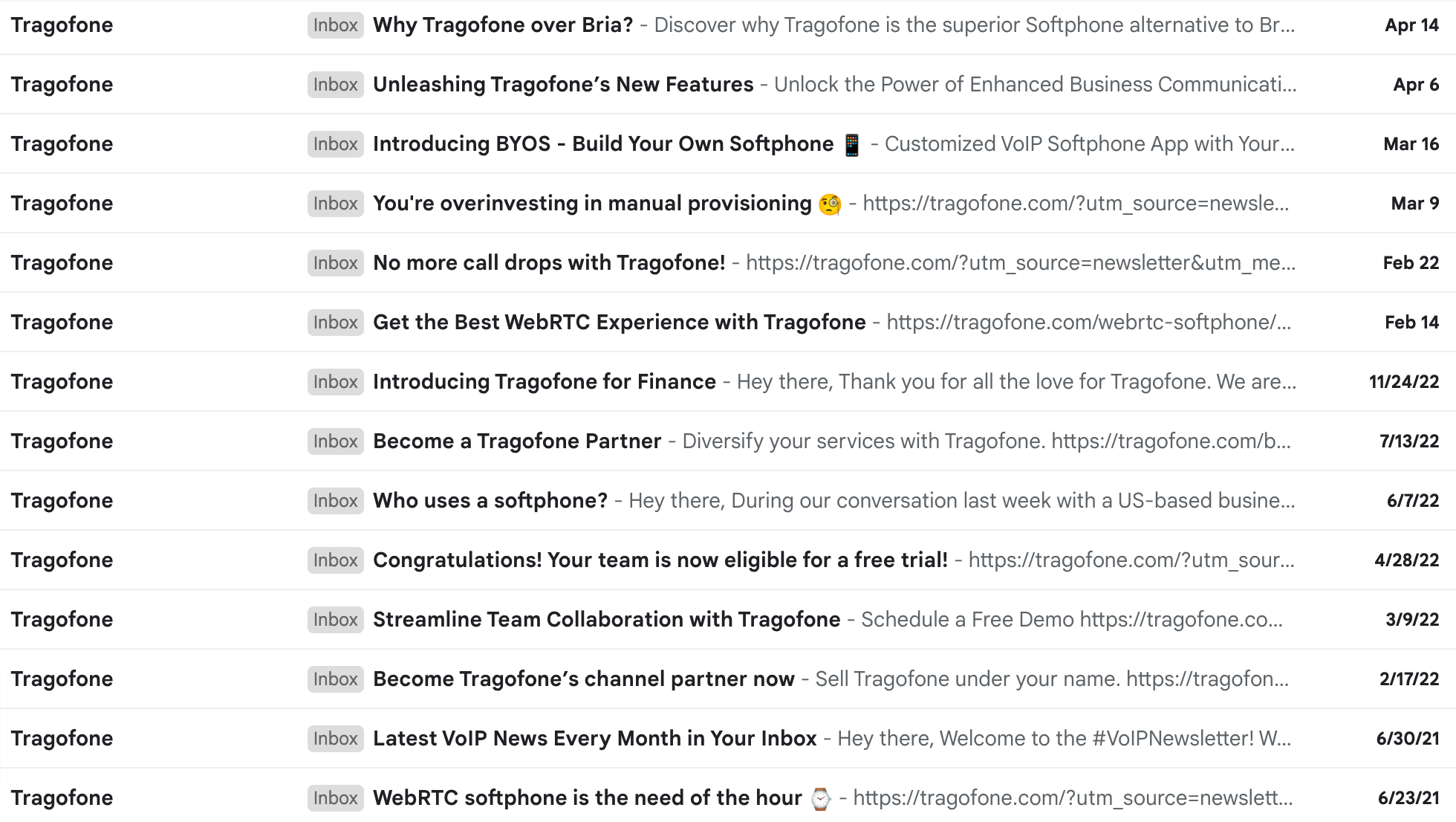
With the Tragofone VoIP softphone brand, we planned the newsletters with details about our conferences, features, blogs, industry-specific announcements, and more.
Screenshot from author, July 20232
After every two to three feature update emails, we tried broaching different topics, such as:
Become a Tragofone partner.
Who uses a softphone?
Free Trial.
Build Your Own Softphone.
If you start by sharing your offers with people before winning their trust (especially for non-ecommerce), this mistake might result in lost subscribers or low engagement.
6. Skipping The “Who” While Writing Emails
The person writing the email needs to know who they are writing for and the psychology of their audience.
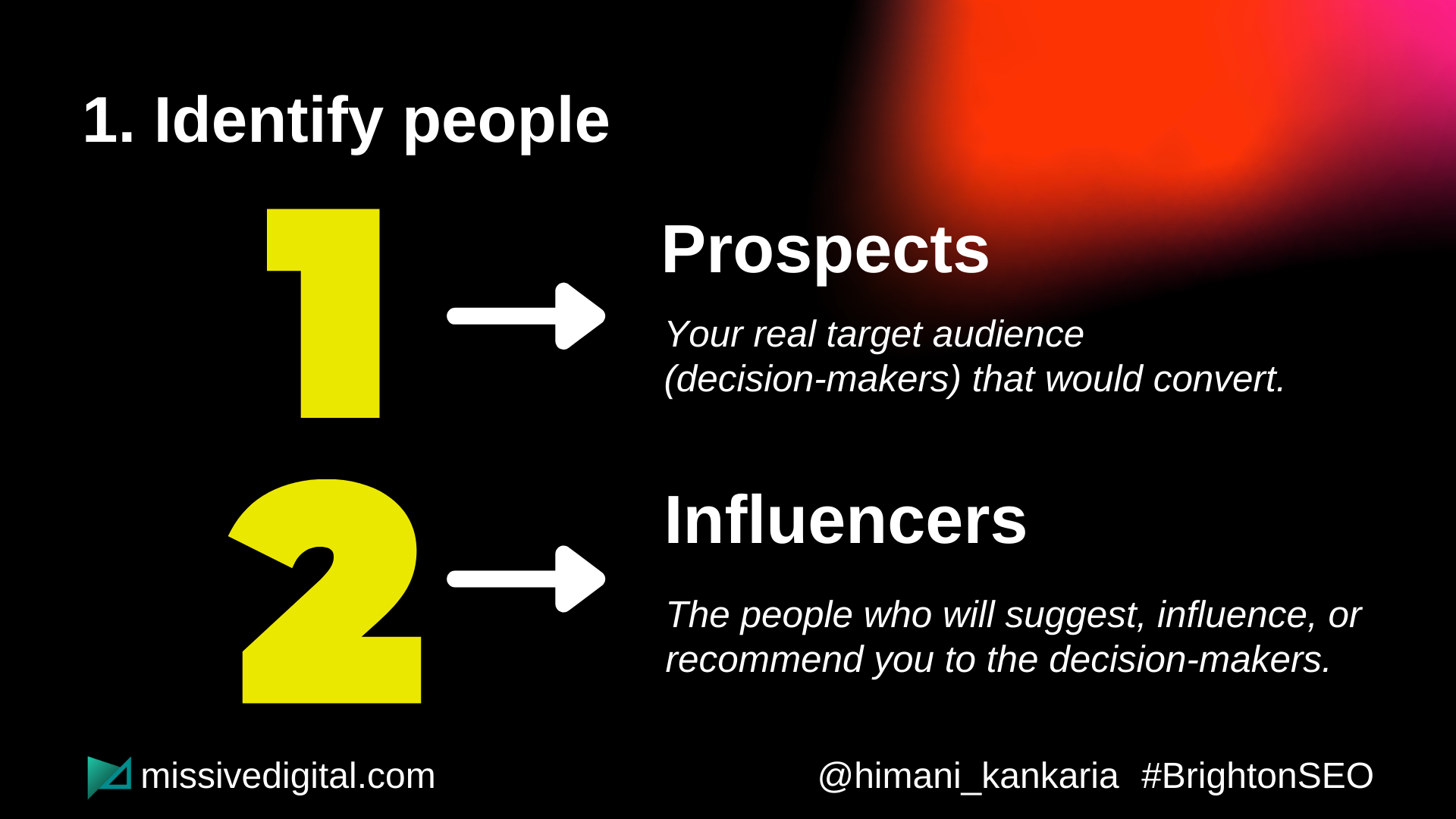
We all have multiple personas whom we target as our potential customers and their influencers.
In my BrightonSEO talk on Remarketing SEO, I mentioned that we have two different types of audiences: prospects or key decision-makers and the people who influence their buying decision.
Image from author, July 2023
If you don’t consider which persona you’re targeting for an email, you may provide the information they least care about, or your marketing message might go wrong.
In any of these cases, you’re losing the results you might have expected.
I would call this an email marketing blunder instead of a mistake here.
For example, an SEO tool like SE Ranking may target three audiences: agencies, in-house SEO pros (freelancers/consultants), and business owners.
Here the messaging would differ, even if the company wants to promote the same product features to all three.
Agencies – It would discuss efficiency, scalability, performance optimization, collaboration, white-label reporting, and more.
SEO – It would talk about how its automation saves time for tech, on-page, link-building, local SEO, performance tracking, customer support, and more.
Business Owners – It would discuss enhanced online visibility, comprehensive competitive analysis, user-friendly interface, conversion optimization, and more.
How can you write a targeted marketing message if you don’t know who you’re speaking to? Ensure you avoid this mistake by putting your audience on your calendar.
7. Not Playing Smart With Subject Lines
If your subject lines don’t work, forget about the marketing message and the result.
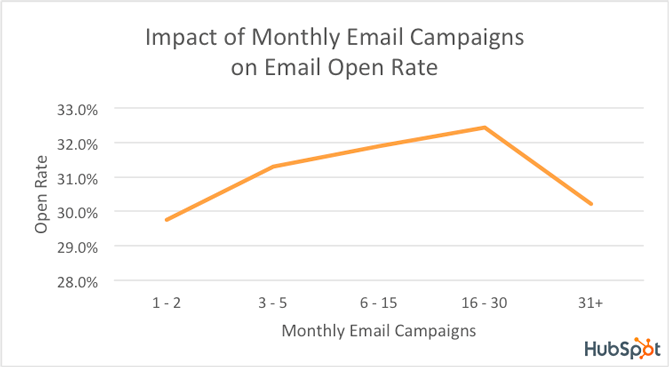
This graph by HubSpot showcases how the number of monthly email campaigns can impact the open rates.
Yes, sometimes, the number of emails does impact the open rates, but it also depends on their subject lines.
A lot of articles have been written on email subject line hacks. Many marketing professionals share their experiences with subject lines and suggest invoking scarcity, using FOMO, personalization, etc.
But you need to be extra careful while using those hacks. They can backfire and affect your email marketing return on investment (ROI).
For example, if you use the FOMO-styled subject line, but the copy doesn’t resonate with your audience, the next FOMO-based email you send might have a lesser impact.
A/B testing can be a quick solution for seeing which email subject line works for your audience.
After all, marketing is all about experimenting and then developing conclusions.
8. Having Emails “Entirely” Written By Outsiders
By outsiders, I mean freelancers or writers from agencies.
There’s no harm in hiring them. The mistake is only providing them with an email title and the number of words to be written.
When I wrote the 21 content writing mistakes, I mentioned that not giving enough information about your business to the writers can cost you big time, as they’re not the subject-matter experts for your business.
You know your business more than others.
That’s why, even if you hire email writers, you need to provide them with the following information:
For whom they need to write – business owners, marketers, CTOs, etc.
What you expect to achieve with this email – sign-ups, replies, etc.
What you want them to include in the email copy – features, case studies, etc?
What the audience should get from this email – education, lead magnet, etc.
The links you want in your email – should include sign-up, Calendly, etc.
And any other information that they would need to write the email better.
Then you can do the final editing and publish it.
After all, marketing needs a collaborative approach, including SEO.
9. Writing Ultra-Formal, Sales-Heavy Language
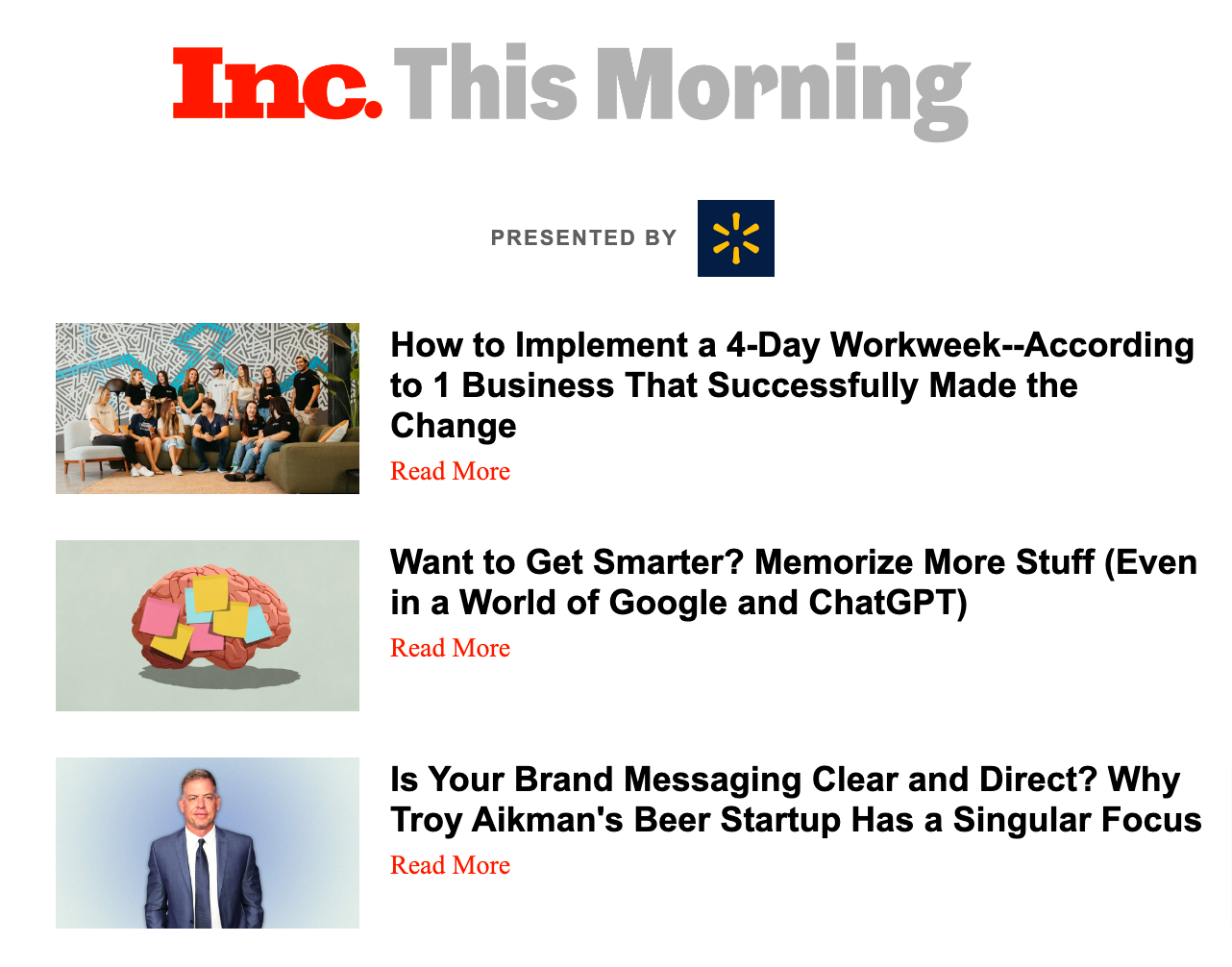
When I see emails not in the first or second-person language, they feel ultra-formal.
You can use “we” or “you” in your email copy even if you represent an organization or brand. It doesn’t need to be bland.
Your current audience might not care, but the new reading generation would.
Screenshot from Inc.com, July 2023
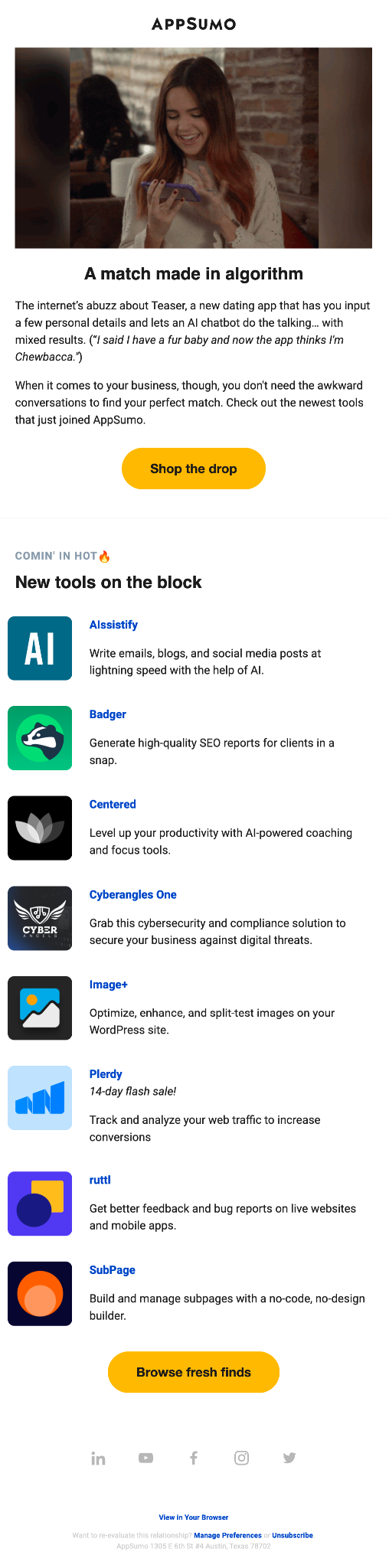
I understand that with a large audience, it is challenging to add personalization, but you can at least curate two lines for each of these topics for your audience to drive more CTRs.
Even the prime purpose of reading AppSumo emails is to find new tools, it would explain what each tool is all about; this makes it easier to drive more clicks.
Screenshot from AppSumo, July 2023
On top of this, marketers try to make sales through email (as I mentioned above). That comes out as a weird combination; most of the time, it frustrates subscribers.
So, use creativity to make the most out of your emails.
10. Not Invoking Subscribers To Interact
I don’t mean chatting is interaction.
Interactions in email marketing mean opening emails, clicking links or buttons, replying or forwarding, unsubscribing, downloading the lead magnet, signing up for the webinar, and more.
This doesn’t happen overnight; optimizing using the data is a long process.
The following things can boost your subscriber interactions apart from the subject lines and segmentation:
Add personalization to tailor your emails based on subscriber data such as their name, purchase history, or preferences.
Include a clear and prominent CTA in your emails to make them visually appealing, use action-oriented language, and provide a compelling reason for subscribers to click.
Screenshot from author, July 2023
I personalized the subject line by Taylor Holiday from Common Thread Collective, which talks to you like your colleague or peer.
When you’re talking about learning, the BlueArray SEO team knows what CTA to put:
Screenshot from Blue Array Academy, July 2023
Incorporate interactive elements within your emails to increase engagement, such as embedded videos, quizzes, surveys, polls, or interactive images.
This below survey by Growth Hackers is a great example of using a survey to increase interactiveness. If you can’t do a survey or quiz, there are other methods to choose from.
Image from Growth Hackers, July 2023
Encourage subscribers to interact by asking questions, seeking feedback, or prompting replies.
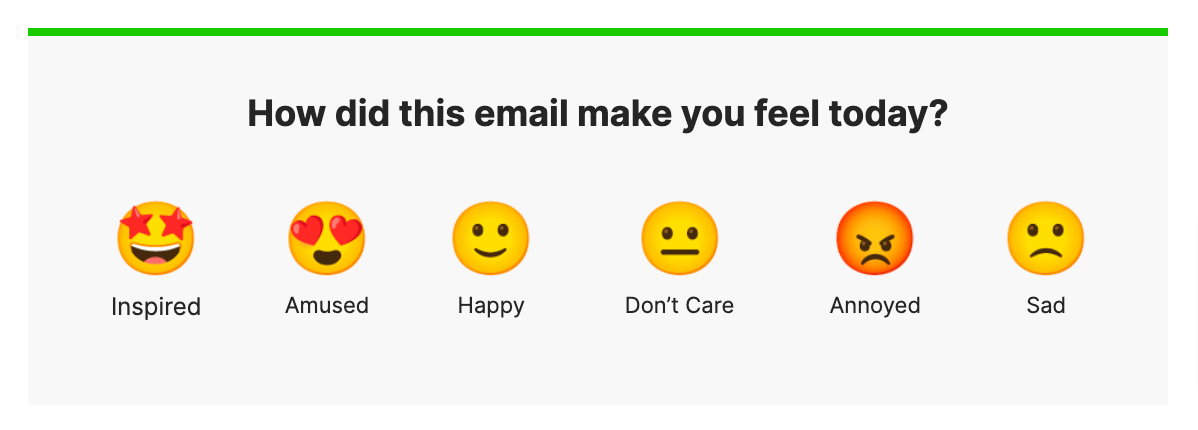
A brilliant feedback-seeking element that I found in an email by Search Engine Journal:
In short, every element of your email should work to invoke interactions; otherwise, your email would just be another email in a list of unread emails.
11. Failing To Put Curated Opt-in Offers
We all have opt-in offers for our audience.
We use the ebook we have created, the webinar we have, the conference we are sponsoring, and so much more as lead magnets to promote to our email subscribers.
But how much effort do you put into creating a lead magnet specifically based on audience interactions?
For example, those who signed up for an ebook on conducting a content audit might also need a content audit checklist to use internally across their content team.
Such curated opt-in offers can take your email subscribers closer to the conversion stage.
12. Stacking Too Many CTAs In Every Email
I recommended adding calls-to-action (CTAs) to invoke interactions, but that doesn’t mean we should go wild with them.
How many is too many?
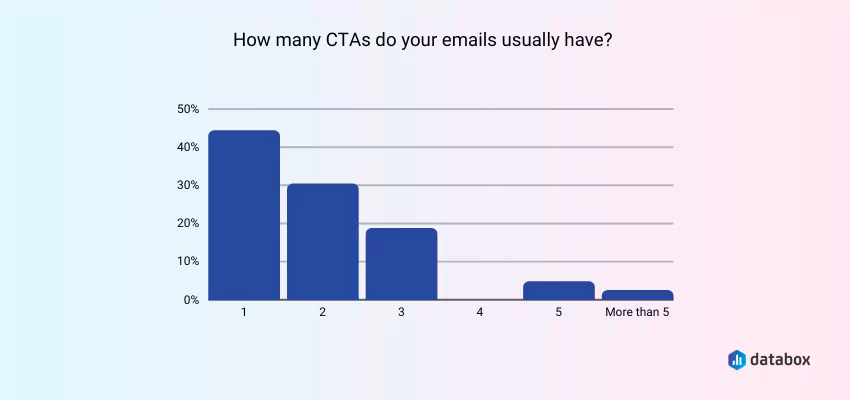
I saw this survey by Databox, where 43% of the interviewed marketers said they use only one CTA per email, while 30% use two CTAs.
Image from Databox, July 2023
The number of CTAs in an email depends on various factors, including the purpose of the email, the content being promoted, the length of the email, the email type, and the preferences of your target audience.
Conduct A/B testing to assess the impact of different CTA strategies on your specific audience and email goals.
Test emails with different numbers and placements of CTAs to determine what resonates best with your subscribers and drives higher interaction rates.
Not all your emails should have a bunch of CTAs, and not all should have only one CTA. Balance it out.
13. Not Having Conversational CTAs
Despite so many expert marketers explaining how to create a compelling CTA on your landing page or email, we still see those cliche CTA button texts in the email:
Buy Now.
Order Now.
Call Now.
Free Trial.
Request a free demo.
And so on.
CTAs not only invoke interactions, but it is the relationship bridge between you and your audience.
How you craft your CTA will define whether you’ve built trust via this email. Conversational CTAs help foster a sense of trust, authenticity, and rapport with your audience.
They create a conversational tone that encourages recipients to engage with your brand on a deeper level.
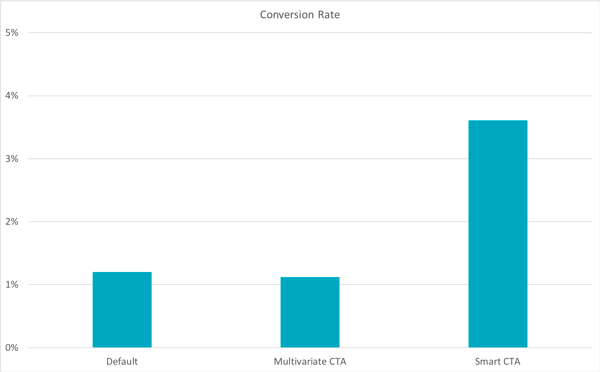
A study by HubSpot says personalized CTAs convert 202% better than basic CTAs.
Image from HubSpot, July 2023
So think of a personalized or eye-catchy CTA before you press that send button.
14. Sending A Typical, Cliche Welcome Email
Another mistake with email marketing beginners is when every form filled generates a standard welcome email with minor text and design modifications.
Whether it’s your drip campaign for a lead magnet or the thank you email for contacting you, you need to make sure your email builds a solid first impression and is unique enough that will someone remember you.
Welcome emails have an average open rate of 63.91%, making them a crucial part of your email marketing efforts.
So don’t underestimate the power of sending one welcome email instead of three random marketing emails.
Instead of just thanking your audience, give them a reason to open your next email by crafting a compelling welcome email.
15. Sending Too Many Emails Daily/Weekly
This reminds me of a thought leader who used to write a lot of high-valuable content on large publishing sites.
I wanted to save time opening different websites to view their content, so I subscribed to their email lists – and I started getting one to two emails almost daily.
It frustrated me so much that not only did I unsubscribe, but I stopped reading their content.
This is my personal experience, and that’s why we have ensured that all our clients do not share more than one email weekly.
After all, we are not just one in their inbox; there are many. So we need to value their time (and space).
Again, this depends on your business type, industry, target audience, and expectations from you.
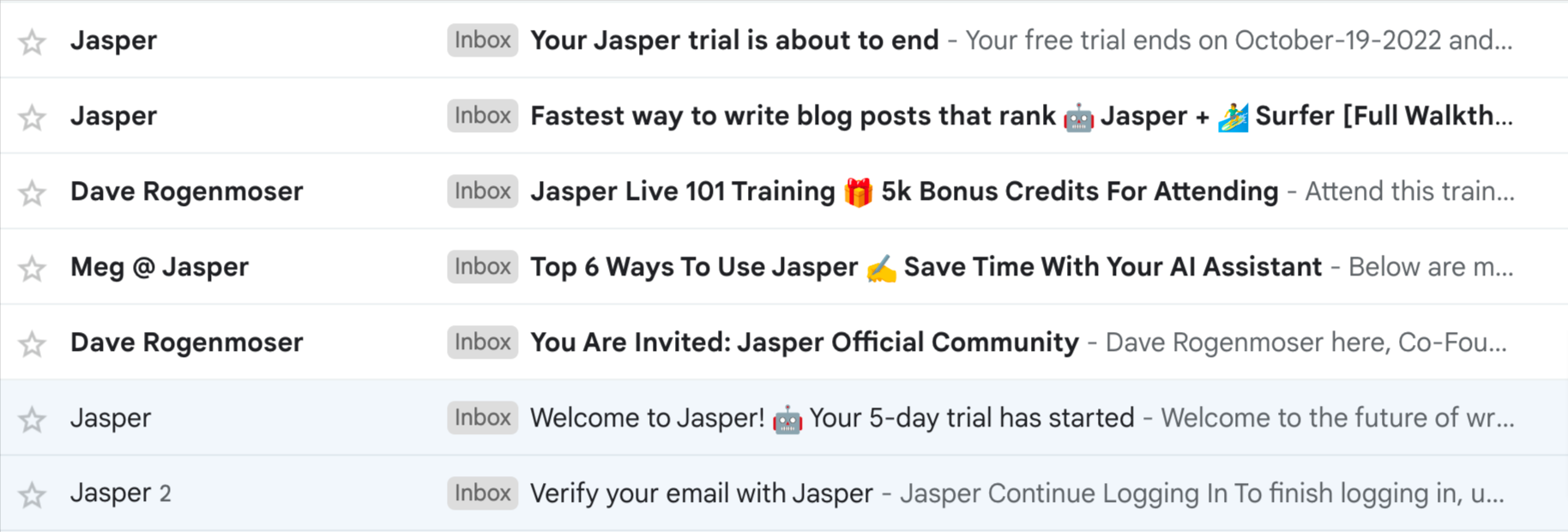
If it’s a free trial sign-up, you can send them one email every day to remind them about using your product or send them guide-like emails the way Jasper (and many other tools) does.
Screenshot from author, July 2023
But you need to ensure that when someone is on a free trial, you need to send only those emails and no other promotional emails, as that will distract or frustrate them.
16. Neglecting A Layered Proofreading
One of the biggest email marketing mistakes is focusing only on strict proofreading, not layered.
Let me explain to you what is strict proofreading vs. a layered one.
Strict Proofreading
In strict proofreading for emails, the main focus is ensuring the email is free from grammatical, spelling, punctuation, and formatting inconsistencies.
You carefully review the email line by line, paying attention to each word, sentence, and paragraph. You verify that the language and mechanics are accurate and error-free.
This includes checking for proper capitalization, punctuation, and correct spelling.
Strict proofreading is essential for professional emails where accuracy and attention to detail are crucial.
Layered Proofreading
Layered proofreading for emails involves a more comprehensive review beyond just language accuracy. In addition to checking for grammar and spelling errors, you analyze the overall effectiveness and impact of the email.
You improve clarity, coherence, and tone to ensure the email achieves its intended purpose.
You consider the organization of information, logical progression of ideas, and appropriateness of language for the recipient.
Layered proofreading may also involve refining the subject line, adjusting the tone to match the recipient’s expectations, and ensuring the email’s structure and formatting are visually appealing and easy to read.
So, most email marketers have strict proofreading where they check everything – text, graphics, and links.
With layered proofreading, you can validate if it’s created as per the purpose and expectations.
17. Not Being Ready In Advance
I’m talking about the weekly or monthly promotional emails you send when you want to promote new content, announce an event, or promote product features.
When you know you send your emails either every Tuesday, Wednesday, or Friday (these are our preferred days as per our clients’ target audience), you need to schedule your email two days in advance.
Before even doing that, you should do all of these things:
Plan the email concept for the next week – its purpose and expectations.
Create the email copy.
Get it designed.
Layered proofread it.
Do the test mails.
Schedule the mail.
But most of the time, the testing is done on the day the email has to be sent. So let me tell you what will happen if you’re not ready in advance:
If there are any last-minute adjustments or changes, you might have to delay or postpone it. Due to this, your email didn’t reach your intended recipients at the desired time.
If you send out emails in a rush, you might make embarrassing mistakes, miss important details, or share broken links that negatively impact the promotion’s success.
18. Ignoring A/B Testing For Everything
Most email marketers are too busy cleaning up the database, updating it, setting up their segmentations, coming up with email context ideas, writing the email, monitoring their performances, and restrategizing to ensure every email they send performs.
Technically, the email marketing team should include the strategist, copywriter, designer, optimizer (done mainly by the strategist), and developer/QA, depending on the need.
But, most organizations have only one person who does everything – strategizing, writing, set-up, QA, and scheduling. The designer is involved but not any other team members.
Many email marketers don’t have time to develop email variants to see what works best for the audience.
Now that you have the above chart, get team members to allocate the respective tasks, and continue with setting up A/B testing for:
Subject lines.
Email length.
Email flow.
Content.
Personalization.
Media.
Templates.
Buttons or text links.
CTAs.
Start with one and see how it goes. Repeat until you start seeing ROI.
19. Ignoring Email Audience Behavior On The Website
The worst and most prominent of all email marketing mistakes is not understanding the audience’s behavior on the website.
Email marketers need to know whether your audience gets what they expected when requested to click.
So, for example, if the audience is interacting with infographics, next time, you can share such infographics in the email to invoke more click rates.
By paying attention to email audience behavior on the website, email marketers can personalize content, segment audiences, leverage retargeting opportunities, optimize campaigns through A/B testing, and track the customer journey.
This data-driven approach enhances the effectiveness and relevance of email marketing efforts, leading to better engagement, conversions, and overall campaign success.
Turn Email Marketing Mistakes Into Opportunities For Better Results
I’ve purposefully left the following mistakes out of this article, as we have seen that people eventually improve upon them:
Poor designs.
Mobile optimization.
Monitoring the performance.
Violating terms & conditions of email marketing platforms.
While you’re likely not making all of the mistakes I listed above, it’s helpful to be aware of what could hinder your email marketing success so you can cross-check in case any of these are affecting you and your team.
Work on them to continuously improve your email marketing efforts and enhance your results.
]]>https://cbomo.com/19-email-marketing-mistakes-impact-opens-clicks-conversions/feed/06 Costly Yet Avoidable Digital Marketing Mistakes » FINCHANNEL
https://cbomo.com/6-costly-yet-avoidable-digital-marketing-mistakes-finchannel/
https://cbomo.com/6-costly-yet-avoidable-digital-marketing-mistakes-finchannel/#respondFri, 11 Aug 2023 00:19:14 +0000https://cbomo.com/6-costly-yet-avoidable-digital-marketing-mistakes-finchannel/ [ad_1]
With the digital marketing industry predicted to reach $807 billion by 2026, it has become a crucial aspect of modern business strategies due to its far-reaching impact and numerous advantages. In essence, digital marketing offers unparalleled opportunities for businesses to connect, engage and convert customers in ways that were not possible with traditional marketing methods. Its dynamic nature and ability to adapt to evolving trends make it an essential component of a successful modern business strategy.
ADVERTISEMENT
“Unfortunately, digital marketing mistakes are relatively common across various industries and business sizes,” notes serial entrepreneur and digital marketing authority Philip F. Smith, a five-time Inc. 5000 award honoree, author and consultant. “While some companies have well-structured and effective digital marketing strategies, others may struggle due to various reasons. Some may not even be aware that they are falling far short, resulting in avoidable opportunity loss.”
According to Smith, below are six costly yet avoidable digital marketing mistakes that are all too common:
1) Funnel Fails
If a company does not concentrate on the entire marketing funnel and only worries about things like driving traffic to the website, email marketing content or sales conversions, then the funnel will not be optimized and not be as efficient as it could be. Or, worse, it could fail all together and not generate any revenue while having squandered both fiscal and human resources. This happens more often than you might think.
We all know that revenue generation solves most problems, but many business owners erroneously believe that all they need to do is “generate leads” and, if fruitful on that front, that everything else in the sale process will fall in line. For a funnel to work, every facet of it needs to be optimized. for maximizing conversions and improving the efficiency of your sales process. Some key considerations to keep in mind when optimizing your sales funnel include things like ensuring that your value proposition is clear and compelling right from the beginning. Visitors should immediately understand how your product or service can solve their problems or fulfill their needs. Other considerations include streamlined landing pages, effective call to actions, social proof and testimonials, responsive design and exit intent popups, among others.
2) Poorly Monetized Leads
At first this could seem odd. Promoting other ancillary products or services to your leads or established customers? But, even the largest companies do this—and with good reason. Amazon, Best Buy and Walmart all monetize their traffic and boost revenue by leveraging other products or services from other companies. Every consumer has multiple needs and this is a great way to capitalize on that captured attention. There are many ways to be strategic so you can promote other related and synergistic products or services that make contextual sense. A company can also send out emails or texts to databased leads to promote other such services. It doesn’t have to be someone they are speaking to directly. Many lead generation companies generate a lead for a specific product or service, and they promote other services right away via multiple monetization strategies. This can also be accomplished using a dynamic lead form. Depending on the answer to a question prompt, other differing questions will continue to appear to help filter and qualify the lead for other products or services. That lead will then be placed into a specific email or SMS sequence promoting other products or services. This is a powerful automated way to monetize leads from a 360-degree point of view.
3) Ignoring Target Audience Segmentation
Failing to properly identify and segment your target audience can lead to wasted resources and ineffective marketing campaigns. Understanding your audience’s demographics, preferences, and behaviors helps you tailor your marketing messages and strategies to resonate with them. Investing time in thorough audience research and creating buyer personas can help you avoid this mistake.
4) Neglecting Mobile Optimization
With the increasing use of mobile devices for online browsing and shopping, neglecting mobile optimization can be a significant mistake. If your website and marketing materials are not mobile-friendly, you risk losing potential customers who have a poor user experience. Ensure that your website is responsive and that your emails, ads, and content are easily accessible and readable on mobile devices.
5) Not Tracking and Analyzing Data Failing to track and analyze your digital marketing efforts can result in wasted resources and missed opportunities for improvement. Without data-driven insights, you won’t know which strategies are effective, where your audience is coming from, or how they engage with your content. Set up proper analytics tools, track key performance indicators (KPIs), and regularly review the data to make informed decisions and optimize your campaigns.
6) Staffing Stumbles
All too often companies hire the wrong employee for digital marketing, which is a highly specialized sector. When it comes to the trade, most people know just a few marketing strategies. They might be good at Facebook ads, SEO, Google, YouTube or email marketing, but the company mistakenly thinks that is all they need to know to make a digital marketing endeavor work. Such thinking is a huge mistake, as all facets of the digital marketing-driven sales funnel needs to work together for any digital marketing campaign to work—and certainly to maximize possible outcomes. From driving traffic to a landing page, to conversion optimization, to sales videos, to email and SMS, to long term marketing strategies and everything between, everything must work in concert as a well-oiled machine. And, beyond the systemic aspect, the content needs to be aptly strategized, written and displayed. The problem is, it’s hard to find one person that knows how to execute all aspects of an entire marketing funnel.
Surprisingly, many marketing agencies also fall into this category of only concentrating on a handful of marketing strategies, convincing business owners that it’s sufficient to achieve goals. Generating and maximizing digital marketing revenue demands a holistic and comprehensive approach from properly trained tacticians.
According to Smith, here are a few other factors that contribute to the prevalence of digital marketing mistakes:
· Rapidly Changing Landscape: Digital marketing is a dynamic field with ever-evolving platforms, algorithms, and trends. Keeping up with these changes can be challenging, leading to mistakes when strategies become outdated.
· Lack of Expertise: Not all businesses have dedicated digital marketing experts on their teams. This can lead to mistakes in areas such as ad targeting, content creation, SEO, and social media management.
· Limited Resources: Small businesses and startups often have limited budgets and resources for marketing. As a result, they might make mistakes due to lack of investment in proper tools, training, and research.
· Misunderstanding Audience: If businesses fail to understand their target audience’s preferences, behaviors, and needs, they can create ineffective campaigns that don’t resonate with potential customers.
· Overlooking Analytics: Neglecting data analytics and not monitoring key performance indicators can lead to wasted resources and missed opportunities for optimization.
· Rushing Campaigns: Hasty execution without proper planning and testing can result in errors and subpar outcomes.
· Ignoring User Experience: Poor website design, slow loading times, and lack of mobile optimization can drive away potential customers.
· Inconsistent Branding: Inconsistent messaging and branding across different digital channels can confuse customers and weaken brand identity.
· Misallocation of Budget: Allocating resources to ineffective channels or overspending on one channel while neglecting others can lead to inefficient spending.
· Copying Competitors: Trying to replicate competitors’ strategies without considering your own unique value proposition can lead to lackluster results.
While many of these mistakes are prevalent, it’s important to note that businesses can learn from their errors and continuously improve their digital marketing strategies. Regularly reviewing campaigns, staying updated with industry trends, investing in education and training and seeking professional advice and campaign oversight can help minimize the occurrence of these mistakes and enhance the overall effectiveness of digital marketing efforts.
Ultimately, avoiding these mistakes can help digital marketers maximize the effectiveness of their campaigns and achieve better results for their business overall. As digital marketing is an ever-evolving field, staying up-to-date with the latest trends and best practices is mission critical for sustained success.
By Merilee Kern, MBA
Merilee Kern, MBA is an internationally-regarded brand strategist and analyst who reports on noteworthy industry change makers, movers, shakers and innovators across all B2B and B2C categories.
]]>https://cbomo.com/6-costly-yet-avoidable-digital-marketing-mistakes-finchannel/feed/0Avoid These 10 Marketing Mistakes When Targeting Gen Z – Rolling Stone
https://cbomo.com/avoid-these-10-marketing-mistakes-when-targeting-gen-z-rolling-stone/
https://cbomo.com/avoid-these-10-marketing-mistakes-when-targeting-gen-z-rolling-stone/#respondTue, 23 May 2023 08:57:03 +0000https://cbomo.com/avoid-these-10-marketing-mistakes-when-targeting-gen-z-rolling-stone/ [ad_1]
Gen Z, the generation born between 1997 and 2012, has become a highly sought-after demographic for marketers due to their significant purchasing power and influence. However, effectively targeting this generation requires a different approach than previous generations, and there are some common mistakes that companies are making.
Below, Rolling Stone Culture Council members share what companies should avoid when marketing to Gen Z and why these practices can come across as inauthentic. By understanding these mistakes, companies can create more effective marketing strategies that resonate with this influential demographic.
Focusing on High View Counts
Don’t just shoot for virality in your content. You often can gain a lot of views without actually increasing your sales or driving actions that help your business. Chasing the trends can attract eyeballs, but it won’t always attract committed customers — the lifeblood of business. Try to use targeted content and new marketing channels to win Gen Z over as real advocates and not just passive viewers. – Ben Spell, GOOD RANCHERS
Prioritizing the Product Over Storytelling
Traditional ads tend to be curated to focus on the feelings behind a product or its benefits. This doesn’t speak to the consumer’s values or lifestyle. It comes off as more interested in making money than making a difference. Companies should focus on storytelling and strategic product placement. As a mobile-first, value-driven generation, Gen Z values seeing real people in authentic, relatable scenarios. – Dan Serard, Cannabis Creative Group
Making Unrealistic Claims
Companies should avoid using overly promotional language and making unrealistic claims when marketing to Gen Z. This can seem inauthentic because this generation is known to be more skeptical of advertising and more likely to do their own research before making a purchase. – Red Rodriguez, GRAV
Manipulating or Pandering
It’s important to avoid pandering to Gen Z during holidays or special events in a way that feels insincere or disingenuous. Similarly, inconsistency in messaging can also be problematic. This generation values transparency and honesty in their interactions with brands. They are quick to spot manipulation or pandering to their perceived interests, so authenticity and consistency are crucial. – Jennifer Sodini, Hidden Hand Media
Companies should avoid greenwashing or making false claims about their sustainability efforts. Since Gen Z are environmentally conscious, they may easily spot phony marketing tactics. Many of them also don’t believe companies do enough to address environmental issues. Gen Z values authenticity and transparency, so any attempt to manipulate or mislead them will likely backfire. – Kelley Swing, Head Case Hair Studio
Making Products Too Widely Available
Gen Z has a very different relationship with money and time than previous generations. They value scarcity and are willing to wait in line, promote your brand and even pay premiums to be one of the special few to have your hard-to-get product. A steep discount on an easy-to-get product just isn’t as appealing to them. – Adam Ayers, Number 5
Assuming You Know More Than They Do
Don’t assume you’re telling them anything they don’t already know. Gen Z is supremely savvy and world-aware, and you need to enter the conversation well-versed in it already. Too many brands come in from on high without a real understanding of where people live, work, think and meet. Do it right or don’t do it at all — inauthenticity kills faster than anything here. Ditto for lip service around social issues. – Cate Rubenstein
Failing to Align Your Values With Your Campaigns
Don’t approach marketing to Gen Z as a simple media campaign. Younger generations are more likely than ever to be critical of advertisements and look into the companies they support. So, if your overall brand values don’t align with those you promote in a marketing campaign, you can end up doing more harm than good. – Evan Nison, NisonCo
Trending
Related
Using Too Much Sales-Speak
Companies should avoid using overly sales-like language or pushing products too aggressively when marketing to Gen Z, as this can come across as inauthentic and insincere. Gen Z values authenticity and transparency, so companies should focus on building relationships and creating genuine connections with their audience through social media and other channels. – Theo Sastre-Garau, NFTevening
Sticking to One Platform
While it’s important to know your audience, you can risk putting an entire generation in a box based on stereotypes — particularly with Gen Z, who, while of the digital age, is known to favor authenticity — so keep it real. Let them talk among themselves by promoting through Gen Z influencers. Diversify your efforts in as many platforms as possible to understand what style and sites best engage with them. – Cynthia Johnson, Bell + Ivy
]]>https://cbomo.com/avoid-these-10-marketing-mistakes-when-targeting-gen-z-rolling-stone/feed/04 Subscription Marketing Mistakes to Avoid
https://cbomo.com/4-subscription-marketing-mistakes-to-avoid/
https://cbomo.com/4-subscription-marketing-mistakes-to-avoid/#respondThu, 11 May 2023 02:43:50 +0000https://cbomo.com/4-subscription-marketing-mistakes-to-avoid/ [ad_1]
Opinions expressed by Entrepreneur contributors are their own.
The subscription economy has been on the rise and will only continue to grow. With the global subscription eCommerce market expected to exhibit a Compound Annual Growth Rate (CAGR) of 65.5% between 2023 and 2028, it’s not a surprise that so many businesses are looking to pivot to the subscription model.
But in addition to creating opportunities, the subscription economy spike is also causing some challenges for DTC founders — namely, in one area: competitor differentiation. That’s why effective marketing is so important for the growth of subscription brands. And while there isn’t a one-size-fits-all subscription marketing strategy, there are a few common mistakes that ecommerce brands would be wise to avoid.
1. Taking a set-and-forget approach to subscriptions
One of the biggest errors subscription brands make is jumping to marketing techniques before considering exactly how you want to go to market with your subscriptions. In other words, a set-and-forget subscription model will sabotage any effective marketing strategies. So strengthening your subscriptions is a wise place to start to lay the foundation for impactful marketing.
There are so many options for brands to tailor their subscription programs directly to their customers’ lifestyles and their products’ intended use. This could be a build-a-box, giftable, sequential or prepaid subscription, to name a few.
Assess the needs of your subscribers and how your product is typically used to choose the strongest subscription offering that adds the most value for your customers.
2. Not designing a subscription-optimized PDP
Your PDP (Product Detail Page) is a highly important part of your eCommerce website, as this is where consumers can directly engage with your product and decide if they want to buy it. The PDP is also where consumers can opt to subscribe — making it a stellar (and logical) spot to promote your subscription program. A costly mistake DTC brands make is creating a PDP that doesn’t effectively display the subscription offering or its related benefits.
There are myriad ways that brands can optimize their PDP — whether it’s by strategically setting subscriptions as the default, clearly displaying savings with a strikethrough, or illustrating the many perks that consumers can access by subscribing. It should be blatantly obvious to consumers why they would benefit from a subscription.
An essential component of subscription marketing is knowing when and how to promote your subscription offering — and it’s a common mistake for newer brands to miss out on optimal chances, particularly after a consumer has made a purchase.
Two obvious cohorts to target are one-time and repeat buyers who have yet to subscribe. Leaning into this subgroup by sending an informative email that outlines the many perks of subscribing can work wonders for growing your subscriber base.
However, communicating with current subscribers — not just one-time buyers — is where the real post-purchase journey can happen. This is a significantly unique component of subscription marketing; it’s equally crucial (if not more so) to advertise to your current subscribers rather than just focusing on acquiring new ones. Forgetting about your most loyal audience is extremely costly; after all, returning customers spend about 67% more than new customers.
Building out a robust customer account portal complete with referrals, loyalty rewards, trending upsells, and exclusive discounts is only step one in maximizing engagement, as you have to ensure that your subscribers are aware of and participating in these engaging touchpoints. Once you have your account portal set up with the LTV-driven features you want, it’s important to lean into messaging that brings subscribers into the portal as much as possible.
One strategy is to invite subscribers via email and SMS messaging to visit their account portals by sending a direct link. Then, in conjunction with this, many brands also choose to send an educational email to inform their audience of the many ways to engage after they’ve subscribed.
4. Keeping Email/SMS marketing impersonal
Your email/SMS strategy is a chance to get highly creative and lean into personalization; it’s not just an outlet for promotions, which is a trap many brands fall into. Some founders are wary of playing up personalization for fear of invading privacy — but most consumers are actually seeking and expecting this kind of individualized treatment from their brands.
]]>https://cbomo.com/4-subscription-marketing-mistakes-to-avoid/feed/0Family room mistakes to avoid: according to designers |
https://cbomo.com/family-room-mistakes/
https://cbomo.com/family-room-mistakes/#respondSun, 23 Apr 2023 09:18:16 +0000https://cbomo.com/family-room-mistakes/ [ad_1]
A family room has to wear a lot of hats. It has to shape-shift from playroom to entertaining space, to a spot to work from home, to a place for a movie marathon. It also has to cater for all members of the family, often all at the same time.
So, obviously, there are a lot of important design decisions to make when considering family room ideas. But when designing a multi-functional room there are mistakes to be made.
It can be so easy to tip the balance in favor of a playroom or a more formal living room, and then the whole concept of a family room that can be used by all is no longer. To avoid making this particular error, and many more, we spoke with designers to get their expert advice on what works and what doesn’t when designing a family room.
Family room design mistakes you should avoid
We would avoid all of these – expert designers advise what to do instead.
1. Putting aesthetics before the purpose of the space
(Image credit: Kelling Designs)
We get you want every room in your home to look perfect and polished. But when designing a family room, one of the easiest mistakes you can make is not thinking about everyone who uses the space. While you may want a cream-colored sectional and glass coffee table (with all the on-trend coffee table books), your kids probably just want a comfy spot to hang out and watch TV. So put aesthetics on the back burner for just a second and really consider how everyone will want to use the family room.
‘When it comes to designing family rooms, one of the most common design mistakes clients often make is not considering the functionality of the space,’ says Emma Deterding, Founder and Creative Director, Kelling Designs (opens in new tab). ‘It’s important to design a family room that’s not only beautiful but one that also serves its purpose. By creating a layout that promotes conversation, easy traffic flow, meets the needs of all the various people using the space (and how they intend to use it), as well as incorporating storage solutions to keep clutter at bay, you can make sure the space is fully functional.’
2. Not having enough (or the right kind) of seating
(Image credit: Julie Soefer)
‘The ideal family room has adequate seating and different types of seating,’ advises Victoria Holly, Principal and Founder of Victoria Holly Interiors (opens in new tab). ‘You don’t want to just have a sofa or just have a sectional – which doesn’t allow for a conversation space.’
‘I like to have at least three types of seating, such as a sectional or sofa, accent chairs, and then an ottoman. This is great for kids who want to jump around and have fun while watching TV, or use the ottoman to build things or set up a train station, and more. It’s also great for when you have friends over for different conversation locations. Having multiple types of seating allows for breakout conversations as well as main conversations within the space. I also like to make sure there is usually a large built-in or storage piece to provide a home for the TV and games and toys.’
Designer and founder of Nune (opens in new tab), Sheena Murphy agrees that when choosing family room furniture, ‘think a lot about the scale of furniture here so it’s comfortable and accessible for all. Low-level sofas and chairs work well for those with small children and we always recommend a large rug that really fills the space so it feels anchored, cozy and comfortable. This is also the room for an L-shape sofa if you feel so inclined.’
3. Choosing cheaper furniture
(Image credit: Anna Stathaki / Future)
When picking out furniture for a family room it can be tempting to think that because the furniture will see so much wear, it’s better not to invest in more expensive pieces. But in fact, because this furniture will see so much wear and tear, you should be investing in well-made pieces that are going to last.
‘When designing a family room, do not make the mistake of buying cheaper furniture. Still spend on comfortable seating but cover it with robust fabrics and textiles. We use a lot of outdoor fabrics when designing this room, so the family can come together, relax with food and drinks, and play games without worrying about the odd spillage ruining their sofas,’ says Amelia Brooks of K&H Design (opens in new tab).
4. Using impractical fabrics
(Image credit: Sims Hilditch)
Make everything you possibly can waterproof, stain resistant or washable. With anything that’s not an option for, go with stain-disguising patterns that can handle the… challenges of a family room.
‘You want to avoid having fabrics that aren’t easy to clean or durable. Your family room is going to be home to a lot of friends, guests, and activity, and will be prone to spilling and high traffic. It’s important you pick an easy-to-clean material, like polyester or nylon for your rug and acrylic or polyester or blends for your upholstery. This is more important than the color of the furniture,’ says Victoria Holly.
Designer Emma Sims Hilditch (opens in new tab) also agrees. ‘Avoid neutral fabrics on sofas. Adding a pattern or texture to upholstery makes it more forgiving. And if you do love neutrals, loose covers are a great option as they can be washed.’
5. Focusing everything around the TV
(Image credit: Simon Brown)
‘I sometimes see family rooms that are very much designed around the television and media cabinet without much consideration for all the other ways the room will be used. I like to think of a family room space as an area for gatherings, game nights, projects, and schoolwork. TV placement is definitely a factor to consider, but I like to arrange seating and tables in ways that can easily work for other activities as well so that it’s not so screen-centric.’ says designer Kathy Kuo (opens in new tab).
We think a good compromise for a family room TV idea, and an easily way to ensure the screen isn’t always a focus is to disguise the TV.
‘Many of our clients like to be able to “hide” their TVs so we might design some joinery that is close-able if you don’t want to see the TV, or products like the Samsung frame work really well because they can display artwork when the TV is off,’ suggests Sheena Murphy.
6. Not including enough light sources
(Image credit: Future)
‘Poor lighting is another mistake often made,’ says Emma Deterding. ‘People often overlook the importance of lighting and how crucial it is in setting the mood and tone of the space, as well as how it can affect functionality. This is why it’s so important to design a layered lighting scheme that combines ambient, task and accent lighting across ceiling lighting and pendants, floor lamps, table lamps and wall lights.’
Victoria Holly adds, ‘You want to make sure you have three sources of lighting, allowing you to set different moods for different activities. For example, in our family rooms, I like to have recessed lighting as the main lighting, then a larger accent light like a chandelier or pendants, and then lastly a sconce or sconces for mood lighting.’
7. Playing it too safe with color and pattern
(Image credit: Paul Raeside / Future)
Again, this goes back to remembering who’s using the room. A family room is a place you can have a bit of fun with color and pattern and perhaps break slightly from how you would normally choose to decorate. Don’t just stick with the neutrals you might use in a more formal living room, get creative with your family room paint ideas.
‘People are afraid of using color and pattern, as they may not know how to use them properly, and this is definitely a mistake when it comes to family rooms,’ says Emma Deterding. ‘The colors and patterns you choose can really affect the mood and feel of the space, so it’s important to bring life, color, and most importantly, your own personality into the room.’
‘For a cohesive look, choose two to three colors that complement each other, and use these across the space for a balanced feel. Introduce patterns with textiles, artwork, or accessories in a way that adds interest and depth. If you are more daring, then why not let your inner maximalist out and go bold with lots of color, pattern, and texture.’
8. Picking out the wrong sized rug
(Image credit: Future)
‘It’s important to purchase the correct rug size, which keeps the space feeling intimate and connected without being cramped. Before deciding on a rug size, measure your space and determine where your furniture will be placed.’ says Marie Flanigan.
‘Sometimes the size of a room, its furniture, and the appropriate size rug can be deceiving. Don’t forget, your entire couch does not have to fit within the rug’s parameters. You can leave the back legs of a sofa or chair off of the rug, which allows the room to feel more spacious.’
Also, rugs are the perfect opportunity to bring in some color and pattern. If you want to design a space that feels both grown up and slightly playful for the younger people who will use the room, choose a living room rug that makes a bit of a statement. It’s less commitment than going bold with your wall color, and you can switch it out as the way the room is used changes.
9. Overlooking how much storage you need
(Image credit: Kelling Designs)
Any room that’s going to cater for kids needs storage. And you want as many built in cabinet ideas for family rooms as possible, so you can hide away toys, tech, and general clutter and stop the room from just becoming a playroom.
‘Most of the family rooms we’ve designed look quite grown up on the surface but they tend to hide a lot! One of the primary focus areas when designing these spaces is storage.
‘Depending on the ages of family members, they may need to house tons of toys/games /books and most of us don’t want to have to look at those things when the space may also double up as a TV or reading room at night or the weekend. So storage, whether built-in or free-standing, is key,’ says Sheena Murphy.
10. Not adding in the personal touches
(Image credit: James Merrell / Future)
‘The biggest mistake is not adding personal touches,’ says Emma Deterding. ‘A family room should be about the family living within it, and should be a reflection of your entire family, so it’s important to incorporate meaningful decor items such as family photos, artwork created by family members, and even souvenirs from holidays. These will help bring personality and charm to the room and make it uniquely yours.’
And the best way to add this personality without the room becoming cluttered? Shelving. Built-in or freestanding, add plenty of shelving to your family room to give you all the surface space you need to display your knick-knacks in an as aesthetically pleasing way possible.
FAQs
What are the most impactful family room mistakes?
Making family room layout mistakes can make the room dysfunctional, so ensuring you have made the best use of floorspace, furniture layout and storage is vital to the room’s success. Your starting point should be creating a space that caters to the room’s primary use.
Another family room mistake you can easily make without meaning to? Using finishes that won’t stand up to the wear and tear. Furniture aside, ensure your family room paint ideas are wipeable, scuff proof and easy to recoat.
]]>https://cbomo.com/family-room-mistakes/feed/07 Short-Form Video Mistakes to Avoid in Your Marketing Strategy
https://cbomo.com/7-short-form-video-mistakes-to-avoid-in-your-marketing-strategy/
https://cbomo.com/7-short-form-video-mistakes-to-avoid-in-your-marketing-strategy/#respondTue, 18 Apr 2023 19:49:54 +0000https://cbomo.com/7-short-form-video-mistakes-to-avoid-in-your-marketing-strategy/ [ad_1]
Opinions expressed by Entrepreneur contributors are their own.
Over the past few years, short-form video has become one of the most engaging and fastest-growing content types across social media platforms.
TikTok, YouTube Shorts and Instagram Reels have all seen meteoric growth, garnering billions of users. According to Statista, Shorts alone boasts 30 billion views daily and 1.5 billion monthly active users in 2023.
Consequently, vertical short-form video has immense potential for digital marketers and businesses alike, and many now incorporate it into their strategies.
However, there are several typical pitfalls you need to dodge to leverage the full power of vertical video. Here are the seven most common short-form video mistakes to avoid in your marketing strategy.
1. Expecting instant results
First off, it’s essential to keep your expectations realistic. While short-form video often gets high engagement and can go viral, don’t expect your follower count to explode overnight.
In the vast majority of cases, growing a following through short-form content still takes time, effort, and consistency. Especially if you don’t have an existing baseline activity on your Instagram profile or YouTube channel, the Reels and Shorts algorithm can be torpid.
An awareness of this is crucial when setting milestones for your marketing strategy, helping you draw up realistic plans and preventing disappointment.
As mentioned already, consistency is key when creating short-form content, especially if you’re setting up new profiles.
This doesn’t just mean regularly uploading new clips. It also means producing content with consistent quality and branding.
The quality of your videography is key for engagement. And consistent branding — everything from editing style to logos and caption fonts — determines how memorable and recognizable your clips are.
When drawing up your short-form strategy, investing time and resources in these branding aspects in advance is well worth it in the long run.
3. Posting irrelevant clips
The next major pitfall for your short-form strategy is the type of content you produce.
Ultimately, your aim is to increase brand awareness, highlight your expertise and your products — and to convert viewers into customers.
That means your content has to be relevant to these goals.
Let’s say you are a graphic design agency. There is little point in putting efforts into reproducing TikTok dances or engaging in challenges.
Instead, focus on making your business relatable — e.g., “A day in the life of a graphic designer” — or showcasing your skills with hacks, demos and how-tos.
Short-form content on some platforms can run up to 2 minutes and 30 seconds. If you’re not used to producing clips like this, it can be tempting to exploit this limit to the fullest.
In most cases, this is a mistake.
While it is possible to make longer videos, shorter ones are still more successful. According to information TikTok shared with select creators in 2022, later reported by WIRED, approximately 25% of the most successful videos on the platform are between 21 and 34 seconds long.
For Instagram Reels, the recommended duration is even shorter, with some industry experts putting it at a mere 7 to 15 seconds.
The bottom line? Keep your content short and zesty.
That means reducing the complexity of your message and the number of ideas you can communicate in a single clip. In most cases, focusing on bringing across one central idea is best.
Another implication of this short recommended video length is that it’s essential to put extra effort into your hook. The first few seconds of your video have to immediately captivate your viewers’ attention — they have to pack visual panache and the promise of information and entertainment.
5. Losing track of your target audience
Another common mistake many businesses make when integrating short-form content into their marketing strategy is losing track of their target audience.
Your marketing strategy should already be based around a clearly defined target audience and buyer personas. Short-form video content is no different.
However, there are several adjustments you need to make. Short-form content is particularly popular among younger audiences, Gen Z and Millennials in particular. According to data released by Kepios in early 2023, the vast majority of TikTok’s above-18 ad audience is composed of people aged 18-24 (39%) and those aged 25-34 (32%).
While older generations are slowly catching on to the use of short-form content, especially on Instagram and YouTube, the typical vertical video viewer is under 35. How you present your business needs to be adjusted for that.
6. Not including captions
On the technical side, a common shortcoming of short-form video content published by businesses is the lack of captions. It is a distinguishing feature of platforms like Shorts, Reels and TikTok that many viewers prefer to watch content on mute.
According to recent statistics, 69% of viewers watch videos without sound, especially when in public. Consequently, they tend to scroll past clips that lack captions.
In addition, well-designed captions with appropriate fonts, backgrounds, and colors can act as additional visual incentives and boost your overall engagement.
Finally, one of the most common mistakes in short-form video for business purposes is to forget your call to action (CTA).
Just getting viewers to watch your video is not the endgame. It’s to get them to take a particular action — to check out your services, start a trial, subscribe to your newsletter, follow your accounts, buy your products.
That’s why including a CTA is essential, even in the shortest of your videos. You can include it in your script, captions, overlay, copy and comments. But you need to include it.
The bottom line
Short-form content on Reels, TikTok and Shorts has immense potential for boosting your business’ visibility.
However, to succeed, you need to avoid the most common mistakes many businesses make when integrating vertical clips into their digital marketing strategy.
By circumventing the pitfalls above, you’ll be able to elevate your brand using short-form content and avoid frustration along the way.
]]>https://cbomo.com/7-short-form-video-mistakes-to-avoid-in-your-marketing-strategy/feed/0I’m a gym owner, and these are the 6 common mistakes preventing people from reaching their fitness goals – Yahoo! Voices
https://cbomo.com/im-a-gym-owner-and-these-are-the-6-common-mistakes-preventing-people-from-reaching-their-fitness-goals-yahoo-voices/
https://cbomo.com/im-a-gym-owner-and-these-are-the-6-common-mistakes-preventing-people-from-reaching-their-fitness-goals-yahoo-voices/#respondFri, 31 Mar 2023 17:18:55 +0000https://cbomo.com/im-a-gym-owner-and-these-are-the-6-common-mistakes-preventing-people-from-reaching-their-fitness-goals-yahoo-voices/ [ad_1]
Source link
]]>https://cbomo.com/im-a-gym-owner-and-these-are-the-6-common-mistakes-preventing-people-from-reaching-their-fitness-goals-yahoo-voices/feed/0Avoid these mistakes to lose weight: Mike Over – Public Opinion
https://cbomo.com/avoid-these-mistakes-to-lose-weight-mike-over-public-opinion/
https://cbomo.com/avoid-these-mistakes-to-lose-weight-mike-over-public-opinion/#respondMon, 27 Mar 2023 00:09:36 +0000https://cbomo.com/avoid-these-mistakes-to-lose-weight-mike-over-public-opinion/ [ad_1]
]]>https://cbomo.com/avoid-these-mistakes-to-lose-weight-mike-over-public-opinion/feed/09 Mistakes People Make on Cruises, According to a Travel Agent
https://cbomo.com/9-mistakes-people-make-on-cruises-according-to-a-travel-agent/
https://cbomo.com/9-mistakes-people-make-on-cruises-according-to-a-travel-agent/#respondTue, 21 Mar 2023 18:13:36 +0000https://cbomo.com/9-mistakes-people-make-on-cruises-according-to-a-travel-agent/ [ad_1]
Opinions expressed by Entrepreneur contributors are their own.
Flying in the same day your cruise departs from the port can be a recipe for disaster.
Take in consideration the travel time between your plane terminal and port terminal. Jennifer Greene
If your cruise departs at 4 p.m., don’t schedule your flight to arrive that morning. That’s the No. 1 mistake I see my clients make.
There’s so much uncertainty with air travel, and one minor issue could cause you to miss the boat. You also need to factor in getting your luggage and traveling to the cruise terminal from the airport — some terminals are 15 minutes away and others are over an hour.
Pro tip: Fly into your port city the night before you set sail. It allows you to have a more leisurely morning getting to the cruise port. If you’re changing time zones, it also allows you to adjust before setting sail.
Don’t miss out on must-dos by booking your cruises for the wrong season.
The time of year you cruise is just as important as the activities you plan. Jennifer Greene
Timing is everything when it comes to cruising — when you go is just as important as where you go.
If your bucket list has whale-watching in Alaska on it, take an August cruise. To avoid hurricanes and large crowds, visit the Caribbean during winter months.
Rather than choosing dates at random, schedule your cruise intentionally so you can make the most of your time at each destination. Working with a travel professional can help if don’t want to do the research yourself.
Some guests forget to check if their cruise is all-inclusive ahead of departure.
Certain excursions can have additional fees. Jennifer Greene
Although there’s usually a lot included in cruise fares, it’s certainly not always an all-inclusive vacation.
Depending on your cruise line, some restaurants, activities, and excursions come with additional fees. You’ll probably need to budget for those ahead of time, so make sure to check what’s included in your package.
For example, many guests don’t consider the beverage cost and have total sticker shock when the bill comes.
Skipping out on travel insurance can also end up costing you later.
I don’t think you can ever be too safe when getting travel insurance. Jennifer Greene
Travel insurance can protect your hard-earned vacation dollars, should you need to cancel your trip. Even when you don’t think something will happen, unfortunately, sometimes it does.
It’s also essential to ensure that you’re covered for any medical situations that can occur while traveling or on a cruise.
Researching the best travel-insurance plan is also something I’ve helped my clients with.
Cruise rooms are small, so don’t overpack for your trip.
Your bathroom will probably be on the smaller side. Jennifer Greene
While thinking about what to pack, don’t skimp on the necessities. Be sure to pack medicine, specific products, and anything else you need that can’t be bought on board.
But keep in mind that bathrooms are small, so don’t pack your entire makeup bag either. Just bring what you need.
If you’re going to the Caribbean, you might not need a heavy jacket or boots. But you might need those things for an Alaskan cruise. And it’s helpful to always check the dress code for restaurants and formal dining nights so you’re prepared.
Pro tip: You’ll probably do a lot of walking on the ship and on excursions, so pack a comfortable pair of sneakers or sandals for daily wear.
It’s usually better to buy wine by the bottle instead of the glass.
You can still enjoy alcohol in a financially responsible way. Matt Hochberg/Royal Caribbean Blog
Without a beverage package, ordering wine by the glass every night can get expensive.
But if you buy a bottle and don’t finish it, I’ve been able to ask the server to recork it and save it for me for the next evening. It’s a pretty simple way to save a little bit of money.
Pro tip: Some cruise lines also allow you to bring two bottles of wine per stateroom.
If you don’t book certain add-ons in advance, you might miss out.
Cruise lines sometimes offer discounted rates for booking drink packages in advance. Jennifer Greene
If you absolutely want to secure a certain shore excursion, find out how far in advance your cruise allows you to book the experience and try to make the reservation that day.
You don’t have to plan your cruise down to the minute, but some things are worth booking in advance. Sought-out dining venues, spa times, and cabana rentals sell out quickly. If you wait to book until you board, you might be left on a waitlist.
Pro tip: Sometimes cruise lines offer discounted rates on drink packages, Wi-Fi plans, and shore excursions if you book ahead of time.
I always recommend that my clients bring cash on cruises.
Cash tends to be helpful to have for tipping. Jennifer Greene
There are ample opportunities to tip on a cruise, so small bills come in handy.
When you’re in port, it’s also usually best to have cash for local markets and small vendors. Some merchants charge a card fee on top of the price, so cash tends to get you the best deal.
You’ll also need cash if you plan to gamble at all. Every cruise ship I’ve been on, with the exception of Disney Cruise Line, has had a casino.
Make sure to pick the right trip for your vacation plans and needs.
Selecting the right cruise ship is vital for a great vacation. Jennifer Greene
Not all cruise ships are the same, and choosing the wrong one could ruin your vacation.
The ship is going to be your home for a week or longer. Determine what amenities are important to you, if you a prefer family-friendly option, or if you want a low-key kind of vibe.
With so much variety, there’s a cruise line to suit everyone’s needs, and the industry is continually expanding to include niche markets.