Meta has detailed updates to ad placement controls on its platforms, in a move that is expected to give brands greater control over ad exposure and to offer advertisers more security assurances.
First up, Meta is testing a new AI-powered inventory filter system through which advertisers can file reports when their ads appear in harmful or inappropriate contexts. The AI system can analyse images, videos, text, and audio, and can cross-reference content against established suitability standards. With this solution, brands will be able to better assess the suitability of content displayed near their ads.
Inventory filters across Facebook and Instagram are also to be updated with new languages. They will now be available in Portuguese, French, Chinese, and Arabic, making them more accessible for international affiliates, brands, and content creators.
Meta has also been continuing its tests on the Reels inventory filter we reported on back in June. The popularity of the Reels format is growing rapidly, and Meta will be eager to ensure it serves as an attractive option for brands looking to advertise on the platform.
Meta is likely priming itself for the holiday season. That may seem like a long time away, but social platforms are keenly aware of how lucrative the season can be, and Meta will want to guarantee that it’s ready to handle the huge advertising influx we see throughout Q4.
These new updates could also be a response to faltering ad revenue seen on rival platforms, namely X (aka Twitter). According to reports, ad revenue at X has plummeted by some 50%. Meta may have seen this as an opportunity and could be attempting to style itself as the safer, more brand-friendly alternative to X.
For affiliate marketers and content creators, the new Meta updates will offer further opportunities for ad optimisation. If harmful content is displayed next to ads, these incidents can be flagged and addressed, which should help prevent any potential reputational damage.
In addition, new language options mean international affiliates will be able to benefit from these new features, which should also help further boost Meta’s ad revenue.
[ad_2]
Source link
Amid ongoing chaos at Twitter, the Meta Threads app has been penned in for launch on 6 July, as the Facebook and Instagram parent company looks to take advantage of what it perceives to be an emerging gap in the market.
The new Meta Threads app has already appeared in app stores ahead of its official release date, with more details about what the app is and how it works now available.
Threads will be connected to Instagram, allowing users to keep the same handle and maintain the same follower lists. However, while Instagram is a visual platform, Threads will be a text-focused micro-blogging app, a clear indication that Meta is looking to compete directly with Twitter.
Twitter owner Elon Musk made headline news over the weekend as he introduced a reading limit for users on the platform. Subscribers to the Twitter Blue premium service were initially limited to reading 6,000 posts per day, while non-subscribers were limited to just 600.
The move was widely panned, despite Musk’s protests that it was necessary to address “data-scraping” issues.
This was just the latest in a long line of questionable decisions made by Musk, who continues to attempt to bring advertisers back to the platform after his controversial takeover in 2022.
Recently, Twitter confirmed plans to introduce a revenue share feature for brands and creators on the platform, but this news has since been eclipsed by the reading limit scandal. The reading limit has since been lifted, but has left users concerned about the direction of the platform.
This could, therefore, be the perfect time for Meta to launch Threads. By providing a viable Twitter alternative that instantly links with existing user Instagram accounts, Meta could attract much of Twitter’s user base.
Whether Threads will or not remains to be seen, but both Twitter and Meta will undoubtedly be watching the situation closely.
For affiliate marketers, the emergence of any new social platform is important. By all accounts, Threads will be an off-shoot, text-based version of Instagram, and will likely launch with access to Instagram’s large data pools.
What this means is that Threads could get off to a flying start. It may benefit from the current popularity of Instagram and could be able to leverage existing communities on the platform to rapidly establish itself as a top social channel.
Affiliate marketers and program managers must be prepared for this. Your marketing strategies need to be dynamic and ready to change to fit a rapidly shifting digital landscape. Instagram is an incredibly important channel for affiliates and influencers, so Threads could prove to be similarly successful, and could become an additional promotion and partner traffic source as we move forward.
[ad_2]
Source link
Meta has been working on a way to allow promotional ads to have more impact on the user. By making it easier for users to use promotional ads that feature deals or offers, promotional ads should get more engagement.
The company announced that customers can now click through an in-feed ad in order to claim an offer and have it automatically be applied at the checkout. Additionally, if the user doesn’t complete the purchase, they will be given a notification on their Facebook feed that will remind them of the item and offer.
On top of this new format, an announcement by Meta included details of attempts to make promotional ads more dynamic and personalised. A new generation of tools for lead ads has been launched designed to make promotional ads more personalised for the user and allow for smoother data collection.
Lead ads will now offer question-and-answer forms that will update automatically based on how users respond, and the in-app browser will soon allow marketers to overlay Instant Forms into the results, allowing users to engage more with the business webpage and have their information automatically added to a forum on the page, pulled from Meta.
The announcement posted on Meta’s business website points out that the upcoming ad features are designed to offer the user a “more tailored discovery and consideration experience” and offer businesses aid in finding more relevant and qualified customers.
The format is to be initially rolled out in the United States, United Kingdom, Canada, and India.
[ad_2]
Source link
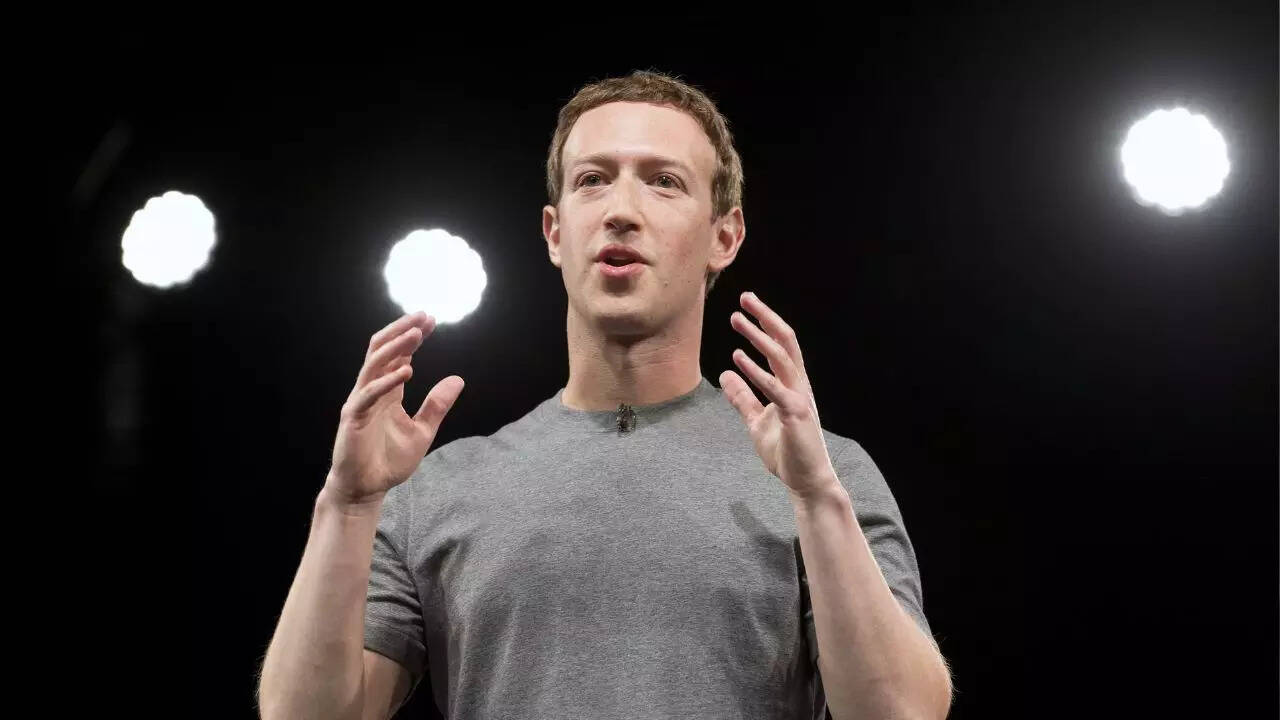
Earlier in March in a blog post shared with the Meta employees, CEO Mark Zuckerberg hinted at the policy change.
Photo : IANS
The IT giant, that owns Facebook, Instagram, and WhatsApp, has asked that employees currently assigned to an office return to in-person work three days a week starting September 5, 2023, as per CNN report.
However, those employees of Meta who are designated as remote workers will be allowed to keep their remote status.
A Meta spokesperson, in a statement to CNN, said the company’s updated policy was not set in stone.
“We’re committed to distributed work, and we’re confident people can make a meaningful impact both from the office and at home. We’re also committed to continuously refining our model to foster the collaboration, relationships, and culture necessary for employees to do their best work,” the spokesperson said.
“Our early analysis of performance data suggests that engineers who either joined Meta in-person and then transferred to remote or remained in-person performed better on average than people who joined remotely,” said in the post.
“This requires further study, but our hypothesis is that it is still easier to build trust in person and that those relationships help us work more effectively,” he wrote.
“This analysis also shows that engineers earlier in their career perform better on average when they work in-person with teammates at least three days a week. This requires further study, but our hypothesis is that it is still easier to build trust in person and that those relationships help us work more effectively,” Zuckerberg added.
Amazon had earlier announced about the end of their full-time work-from-home policy for corporate employees beginning May 1. Disney too earlier this year began requiring workers to show up in person four days per week.
In September last year, TCS informed its employees they must come to the office for at least three days a week which accounts for a total of 12 days in a month.
[ad_2]
Source link
The US state of California is considering a new Journalism Preservation Act, the most relevant aspect of which would force Meta to pay for news content that users are sharing on the Facebook and Instagram platforms. As such, Meta has threatened to ban news content in the state.
The Journalism Preservation Act intends to allow publishers, particularly small publishers, a means of making money on Meta’s social media platforms. Californian lawmakers argue that Facebook in particular benefits from news content for greater engagement, and therefore gains revenue. Ultimately saying that Meta, therefore, needs to pay for that privilege.
However, Meta disagrees, pointing out that very little revenue is gained from publishers when compared to what publishers get from Facebook.
Meta’s Andy Stone said of the Journalism Preservation Act on Twitter: “If the [act] passes, we will be forced to remove news from Facebook and Instagram rather than pay into a slush fund that primarily benefits big, out-of-state media companies under the guise of aiding California publishers.
“The bill fails to recognize that publishers and broadcasters put their content on our platform themselves and that substantial consolidation in California’s local news industry came over 15 years ago, well before Facebook was widely used. It is disappointing to see that California lawmakers appear to be prioritising the best interests of the nation and international media companies over their own constituents.”
Meta has already gone through similar bans with the Australian News Bargaining Code 2021, and the Canadian Online News Act.
[ad_2]
Source link
Meta has been through the wringer in recent months. Plummeting revenues have led to thousands of job losses, while just this week the tech giant was fined a record $1.3 billion for data misuse. Now, ad buyers are reporting ongoing problems with Meta ads manager.
Unfortunately, these problems with Meta ads manager are nothing new. Last month, an error in Meta’s advertising system resulted in a huge overspend on a number of accounts.
According to some Meta ad buyers, their CMPs had skyrocketed by as much as 500% in just a 24-hour period, while performance metrics remained unchanged. Many marketers reported that this inadvertent spending had sent them well over budget.
Digital businesses rely on Meta for advertising and promotion, so an error like this was incredibly serious and will have damaged the relationship between Meta and ad buyers. The company acted quickly, assuring brands that the issue had been addressed and rectified.
However, it would appear that problems with Meta ads manager haven’t gone away. As social media tech expert David Herrmann explained on Twitter, issues have been ongoing for the past month, with Meta support staff seemingly clueless as to the cause of the problems and unable to offer advice for affected users.
HubSpot expert Chris Strom also detailed on Twitter that the problems with Meta were so severe that he has started running Google advertisements for clients instead.
What this clearly indicates is that the Meta ad problems are far from over. The company needs to get a handle on the situation quickly to mitigate the damage and salvage its reputation.
In other news, The Washington Post has reported that Meta employees are concerned that the company’s significant downsizing in recent months could impact user safety.
More layoffs are expected to take place this week, with staff citing concerns that a depleted workforce could make it more difficult to tackle misinformation and harmful content posted across Meta’s various social platforms.
The Facebook and Instagram parent has come under fire in recent years for failing to properly safeguard users, and it seems this issue is likely to go unaddressed as the company continues to strip back its workforce in an attempt to revive floundering revenue.
[ad_2]
Source link
We use technologies like cookies to store and/or access device information. We do this to improve browsing experience and to show personalised ads. Consenting to these technologies will allow us to process data such as browsing behaviour or unique IDs on this site. Not consenting or withdrawing consent, may adversely affect certain features and functions.
The technical storage or access is strictly necessary for the legitimate purpose of enabling the use of a specific service explicitly requested by the subscriber or user, or for the sole purpose of carrying out the transmission of a communication over an electronic communications network.
The technical storage or access is necessary for the legitimate purpose of storing preferences that are not requested by the subscriber or user.
The technical storage or access that is used exclusively for statistical purposes.
The technical storage or access that is used exclusively for anonymous statistical purposes. Without a subpoena, voluntary compliance on the part of your Internet Service Provider, or additional records from a third party, information stored or retrieved for this purpose alone cannot usually be used to identify you.
The technical storage or access is required to create user profiles to send advertising, or to track the user on a website or across several websites for similar marketing purposes.
[ad_2]
Source link
(MENAFN– VDO.AI) today’s fast-paced and highly competitive digital world, businesses are constantly seeking innovative ways to stand out from the crowd, increase their visibility, and generate high-quality leads. One technology that has emerged as a game-changer in this pursuit is Artificial Intelligence (AI). With its unparalleled lead generation and engagement capabilities, AI is transforming the marketing landscape, empowering businesses to reach new heights of success.
Driving Visibility through AI-Powered Insights
AI-powered platforms like WOZ.AI equip businesses with valuable insights and data-driven strategies that drive visibility in the digital realm. By analyzing vast amounts of consumer data, AI algorithms can identify patterns, preferences, and trends, allowing businesses to optimize their marketing efforts. From understanding customer behavior to predicting market trends, AI enables businesses to create targeted and personalized campaigns that capture attention and generate visibility.
Personalized Customer Engagement
Gone are the days of one-size-fits-all marketing approaches. AI enables businesses to deliver personalized customer experiences at scale. By leveraging machine learning algorithms, businesses can analyze customer preferences, past interactions, and browsing behavior to tailor their marketing messages accordingly. This level of personalization boosts customer engagement, as individuals feel a stronger connection with brands that understand their needs and provide relevant content.
Smart Automation for Lead Generation
AI-powered automation tools have revolutionized lead generation by streamlining and optimizing the process. Chatbots and virtual assistants, powered by AI, can engage with website visitors in real-time, answer queries, and capture contact information. These intelligent tools not only provide instant responses but also qualify leads by gathering relevant data. By automating lead nurturing and follow-ups, businesses can focus on building relationships with potential customers, resulting in higher conversion rates.
Predictive Analytics for Targeted Marketing
AI’s predictive analytics capabilities enable businesses to identify potential leads and target them with precision. By analyzing customer data, AI algorithms can predict future behaviors and preferences, allowing businesses to develop highly targeted marketing campaigns. This ensures that marketing resources are focused on the right audience, increasing the likelihood of lead generation and conversion.
Optimizing Marketing Strategies
AI empowers businesses to optimize their marketing strategies by continuously analyzing and adapting to changing market dynamics. By monitoring campaign performance, AI algorithms can identify trends, assess customer response, and make real-time adjustments. This iterative approach ensures that marketing efforts remain effective and relevant, driving visibility and generating leads.
Conclusion
Artificial Intelligence is revolutionizing the marketing landscape by empowering businesses to drive visibility and generate unparalleled leads. Through AI-powered insights, personalized customer engagement, smart automation, predictive analytics, and optimized marketing strategies, businesses can tap into the full potential of AI to achieve their marketing goals. As the digital landscape continues to evolve, embracing AI will be the key to staying ahead of the competition and achieving success in generating leads and driving business growth.
MENAFN17052023007271015592ID1106266216
Legal Disclaimer:
MENAFN provides the information “as is” without warranty of any kind. We do not accept any responsibility or liability for the accuracy, content, images, videos, licenses, completeness, legality, or reliability of the information contained in this article. If you have any complaints or copyright issues related to this article, kindly contact the provider above.
[ad_2]
Source link
The US regulator, the Federal Trade Commission, has accused Meta of putting children at risk by shirking its responsibilities when it comes to parental controls. The FTC is looking at banning Meta from using youth data to make money, a move that predictably has irked the tech giant known for its dodgy dealings of data in the pursuit of money.
The FTC has accused Meta of infringing on its 2020 privacy policy, which says that Meta was required to establish a set of measures to control data usage, largely a result of the Cambridge Analytica incident. But the FTC maintains that Meta unfairly represented the level of control that parents have over their children’s activity on Messenger Kids, plus there are accusations that Meta has allowed app developers to access the private data of users.
The FTC explained that Facebook had repeatedly infringed privacy agreements and that the company’s behaviour was putting the well-being of young users of the platform at risk.
Meta has since issued a statement, saying that the move from the FTC is a political stunt and that they heard no mention of this theory despite three years of ongoing engagement.
Meta went on to throw TikTok under the bus, much like TikTok did in front of Congress, accusing the FTC of acting unfairly by singling out the one American company, Meta, while allowing Chinese companies like TikTok to operate in American markets.
[ad_2]
Source link
It’s been a tough 2023 for Meta. The Facebook, Instagram, and WhatsApp parent company has conducted several rounds of layoffs, most recently last week when 10,000 staff were culled.
The cutbacks came along with a hiring freeze and a general restructuring of the company, in an attempt to reverse dwindling revenues and reassure nervous shareholders.
CEO Mark Zuckerberg spoke of making 2023 Meta’s ‘Year of Efficiency’ with a focus on growth and expansion in a rapidly evolving digital landscape.
It would seem the tech giant is managing to turn things around, according to an earnings report released last week.
Q1 revenue was up 3% year-on-year, totalling $28.6 billion. This is a marked improvement when compared to recent results, Meta previously reported revenue decline in three consecutive financial quarters.
When discussing the positive results, Zuckerberg attributed the turnaround largely to the power of modern AI tech, maintaining that it has been instrumental in allowing the company to optimise and improve ad efficiency.
According to Zuckerberg, AI tools have been put in place to develop further monetisation options for Facebook and Instagram Reels, which both saw year-on-year growth of 40% and 30% respectively.
AI has also allowed Meta to increase the reach and visibility of Reels, using a TikTok-inspired algorithm to deliver personalised content to users and boost engagement levels.
Zuckerberg went on to discuss the potential for generative AI, which has been making headlines as the tech behind tools like ChatGPT.
According to Zuckerberg, Meta is looking to utilise generative AI to create an ‘open ecosystem’. This comes as Meta appears to be stepping back from its VR Metaverse push, citing technological limitations.
Earlier this month, the company confirmed that it had established a new generative AI team that has been working towards creating generative AI ad creation tools and a video analysis system.
As AI tech continues to improve at a rapid rate, we can expect to see more social media platforms utilise the technology to improve products and services.
[ad_2]
Source link