This article originally appeared on Business Insider.
Six of the 10 most expensive US metros for families are in California.
Business Insider looked at the monthly costs for households with two adults and two children from the Economic Policy Institute’s “Family Budget Calculator.” EPI assembled data from multiple sources and looked at several kinds of expenses a household may have.
“The Family Budget Calculator is constructed to determine the resources needed to generate a decent standard of living, one in which a family can afford the basic necessities,” a post from EPI said.
BI looked at families where the parents are “employed, live together with their children, and jointly file federal income taxes.” There are assumptions about children’s ages too: “Families with two children are assumed to have a 4-year-old and an 8-year-old,” a EPI post said.
There are also some assumptions for the various expense categories, such as for healthcare. The budget calculator notes that these “expenses include insurance premiums and out-of-pocket costs, and assume families purchase the lowest cost bronze plans on the health insurance exchange established under the Affordable Care Act.”
The EPI post about the calculator noted that data is for 2023 or when needed “inflated to 2023 dollars with the budget-item-appropriate inflator.”
San Francisco ranked No. 1 — or the most expensive among the metros analyzed by EPI — based on its monthly total cost of around $15,000. With a monthly cost of over $3,000 for housing, based on the cost of a two-bedroom apartment, this was the largest monthly expense among the seven categories for this area.
San Francisco wasn’t the only one with a large monthly housing expense compared to other expenses. Stamford-Norwalk, Connecticut, had a housing expense of $2,563 for a two-adult, two-child family, making it its largest monthly expense among the seven categories EPI focused on.
Other metros saw childcare as the highest expense. Childcare was the largest monthly expense among the seven categories for Nassau-Suffolk, New York, for instance.
People may be finding it difficult to afford certain items. Fed Chair Jerome Powell said in a recent 60 Minutes interview that “if you think about the basic necessities” like bread and milk, “prices are substantially higher than they were before the pandemic.”
“We think that’s a big reason why people are, have been relatively dissatisfied with what is otherwise a pretty good economy,” Powell said.
Parents and guardians also have to think about the cost and type of childcare they need. For some people, childcare is a massive expense and could be larger than their other costs.
“It’s almost like $2,000 more than our mortgage,” Paige Connell, who has four children, previously told Business Insider. “I mean, that is a pretty significant dollar amount for us. It is the thing that we pay the most money for, for sure.”
Below are the most expensive metros ranked based on the monthly total for two adults and two children according to EPI. The dollar amount next to the metro is the monthly total of the costs for this household.
10. Boston-Cambridge-Quincy, MA: $12,725
John Coletti/Getty Images via BI
Housing: $2,635
Food: $1,198
Transportation: $1,434
Healthcare: $1,244
Other necessities: $1,357
Childcare: $2,635
Taxes: $2,222
9. Napa, CA: $12,765
DenisTangneyJr/Getty Images via BI
Housing: $2,388
Food: $1,261
Transportation: $1,710
Healthcare: $1,599
Other necessities: $1,292
Childcare: $2,311
Taxes: $2,204
8. Santa Maria-Santa Barbara, CA: $12,901
Alexander Spatari/Getty Images via BI
Housing: $2,667
Food: $1,046
Transportation: $1,641
Healthcare: $1,685
Other necessities: $1,315
Childcare: $2,301
Taxes: $2,246
7. Westchester County, NY: $12,960
Alex Potemkin/Getty Images via BI
Housing: $2,029
Food: $1,173
Transportation: $1,382
Healthcare: $1,791
Other necessities: $1,134
Childcare: $3,096
Taxes: $2,357
6. Oakland-Fremont, CA: $12,972
Brad Wenner/Getty Images via BI
Housing: $2,405
Food: $1,200
Transportation: $1,566
Healthcare: $1,594
Other necessities: $1,276
Childcare: $2,662
Taxes: $2,268
5. Stamford-Norwalk, CT: $13,101
halbergman/Getty Images via BI
Housing: $2,563
Food: $1,183
Transportation: $1,503
Healthcare: $2,032
Other necessities: $1,326
Childcare: $2,070
Taxes: $2,424
4. Nassau-Suffolk, NY: $13,565
littlenySTOCK/Shutterstock via BI
Housing: $2,297
Food: $1,132
Transportation: $1,584
Healthcare: $1,675
Other necessities: $1,214
Childcare: $3,137
Taxes: $2,526
3. San Jose-Sunnyvale-Santa Clara, CA: $13,752
Walter Bibikow/Getty Images via BI
Housing: $2,941
Food: $1,183
Transportation: $1,566
Healthcare: $1,366
Other necessities: $1,460
Childcare: $2,726
Taxes: $2,509
2. Santa Cruz-Watsonville, CA: $14,509
Housing: $3,293
Food: $1,269
Transportation: $1,652
Healthcare: $1,608
Other necessities: $1,615
Childcare: $2,343
Taxes: $2,728
1. San Francisco, CA: $15,106
Alexander Spatari/Getty Images via BI
Housing: $3,188
Food: $1,333
Transportation: $1,494
Healthcare: $1,682
Other necessities: $1,601
Childcare: $2,900
Taxes: $2,909
[ad_2]
Source link
This article originally appeared on Business Insider.
Pristine sandy beaches, red-roofed vacation homes, and French influence attract travelers to Gustavia, a town on the Caribbean island of Saint Barthélemy.
And while there’s plenty to entice travelers to visit, it comes at a cost.
According to Florida Panhandle, a travel brand that promotes tourism in the Sunshine State, Gustavia is the world’s most expensive travel destination.
The organization analyzed data from more than 100 popular vacation destinations. They considered factors such as the nightly rate for accommodations, flights, meals, and daily transportation prices, as well as the most popular attractions in each place.
And Gustavia easily topped the list.
According to the travel study, the cost of a single day for a traveler averages $1,852 — and that doesn’t even factor in the airfare.
Take a look inside the world’s most expensive travel destination.
Islands dot the Caribbean Sea, but one town, in particular, draws a rich crowd. Gustavia, a coastal town on the island of Saint Barthélemy, has been deemed the world’s most expensive travel destination, according to a new study by the tourism site Florida Panhandle.
An arrow points to the coastal town of Gustavia. Google Maps via BI Source: Florida Panhandle
It’s expensive partly because most goods on the island need to be imported, but also because it’s earned a reputation for catering to rich clientele, according to HuffPost.
A view of Gustavia in the evening. Sean Pavone/Getty Images Source: HuffPost
And those two factors mean visitors can expect to spend a lot while visiting. According to Florida Panhandle, travelers spend an average of $1,852 a day while staying in Gustavia.
An aerial view of Saint Barthelemy. cdwheatley/Getty Images via BI Source: Florida Panhandle
But before exploring the town’s old churches and sandy beaches, visitors have to get there. The closest airport to Gustavia is the tiny Gustaf III Airport. Here, a roundtrip flight from Los Angeles costs an average of $2,772, according to Florida Panhandle’s study.
An aircraft lands on the island’s airport. Walter Bibikow/Getty Images via BI
Or visitors can arrive by boat and dock in the Gustavia Harbor, where there are guaranteed to be multimillion-dollar yachts.
Yachts lined up in Gustavia, Saint Barthélemy. Sean Pavone/Getty Images via BI
And once travelers reach the island, they can expect to drop a pretty penny on accommodations. The travel company discovered that the average night’s stay is around $1,700.
Gustavia Harbor on the island of Saint Barthélemy. NAPA74/Getty Image via BI
But beyond glamorous hotels and vacation homes, visitors arrive in Gustavia for its tropical landscapes.
A view of the coast of the island of Saint Barthélemy. daniloforcellini/Getty Images via BI
These happen to come at affordable prices. The town’s well-known beaches, like Shell Beach, are free to visit.
Boats anchored off Shell Beach, Gustavia, St. Barts. Holger Leue/Getty Images via BI
But Saint Barthélemy has more to offer than sand. Visitors can also explore nearby churches, go on mountainside hikes, or find an afternoon yoga class in one of the town’s studios.
St Bartholomew’s Anglican Church. Mark Meredith/Getty Images via BI
Or they can spend an afternoon shopping in the town’s high-end boutiques.
Designer shops fill the town. Mark Mainz/Getty Images via BI
And, of course, visitors can indulge in the town’s fine-dining restaurants. According to the Florida Panhandle, the average meal for visitors is $58.
The town of Gustavia at night. Walter Bibikow/Getty Images Source: Florida Panhandle
So, while there’s plenty to attract travelers to Gustavia, visitors will need to make sure they pack their wallets.
Gustavia Harbor at sunset. Buena Vista Images/Getty Images via BI
[ad_2]
Source link
Happy hour? Wine not.
But before you plop down your hard-earned money on a savory bottle of red or a bottle of white, you might want to understand better why wines are priced the way they are. Contrary to popular belief, it’s not just because they taste better — or because they’re older than your grandpa.
We asked Brianne Engles, the head winemaker at Chamisal Vineyards in San Luis Obispo, California, to shed some light on this mysterious topic. Chamisal specializes in handcrafted Chardonnay and Pinot Noir, grown on an 82-acre estate in the Edna Valley AVA. Their offerings range from $35 for their estate-grown wines to $100 for their luxury icon wines. Engles says cost boils down to three key factors — farming, oak, and quality.

Brianne Engles of Chamisal Vineyards
Farming
Harvesting grapes at a vineyard can be costly, including planting, irrigation, and labor. At boutique wineries like Chamisal, individual “blocks” or a designated group of premium vines in a vineyard require more TLC.
“Our highest producing, highest quality blocks tend to have lower yields,” explains Engles. “When you have lower yields, your cost of farming is higher.”
This is because low-yield grapes result in lower production, leading to more scarcity of product. All the pruning, canopy management, and harvesting at Chamisal are performed by hand and follow Organic farming practices, which require multiple vineyards passes throughout the growing season. These labor-intensive elements contribute to the increased cost of farming.
Oak
Oak aging is a popular practice among winemakers because it adds complexity and smoothness to the wine. Chamisal wine is aged in oak barrels imported from France. In the barrel, the wine is exposed to oxygen, which helps to soften the tannins and develop the flavors. The oak barrels also impart unique flavors to the wine, which consumers might say smells like vanilla or baking spices.
The oak barrels at Chamisal are used judiciously to allow for the transfer of oxygen into the wine, elevating the unique character of each grape variety and vineyard site’s soil.
But oak aging is a complex and time-consuming process. “New oak is expensive. So if you have a higher percentage of new French oak, it can lead to a more expensive wine,” says Engles.
Time is also a factor. Some wines are typically aged for 12 to 18 months in oak barrels. This practice takes space and money to ensure that a bottle of wine is appropriately nurtured.
Quality
The quality of the grapes coming out of specific blocks is also a factor in the cost of the wine. But when winemakers measure quality, they’re not just focusing on the taste. At Chamisal, they evaluate the wine that comes out of each block in the cellar and do an extensive evaluation.
“We smell it, sip it, give it grades,” explains Engles. “Winemakers are not just sitting there writing flowery descriptors. We’re determining does it have intensity, are the tannins in balance, does it have enough fruit, does it have all the guts and pieces that make a very high quality.”
All these factors make the perfect bottle of wine harder to achieve, and scarcity causes the price to go up.
Would you like some Chardonnay with that crustacean?
Chamisal is hosting its 15th annual Lobsterfest on July 21 and 22nd. Lucky gourmands are treated to long tables piled with steamed lobster, corn, artichoke, sausages, and, of course, lots of wine.
Prices range from $215 for club members to $265 for the general public.
For reservations, visit their site.
[ad_2]
Source link
-
Rachel McDevitt

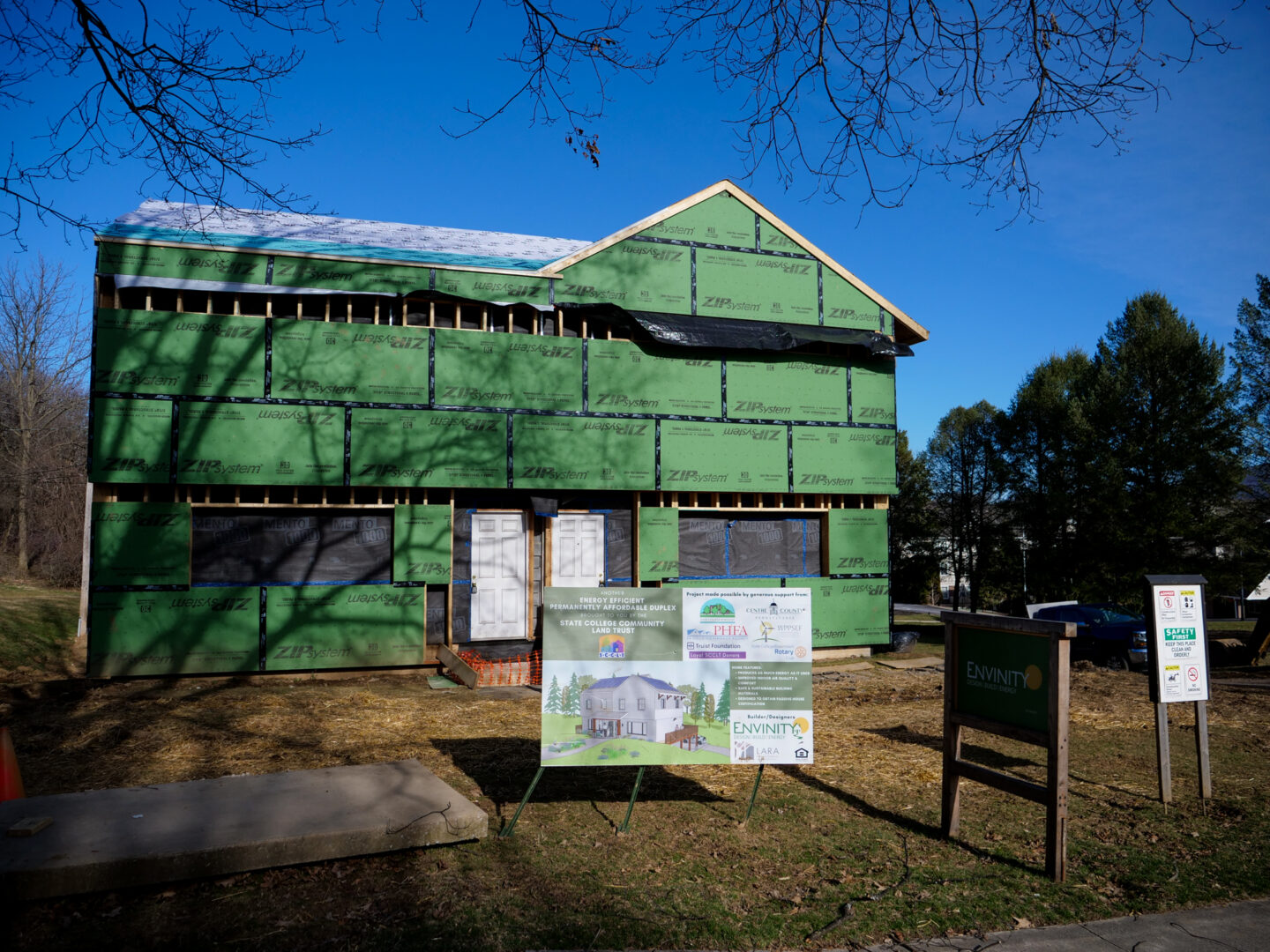
The State College Community Land Trust and Envinity are working to make a home in State College more energy efficient. They built an “envelope” around the exterior of the home that will be filled with insulation. (Jeremy Long – WITF)
 This story was produced for Climate Solutions, a collaboration focused on helping Central Pennsylvania move toward climate literacy, resilience and adaptation. StateImpact Pennsylvania convened the collaboration, and WITF is a partner. Climate Solutions’ funding partner is the Solutions Journalism Network.
Listen to the story:
Eddie and Kristy Riley knew they wanted to start and raise their family in State College, but for a long time, owning a home in the borough seemed out of reach.
Both are Penn State graduates. Eddie works in mental health care; Kristy is a teacher who now stays at home to care for their two sons. But a mortgage in the area was too much. The median home value in State College is around $370,000.
“There were several times when we’d look at each other and have the conversation like, what, what did we do wrong?” Eddie Riley said.
The Rileys could afford rent, but sometimes their heating bills were $500 for one month. Eddie and Kristy remember heating only one room for the whole family and blocking off other parts of the house with blankets. A rent hike on top of the high energy bills forced them out of the borough a few years ago.
They ended up finding the State College Community Land Trust, which has a program designed not only to help people afford a home, but to renovate the home to be as energy-efficient as possible. That efficiency piece saves the homeowners money and also cuts down on emissions from home heating, one of the top contributors to the greenhouse gasses that fuel climate change. The efforts can be of particular help in Pennsylvania, which has some of the oldest housing stock in the nation.
The land trust’s mission is to promote affordable homeownership in the borough. A recent pilot program added an energy efficiency component to 12 homes that were built in around the 1950s and 60s.

Rachel McDevitt / StateImpact Pennsylvania
Kristy and Eddie Riley pose for a photo with their sons Ludden and Aiden on Feb. 16, 2023.
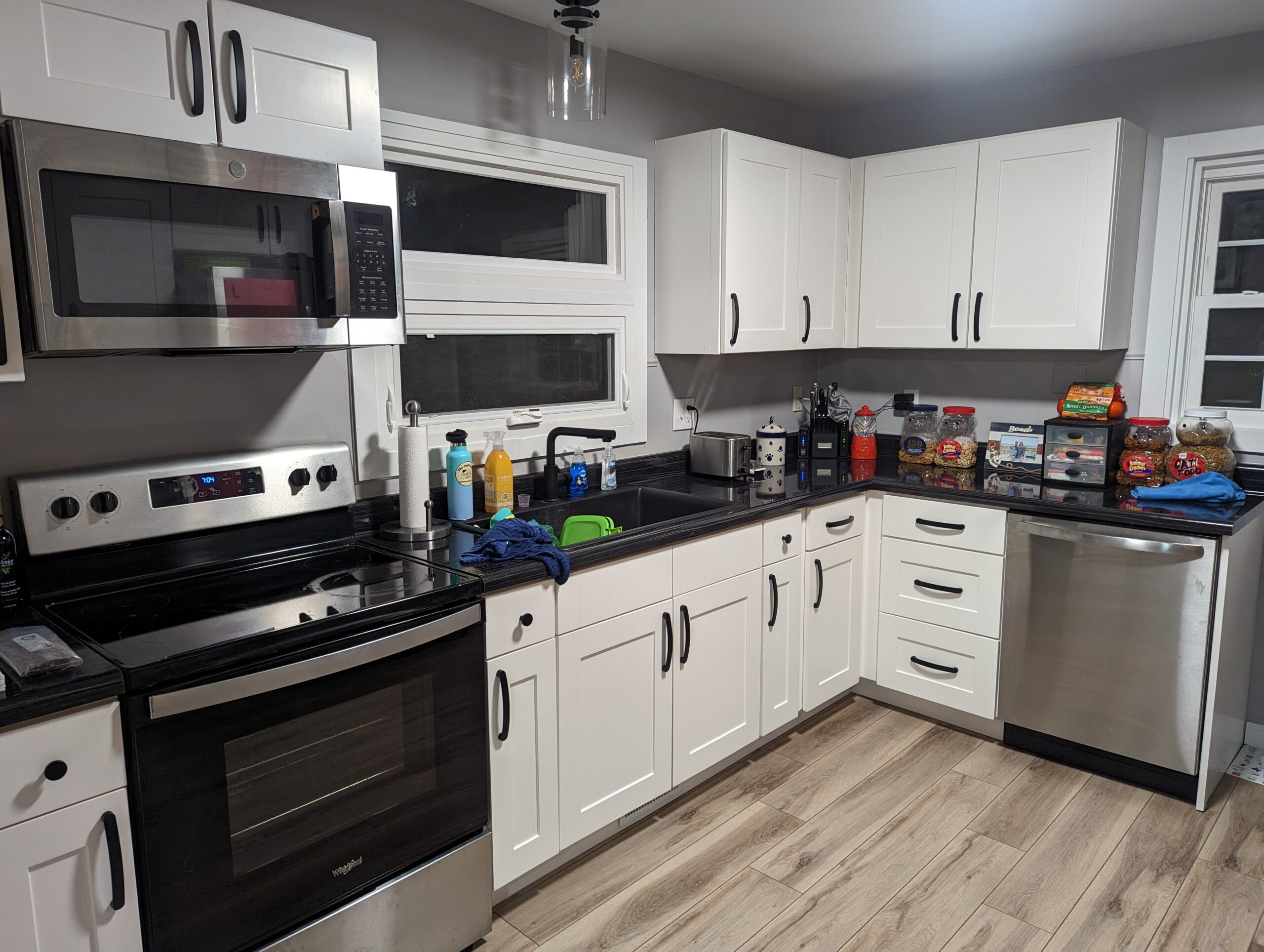
The Rileys became part of the pilot when they moved into the white cottage on Old Boalsburg Road. The land trust had done an energy audit in the house, added insulation to the attic and basement, installed an electric, heat pump-powered water heater and put new, efficient appliances in the kitchen. Those improvements reduced the home’s energy needs by a quarter.
Now the Rileys have been homeowners for over a year and they don’t have to worry about whether they will be able to pay all their bills. The family was even able to visit relatives in Florida this spring.
“It’s been a blessing, a gift. I feel like we won the lottery,” Eddie Riley said.
Others may also have the chance to win out soon, because of new federal money and state programs that aim to help people save on their energy bills while reducing planet-warming emissions.
-
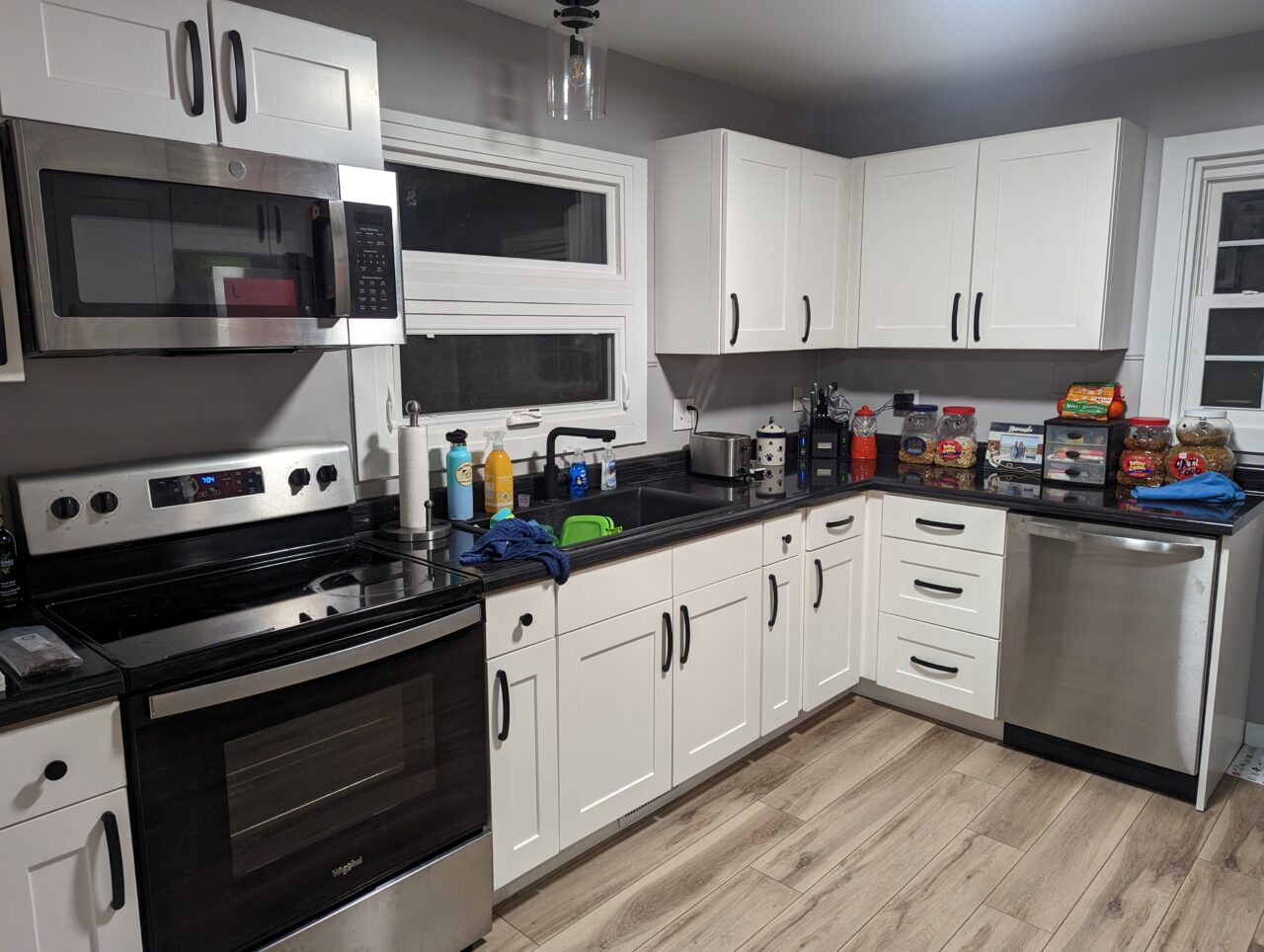
- The Riley family’s home got new appliances as part of renovations by the State College Community Land Trust, seen here on Feb. 16, 2023.
-
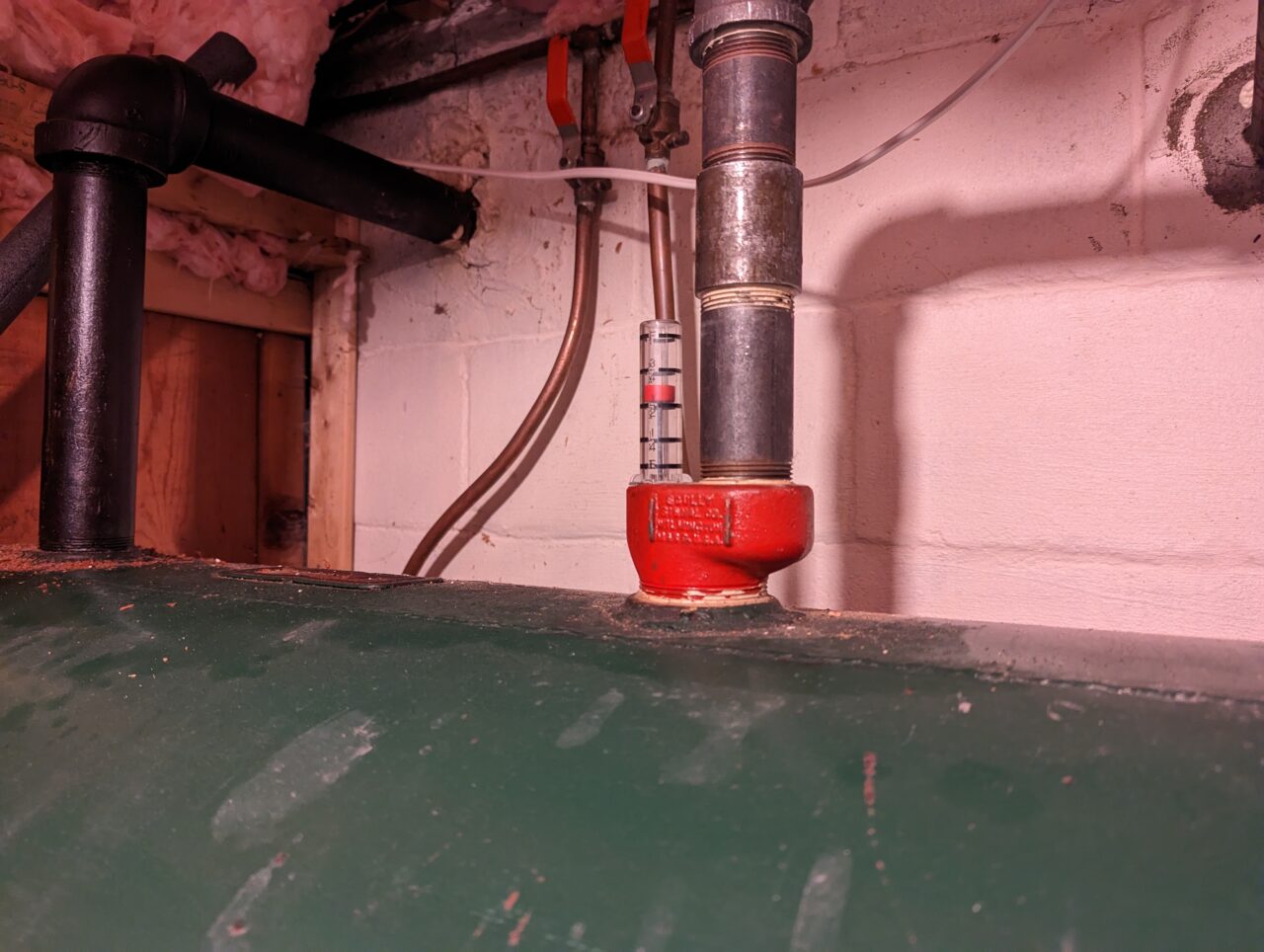
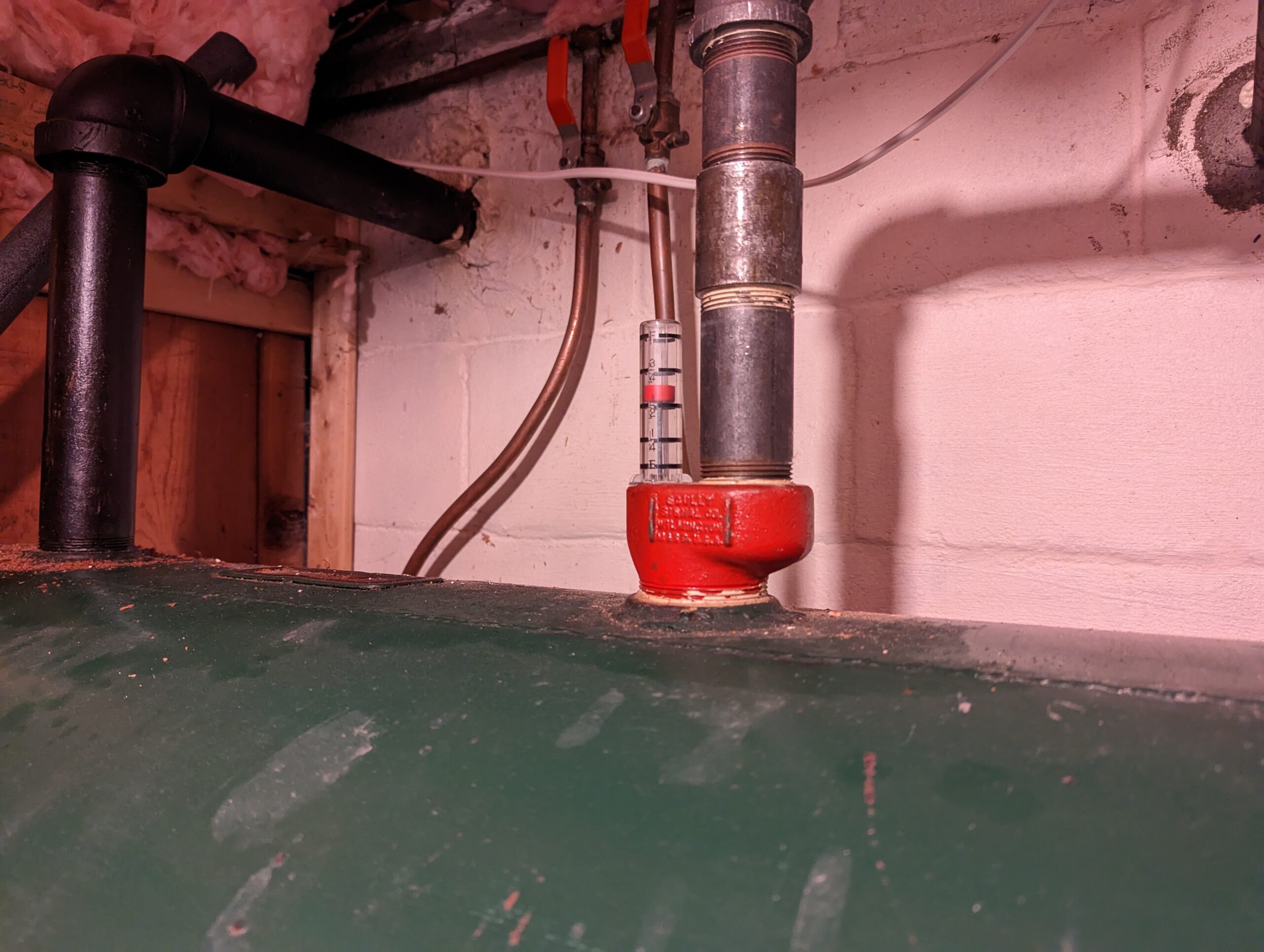
- A gauge on the Riley family’s oil tank shows they have a good supply left in this photo from Feb. 16, 2023. Eddie Riley said the family uses much less oil in their energy-efficient home than in past homes.
Budget-friendly can be climate-friendly
Emissions from home heating account for about 7% of greenhouse gas emissions in Pennsylvania.
Data from the Energy Information Administration shows that, nationally, home energy use accounts for about 20% of emissions when accounting for indirect emissions from electricity use.
Energy efficiency measures are some of the most effective ways to reduce carbon pollution. The International Energy Agency, which works with countries around the world on energy policy, estimates that efficiency could reduce the building sector’s emissions by around 25%.
What efficiency upgrades can you make in your home?
An energy efficient home helps people save money on utility bills. It also plays a role in lowering climate-warming emissions. About 20% of the country’s emissions are because of energy and electricity use in homes.
Graphic: Tom Downing, WITF | Sources: U.S. Department of Energy and Project Drawdown
Colleen Ritter, executive director of the State College Community Land Trust, plans to keep a focus on energy efficiency in all the homes the nonprofit buys.
“We recognize that it really needs to be at the forefront,” Ritter said. “Because if people are buying the houses and the mortgages are affordable to them… we want to make sure that the house is then affordable to them as well.”
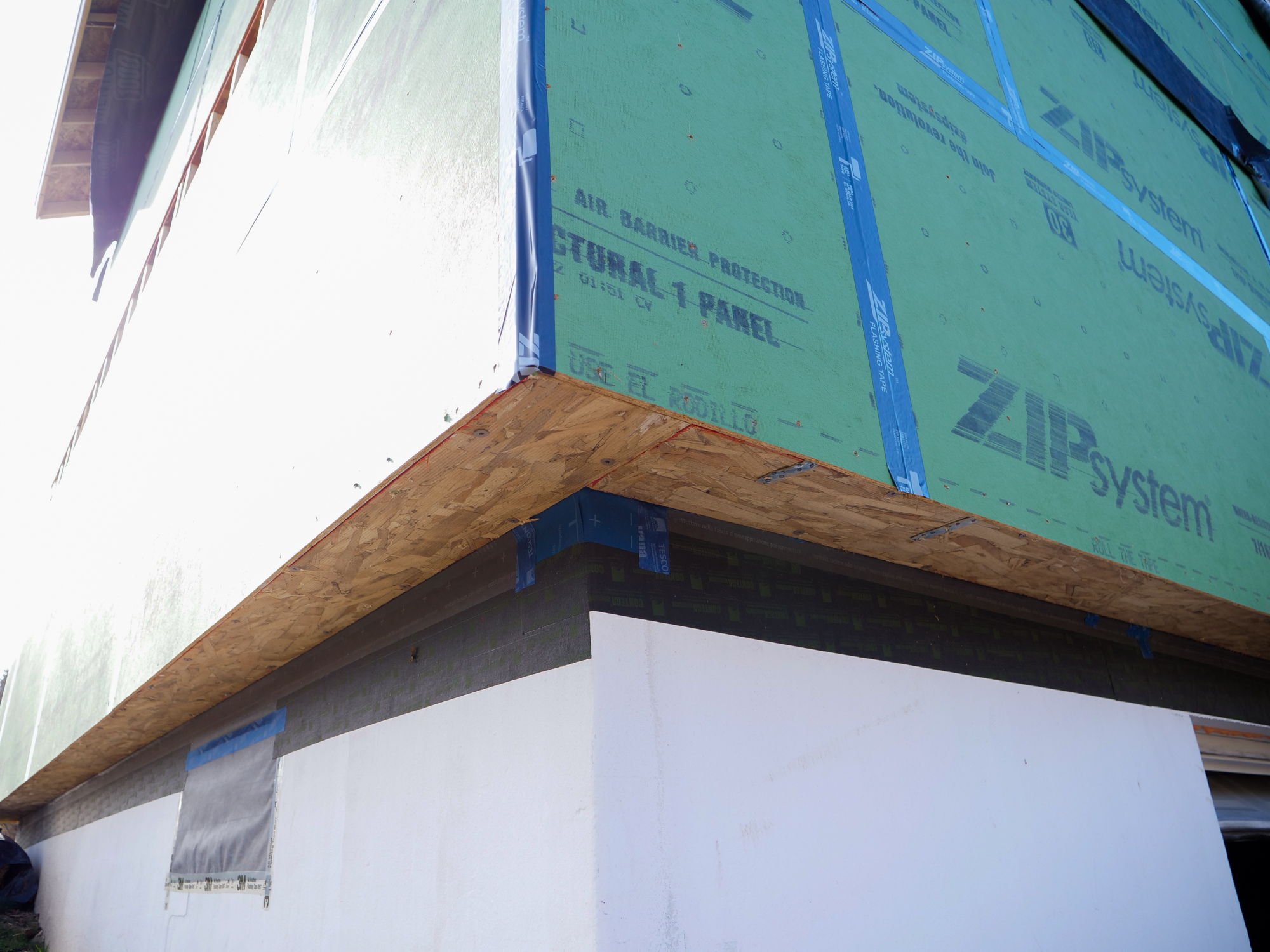
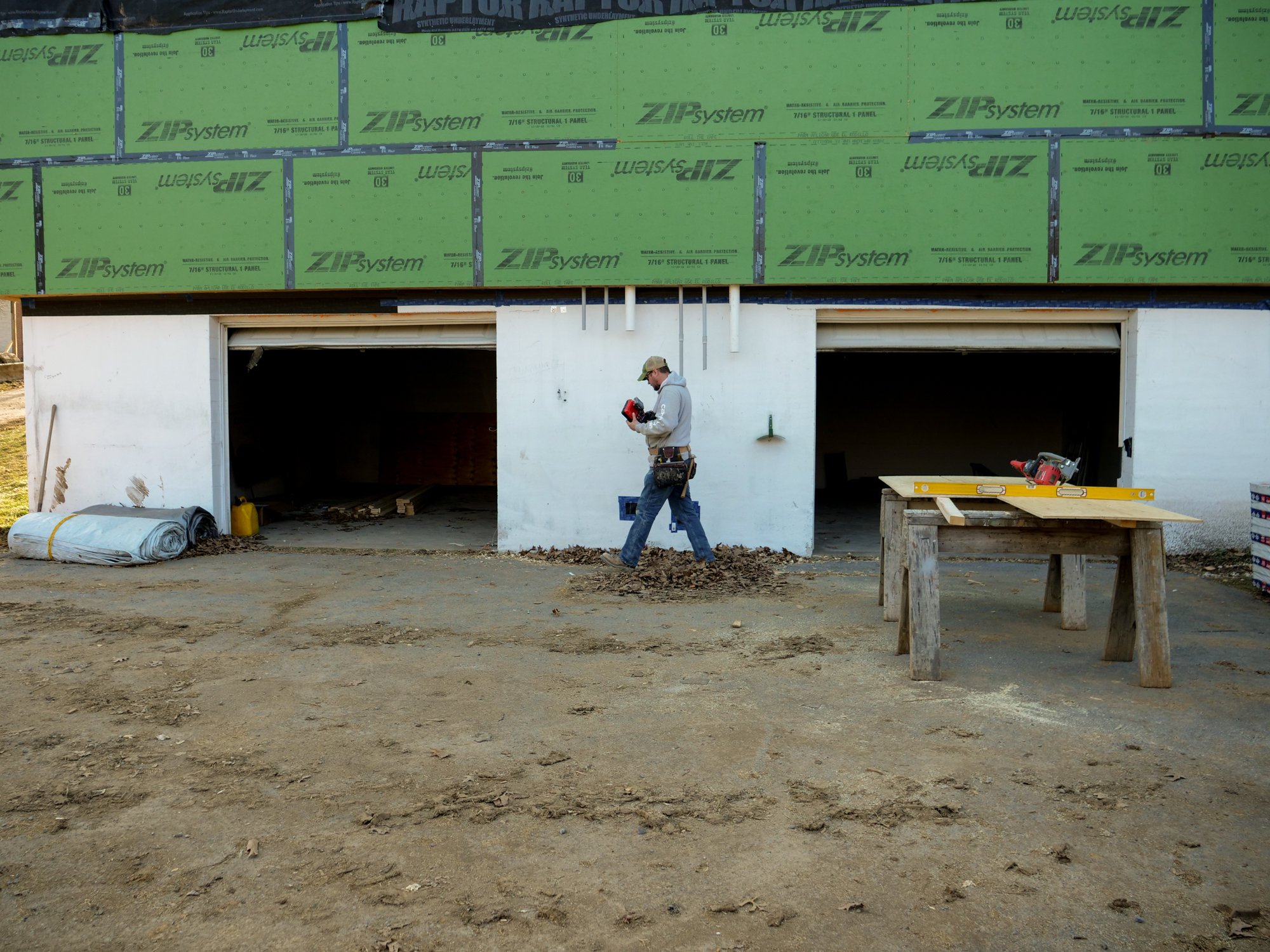
Work is underway at the land trust’s latest project, a 1970s duplex on University Avenue. In March the home looked like it was made from big green legos. A grid of insulation boards was built around the house like a shell, making 9.5 inches of space from the original walls for new insulation.
When finished, this home will be known as a passive house, which is one of the highest standards in home energy efficiency. All the appliances will be electric, including a heat pump instead of a gas furnace. It’s airtight, keeping warm or cool air inside the home.
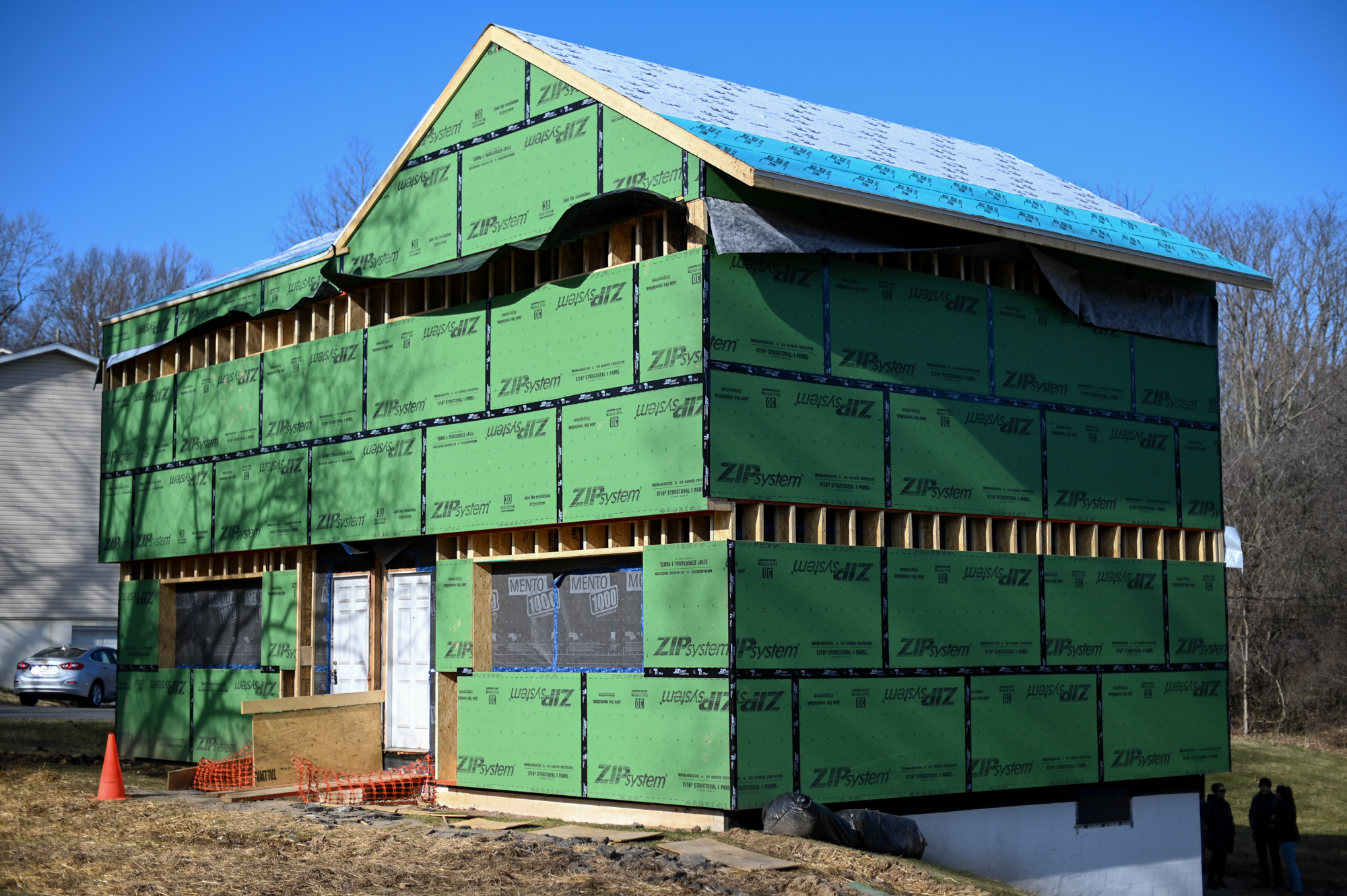
The State College Community Land Trust and Envinity are working to retrofit this home in State College into a highly energy efficient “passive house.” They built an “envelope” around the exterior of the home that will be filled with insulation. (Jeremy Long – WITF)
“This house is going to be pretty much constant temperature,” said Karis Taddei, project manager with Envinity, which is doing the renovations. “So that alone will save tons on energy costs and it’ll be like thermal comfort in your house.”
The focus for the land trust is affordability. It’s listing each home of the duplex for $105,000. But there’s also attention on using materials that are friendlier to the environment and on the overall carbon footprint of the home.
Ritter hopes the passive house can be something of a model for other nonprofits or governments that want to make homes safe, comfortable and efficient.
“We’re not gonna build our way out of a housing shortage. But what we do need to do is to make things sustainable and affordable and energy efficient,” Ritter said.
-
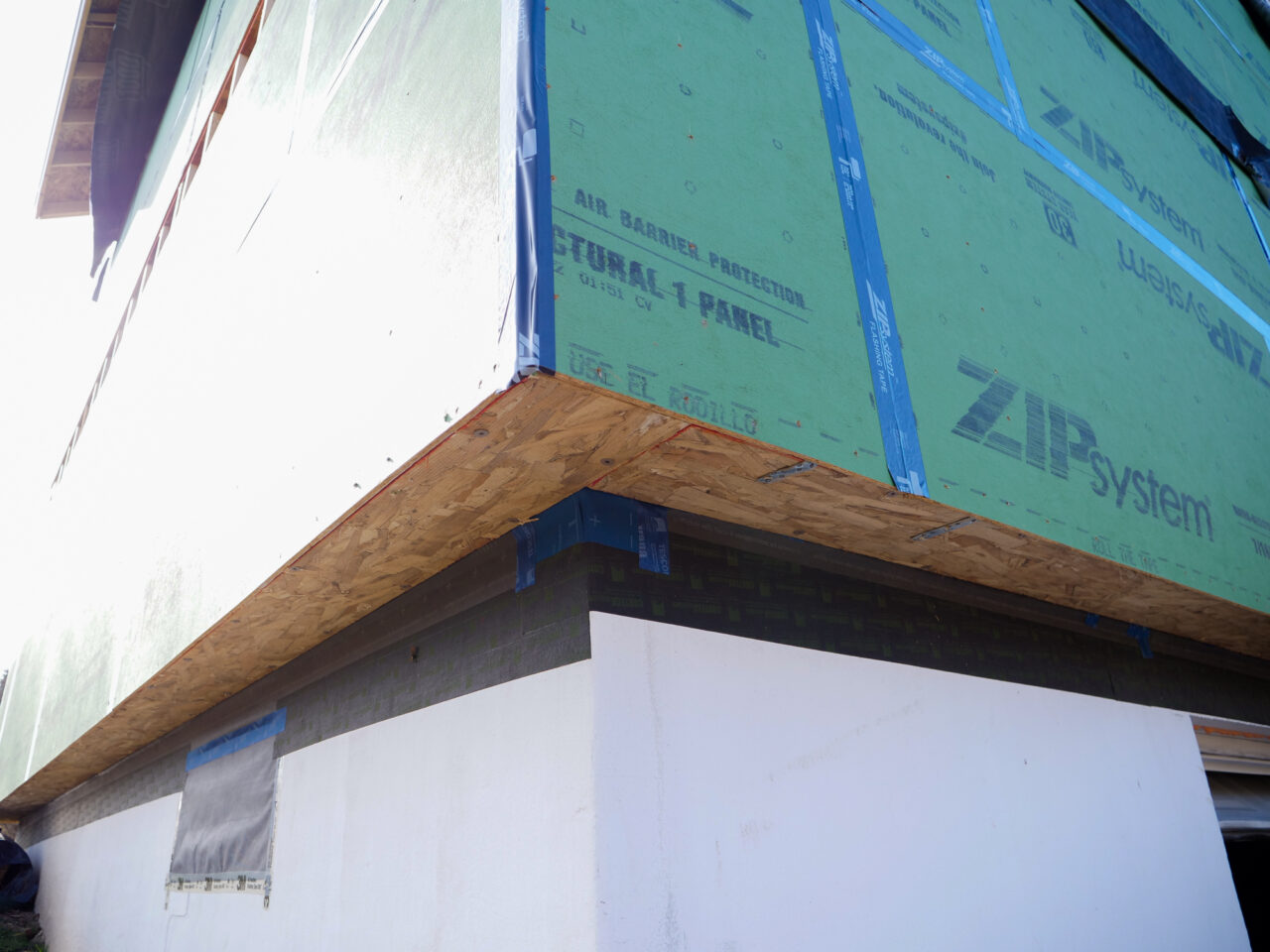
- The State College Community Land Trust and Envinity are working to make a home in State College more energy efficient. The built an 9.5 inch “envelope” around the exterior of the home that will be filled with insulation. (Jeremy Long – WITF)
-
- Karis Taddei, assistant project manager for Envinity, explains how they are remodeling a house in State College. The State College Community Land Trust and Envinity are working to make a home in State College more energy efficient. (Jeremy Long – WITF)
New programs
Communities have an opportunity now to look at issues in housing and prioritize efficiency.
The recent federal infrastructure law expanded weatherization programs and the Inflation Reduction Act is giving $9 billion to home efficiency programs, with the goal of lowering energy bills and emissions at the same time.
A new state program called Whole Home Repairs allocated $125 million to counties last year to improve homes owned by people with low incomes, who often pay up to a third of their income on utility bills, leaving them unable to make the upgrades that would ultimately save them money and prevent emissions.
Pennsylvania, with its old housing stock, needs the help. Surveys have found that one in four voters lives in a home that needs a critical repair. Homes in need of repair are ineligible for other weatherization assistance. Advocates are pushing now to make Whole Home Repairs a permanent part of the state budget.
-
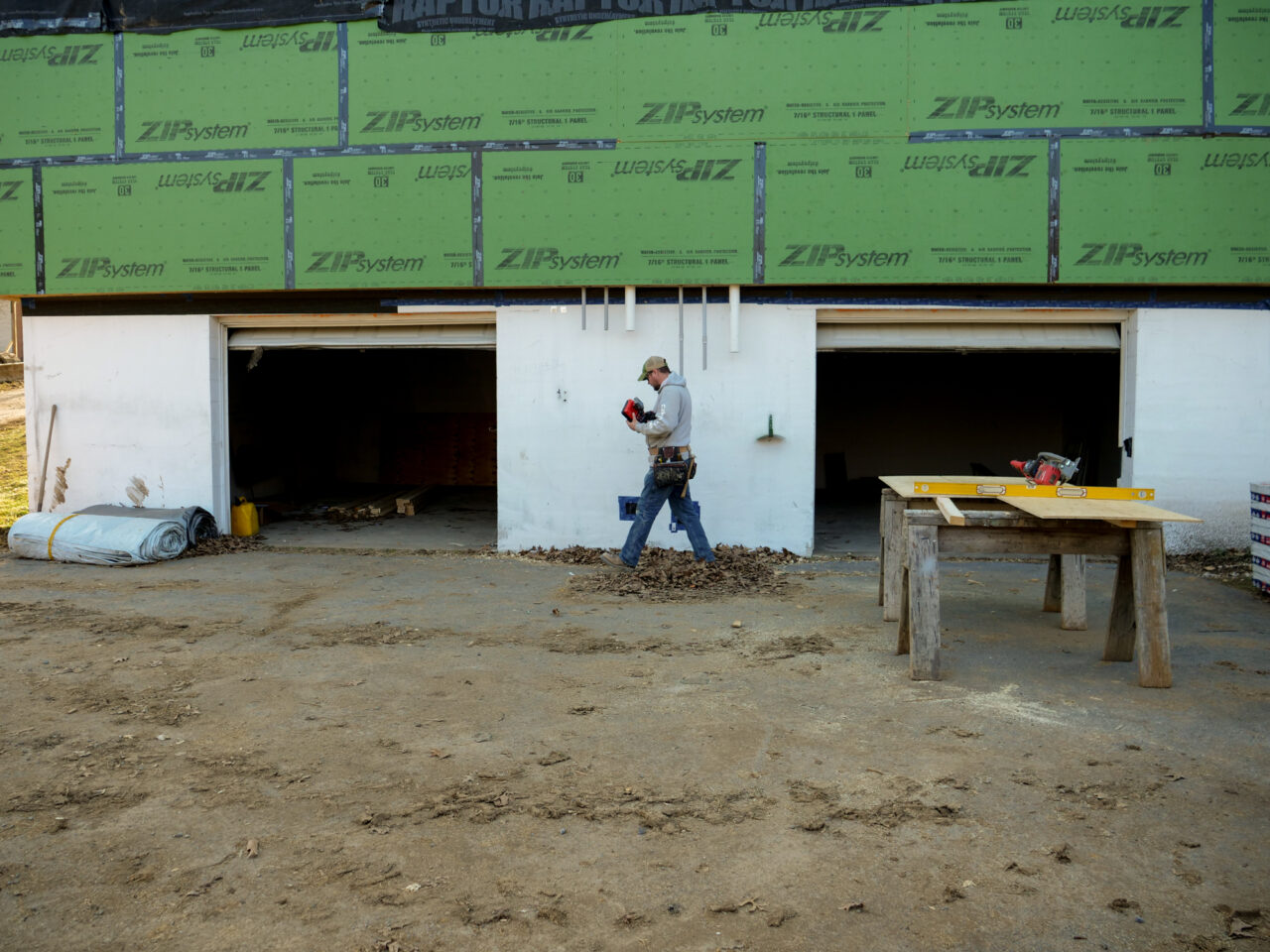
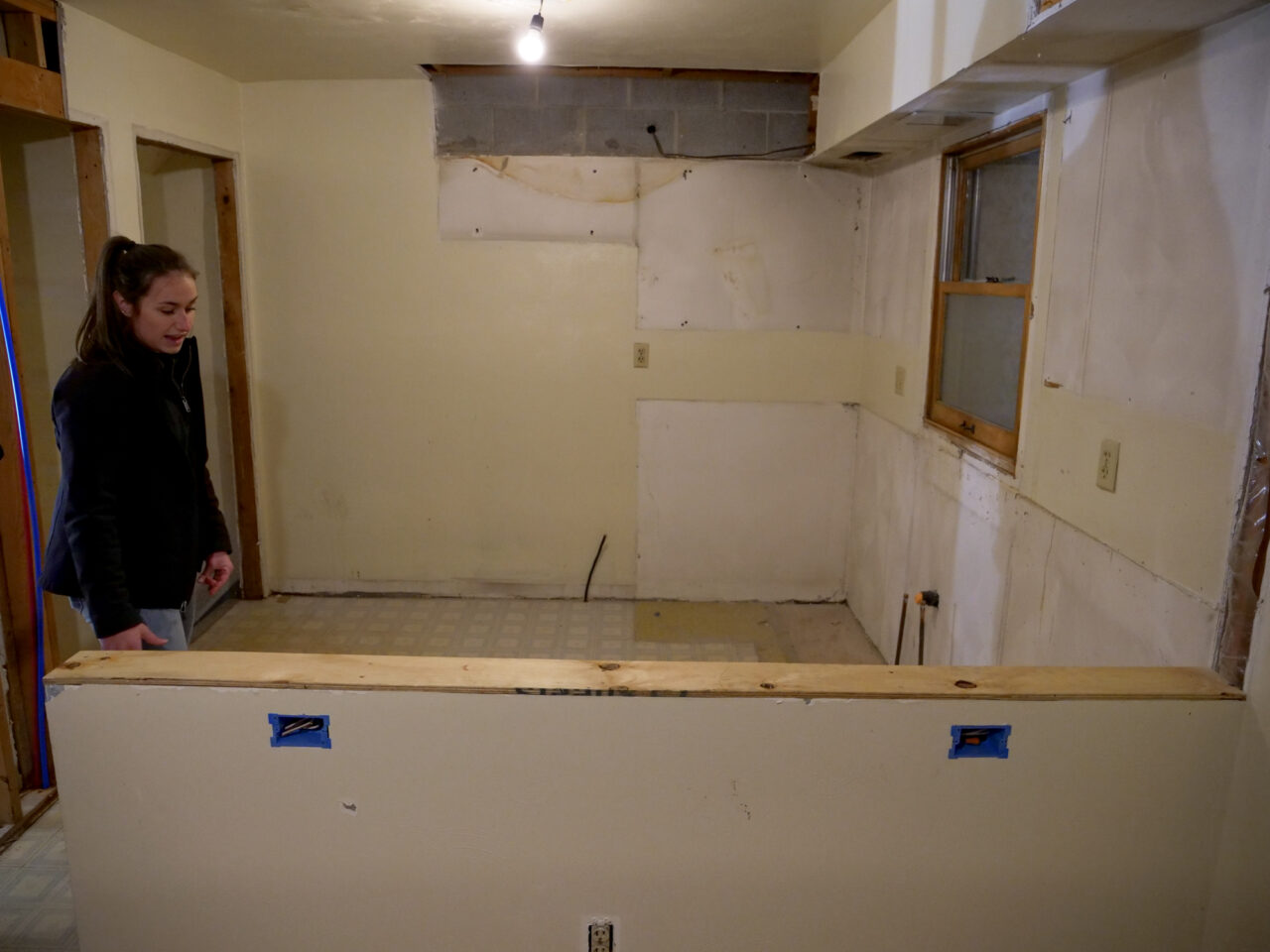
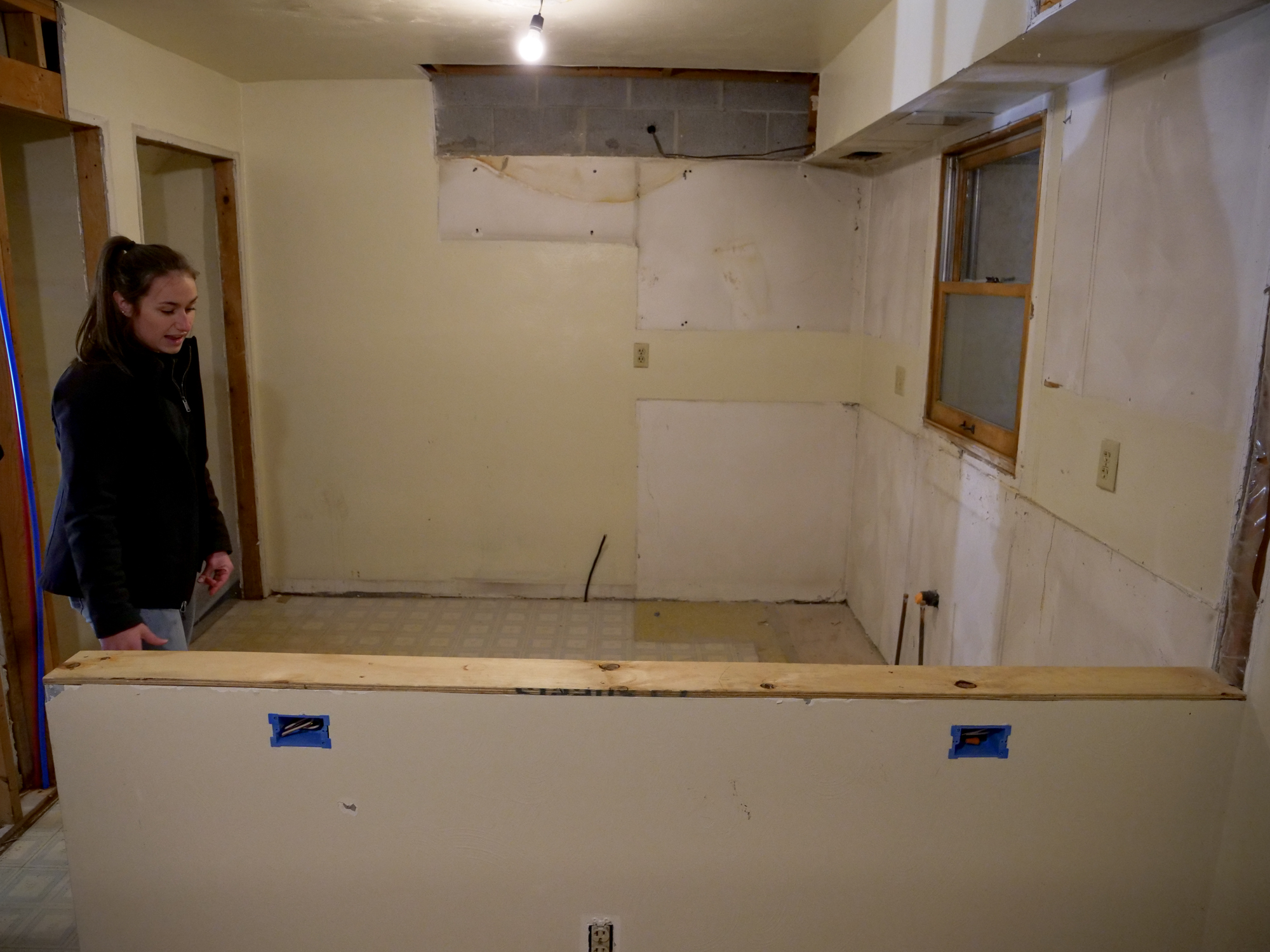
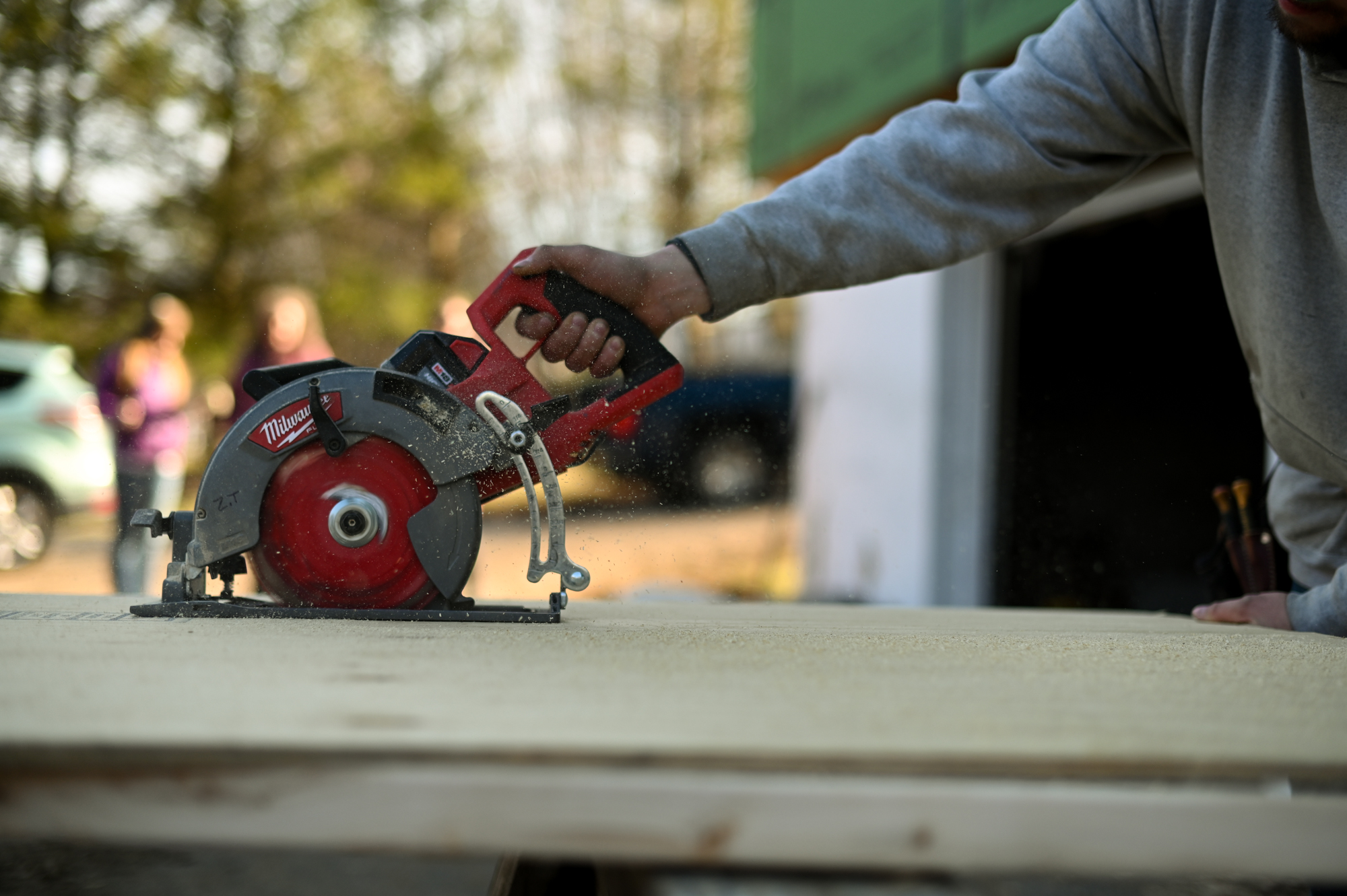
- Zach Tingle, a carpenter with Envinity, works at a home in State College that the company is helping make more energy efficient. (Jeremy Long – WITF)
-
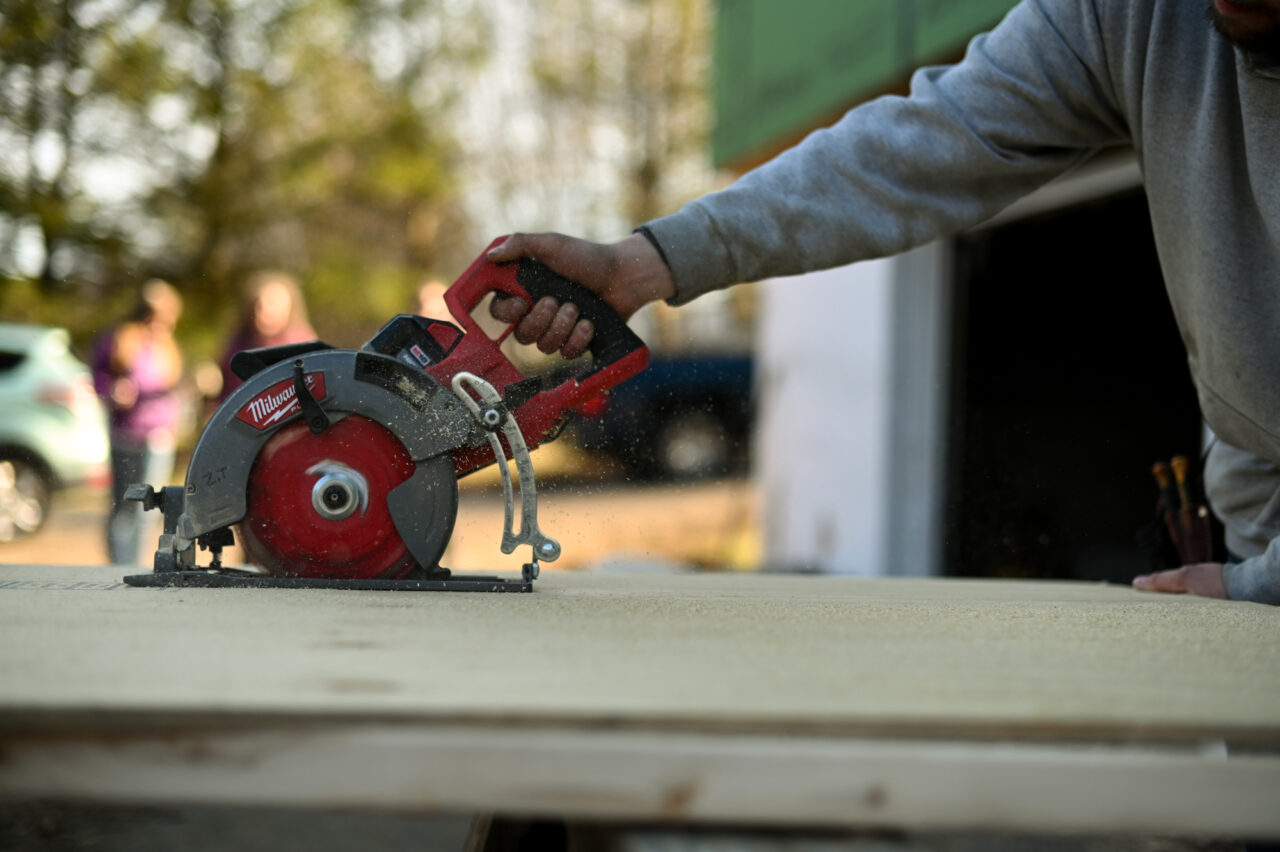
- Zach Tingle, a carpenter with Envinity, works at a home in State College that the company is helping make more energy efficient. (Jeremy Long – WITF)
Pam Adams with the Centre Region Council of Governments has been working on proposals to expand the land trust’s Energy Plus pilot program in the State College area. She’s hopeful the new federal and state programs will achieve multiple goals.
“There is not just climate programs, they have co-benefits and this can help people afford their homes more,” Adams said. But there will be challenges.
Adams said people often don’t want government involved in their homes, and they may be too busy to realize what the programs do and if they qualify.
Then there’s finding people to do the work. Contractors already have more work than they can get to, so going through extra training to understand and work with government programs could discourage some from participating.
Some of the new state money is meant for workforce development.
Adams said outreach and training will be crucial to make the most of the new programs.
Editor’s Picks
[ad_2]
Source link
With interest rates soaring, finding a house is more complicated than ever for first-time buyers.
But some states offer more realistic deals than others for those looking to invest in a little slice of the American Dream.
Moneywise, a financial website, ranked all 50 states based on the median price for houses in each state as provided by Zillow and the average down payment percentage of 13% according to the National Association of Realtors.
Their findings? For one, it might be called the Aloha State, but Hawaii is not very welcoming when it comes to buying a home.
First-time home buyers in Hawaii must shell out an average down payment of $110,360.38 to secure a home, making it the most expensive state for first-home buyers. With limited land for development and burdensome regulations, Hawaii’s median home value is a tsunami of $848,926.
If the surf and sand minus the tasty waves are what you’re looking for, you might want to consider a state like Mississippi, where the average home goes for $157,828 with a down payment of $20,517.64
The number two most expensive state for first-time buyers in California. The Golden State lives up to its billing, with median home prices on Zillow ringing in at $760,800. The average downpayment on such a home is $98,904.
Here’s a list of the priciest places to live.

Courtesy: Moneywise
Related: 9 Places in the U.S. With Small Town Charm and Affordable Home Prices
Most affordable states for first-time home buyers
So where should those looking to buy their first home look? According to this new survey, West Virginia is the best state to invest in, boasting the lowest average down payment requirement of $16,783.39. The median home price in West Virginia is $129,103, a steal compared to the national average of $428,700.
The aforementioned Mississippi is the second cheapest place to buy a home. After that, first-home buyers should look at Arkansas, Oklahoma, and Iowa.
“Armed with the knowledge from these findings, first-time home buyers can make informed decisions when it comes to choosing a state to buy their first home and work their way towards a brighter financial future,” said a spokesperson for Moneywise.
Here is a list of the least expensive states to buy.

Courtesy: Moneywise
[ad_2]
Source link