-
Rachel McDevitt

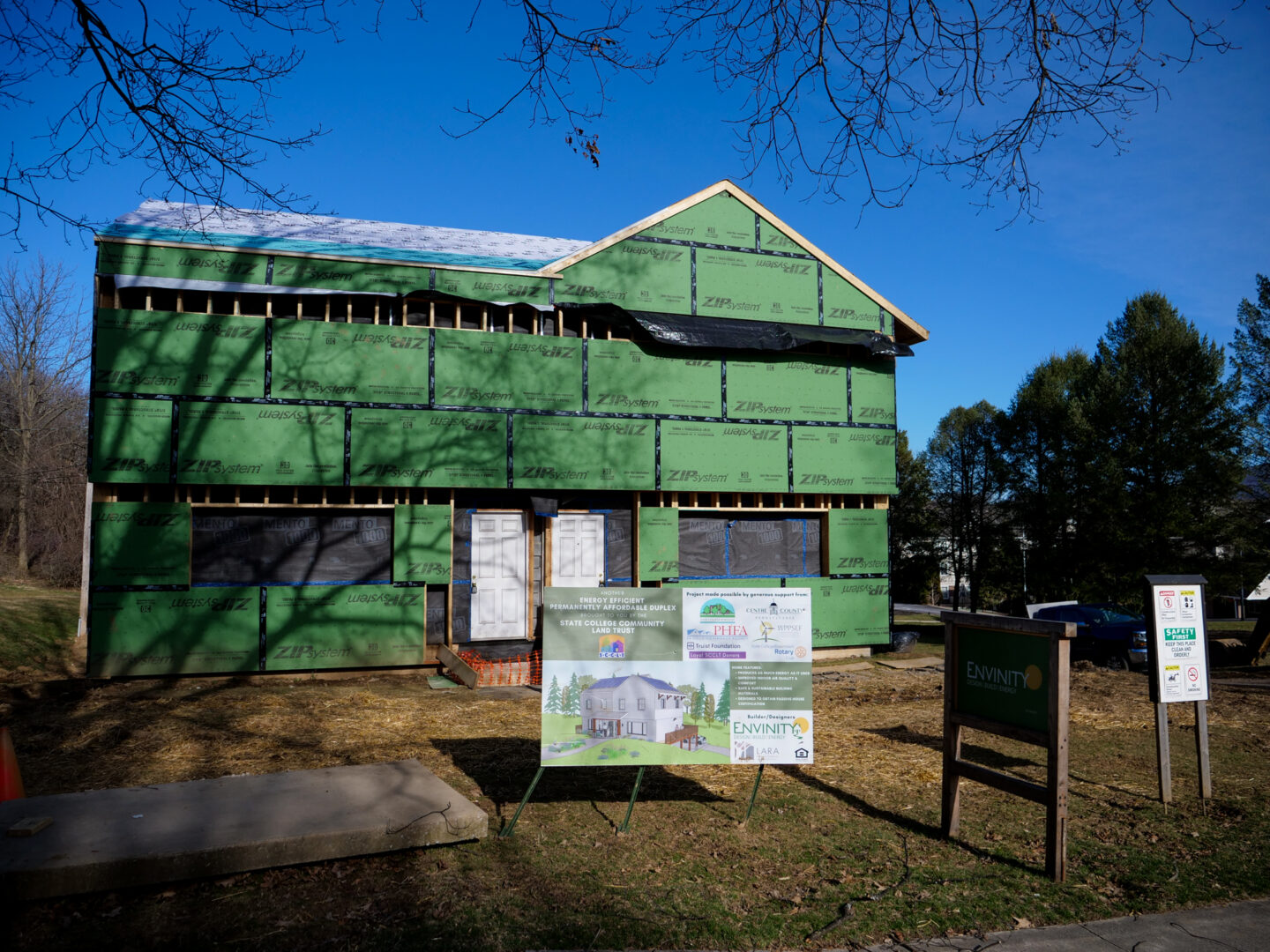
The State College Community Land Trust and Envinity are working to make a home in State College more energy efficient. They built an “envelope” around the exterior of the home that will be filled with insulation. (Jeremy Long – WITF)
 This story was produced for Climate Solutions, a collaboration focused on helping Central Pennsylvania move toward climate literacy, resilience and adaptation. StateImpact Pennsylvania convened the collaboration, and WITF is a partner. Climate Solutions’ funding partner is the Solutions Journalism Network.
Listen to the story:
Eddie and Kristy Riley knew they wanted to start and raise their family in State College, but for a long time, owning a home in the borough seemed out of reach.
Both are Penn State graduates. Eddie works in mental health care; Kristy is a teacher who now stays at home to care for their two sons. But a mortgage in the area was too much. The median home value in State College is around $370,000.
“There were several times when we’d look at each other and have the conversation like, what, what did we do wrong?” Eddie Riley said.
The Rileys could afford rent, but sometimes their heating bills were $500 for one month. Eddie and Kristy remember heating only one room for the whole family and blocking off other parts of the house with blankets. A rent hike on top of the high energy bills forced them out of the borough a few years ago.
They ended up finding the State College Community Land Trust, which has a program designed not only to help people afford a home, but to renovate the home to be as energy-efficient as possible. That efficiency piece saves the homeowners money and also cuts down on emissions from home heating, one of the top contributors to the greenhouse gasses that fuel climate change. The efforts can be of particular help in Pennsylvania, which has some of the oldest housing stock in the nation.
The land trust’s mission is to promote affordable homeownership in the borough. A recent pilot program added an energy efficiency component to 12 homes that were built in around the 1950s and 60s.

Rachel McDevitt / StateImpact Pennsylvania
Kristy and Eddie Riley pose for a photo with their sons Ludden and Aiden on Feb. 16, 2023.
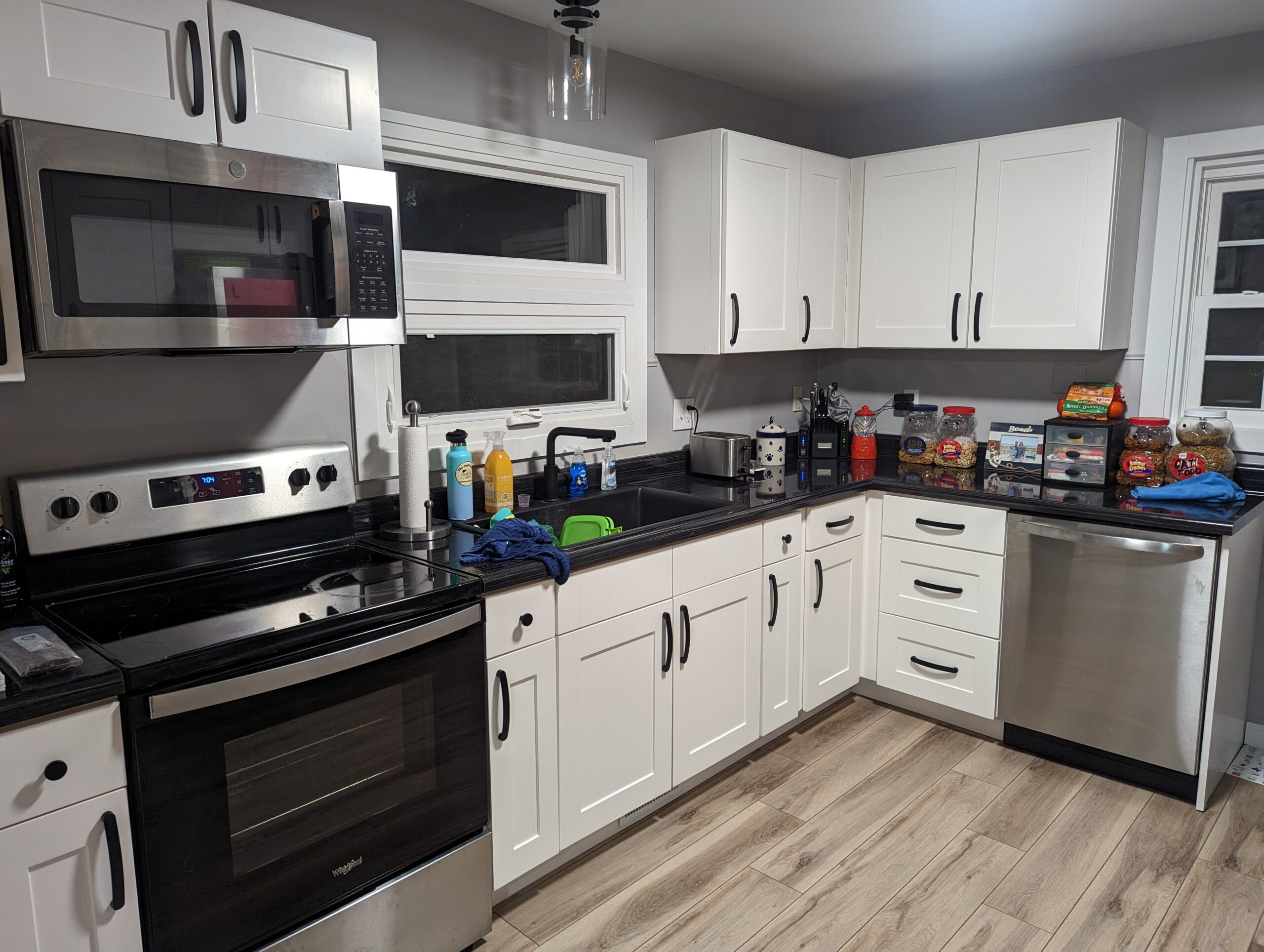
The Rileys became part of the pilot when they moved into the white cottage on Old Boalsburg Road. The land trust had done an energy audit in the house, added insulation to the attic and basement, installed an electric, heat pump-powered water heater and put new, efficient appliances in the kitchen. Those improvements reduced the home’s energy needs by a quarter.
Now the Rileys have been homeowners for over a year and they don’t have to worry about whether they will be able to pay all their bills. The family was even able to visit relatives in Florida this spring.
“It’s been a blessing, a gift. I feel like we won the lottery,” Eddie Riley said.
Others may also have the chance to win out soon, because of new federal money and state programs that aim to help people save on their energy bills while reducing planet-warming emissions.
-
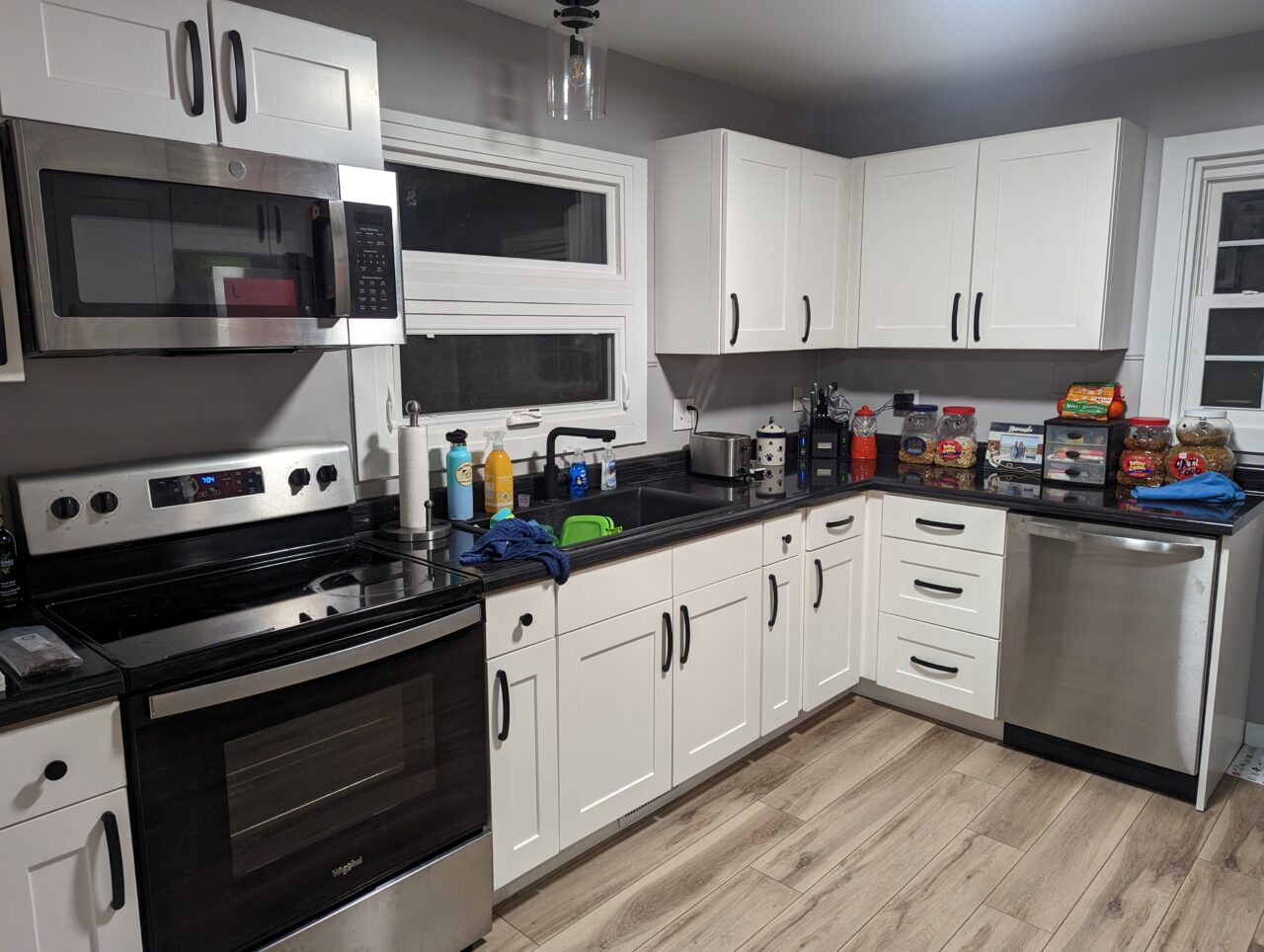
- The Riley family’s home got new appliances as part of renovations by the State College Community Land Trust, seen here on Feb. 16, 2023.
-
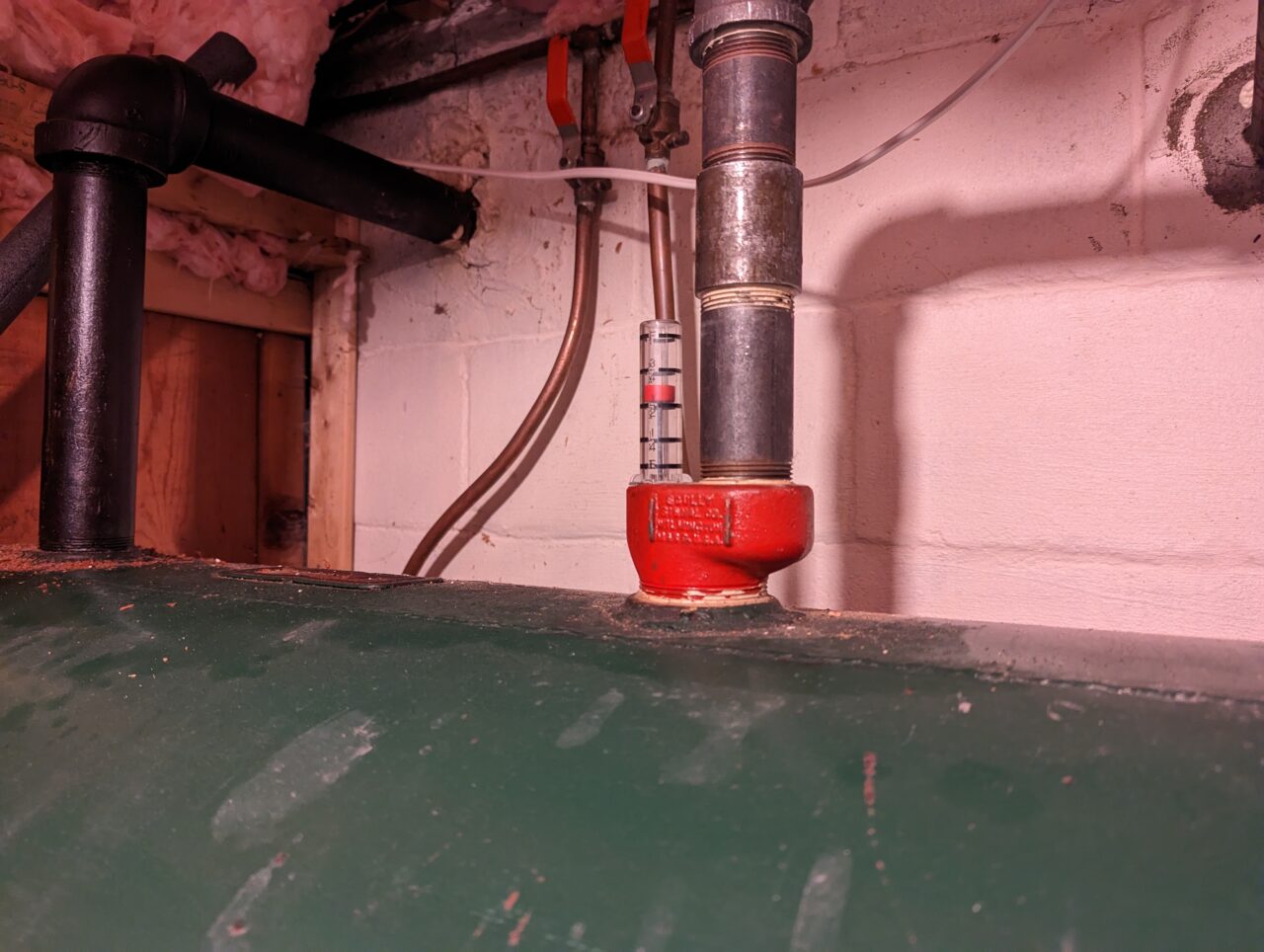
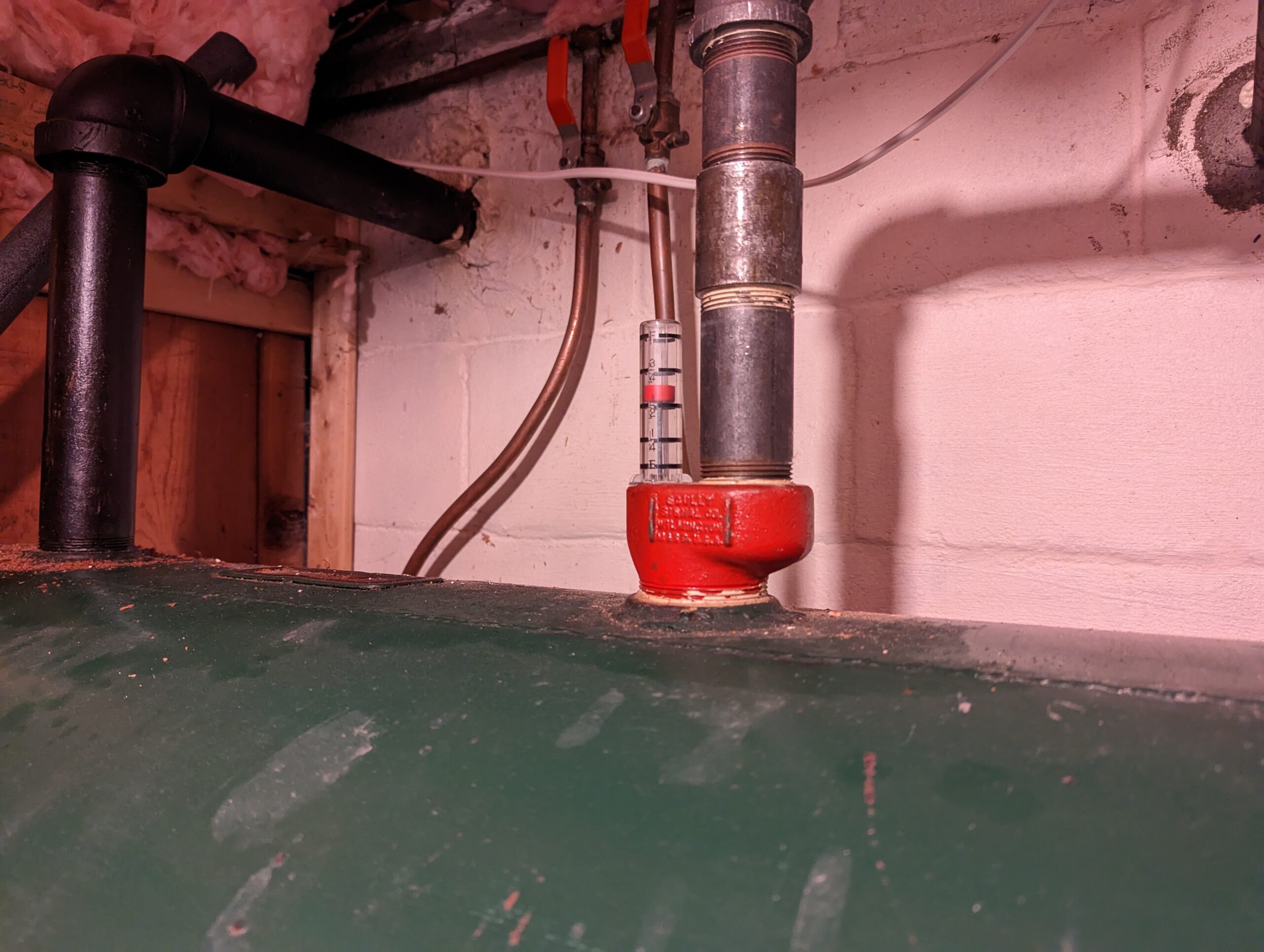
- A gauge on the Riley family’s oil tank shows they have a good supply left in this photo from Feb. 16, 2023. Eddie Riley said the family uses much less oil in their energy-efficient home than in past homes.
Budget-friendly can be climate-friendly
Emissions from home heating account for about 7% of greenhouse gas emissions in Pennsylvania.
Data from the Energy Information Administration shows that, nationally, home energy use accounts for about 20% of emissions when accounting for indirect emissions from electricity use.
Energy efficiency measures are some of the most effective ways to reduce carbon pollution. The International Energy Agency, which works with countries around the world on energy policy, estimates that efficiency could reduce the building sector’s emissions by around 25%.
What efficiency upgrades can you make in your home?
An energy efficient home helps people save money on utility bills. It also plays a role in lowering climate-warming emissions. About 20% of the country’s emissions are because of energy and electricity use in homes.
Graphic: Tom Downing, WITF | Sources: U.S. Department of Energy and Project Drawdown
Colleen Ritter, executive director of the State College Community Land Trust, plans to keep a focus on energy efficiency in all the homes the nonprofit buys.
“We recognize that it really needs to be at the forefront,” Ritter said. “Because if people are buying the houses and the mortgages are affordable to them… we want to make sure that the house is then affordable to them as well.”
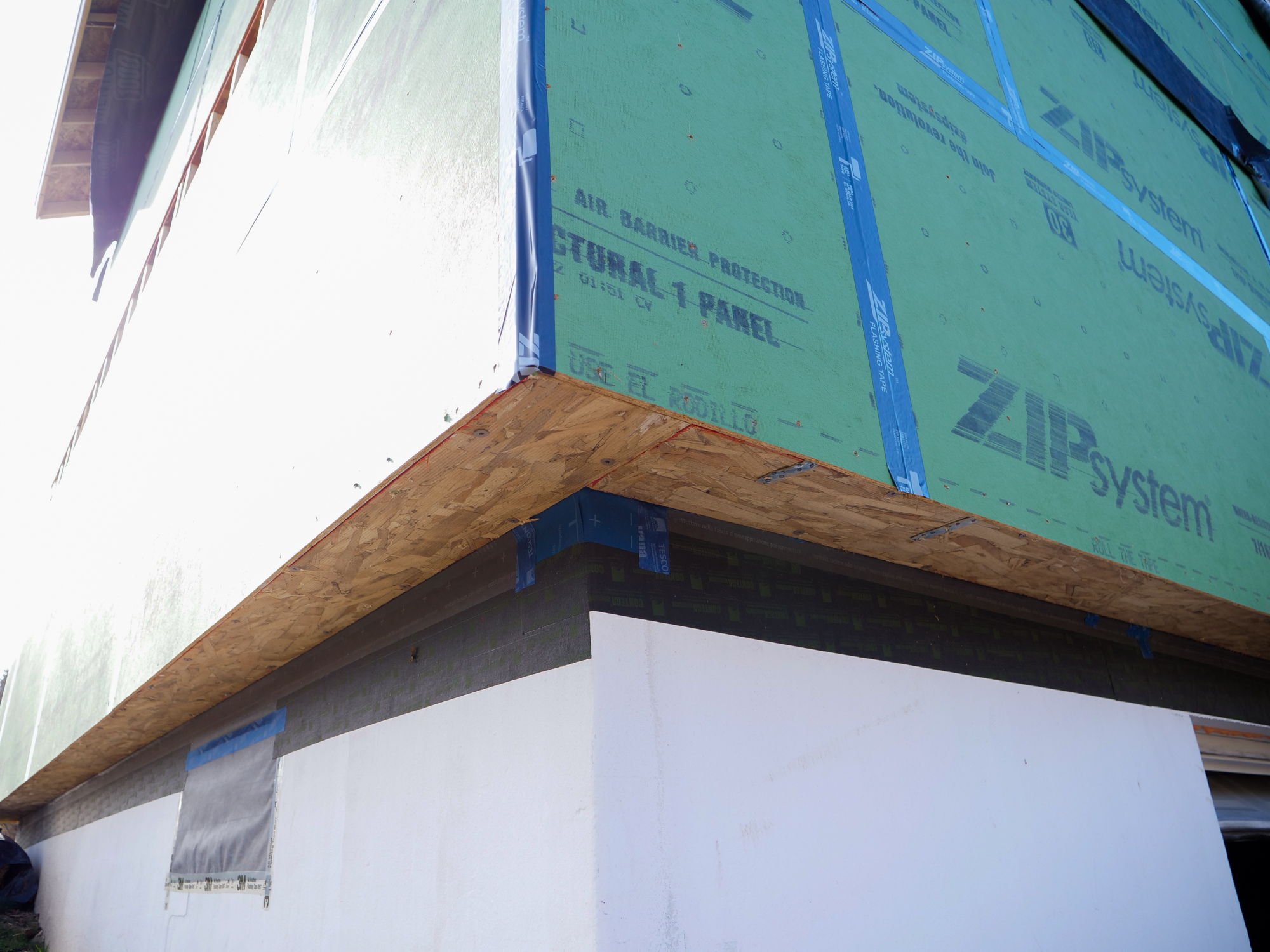
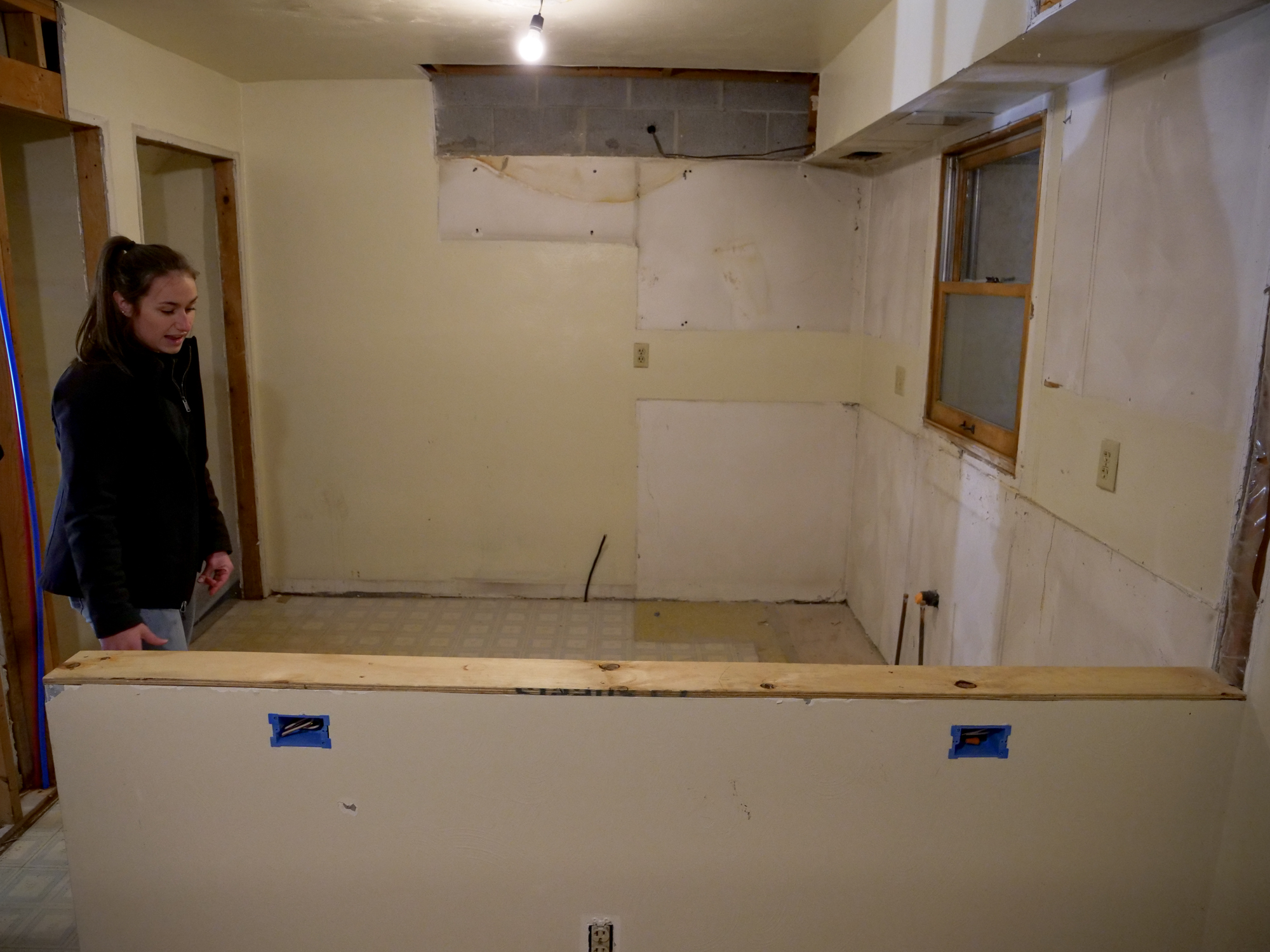
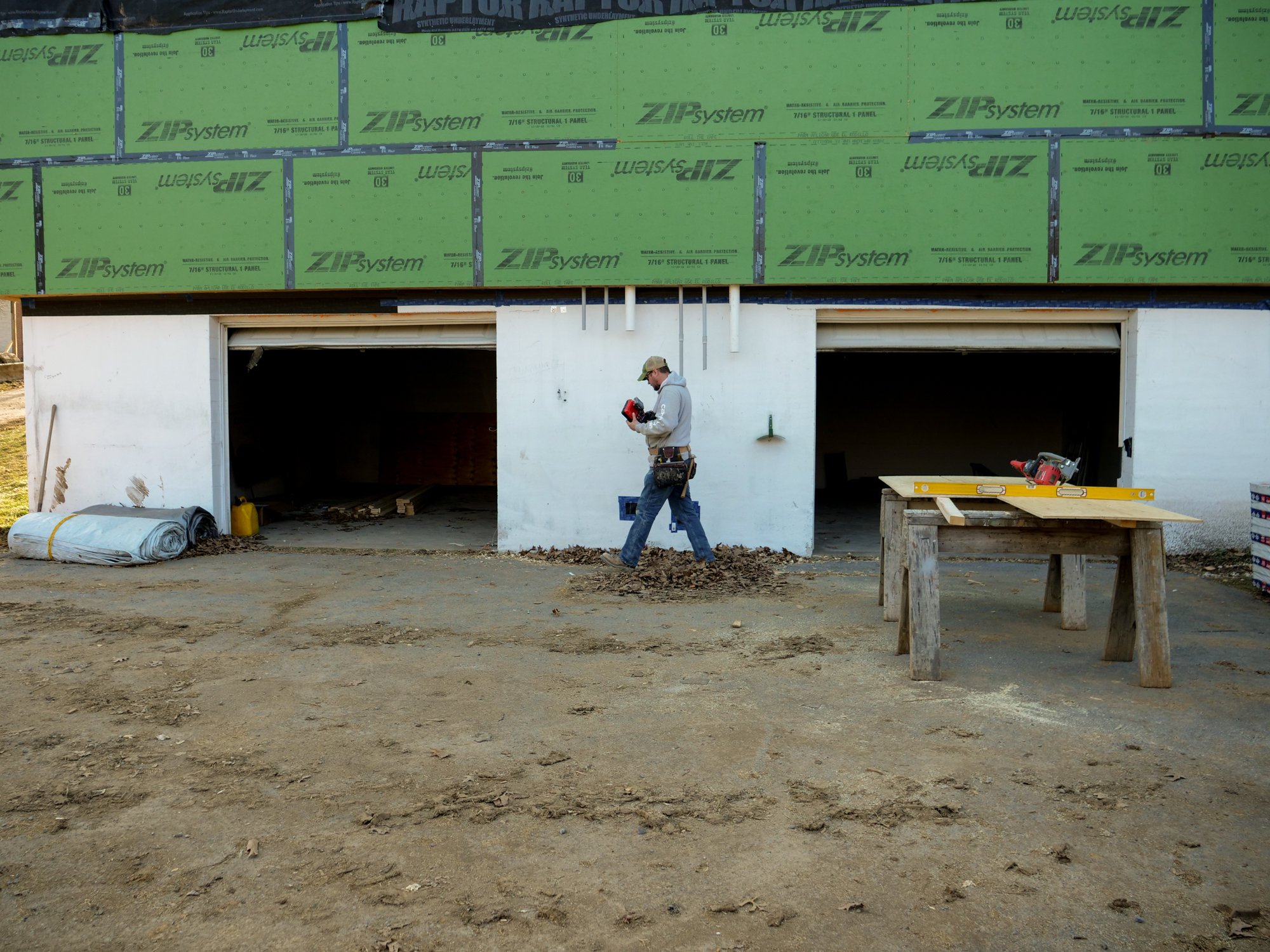
Work is underway at the land trust’s latest project, a 1970s duplex on University Avenue. In March the home looked like it was made from big green legos. A grid of insulation boards was built around the house like a shell, making 9.5 inches of space from the original walls for new insulation.
When finished, this home will be known as a passive house, which is one of the highest standards in home energy efficiency. All the appliances will be electric, including a heat pump instead of a gas furnace. It’s airtight, keeping warm or cool air inside the home.
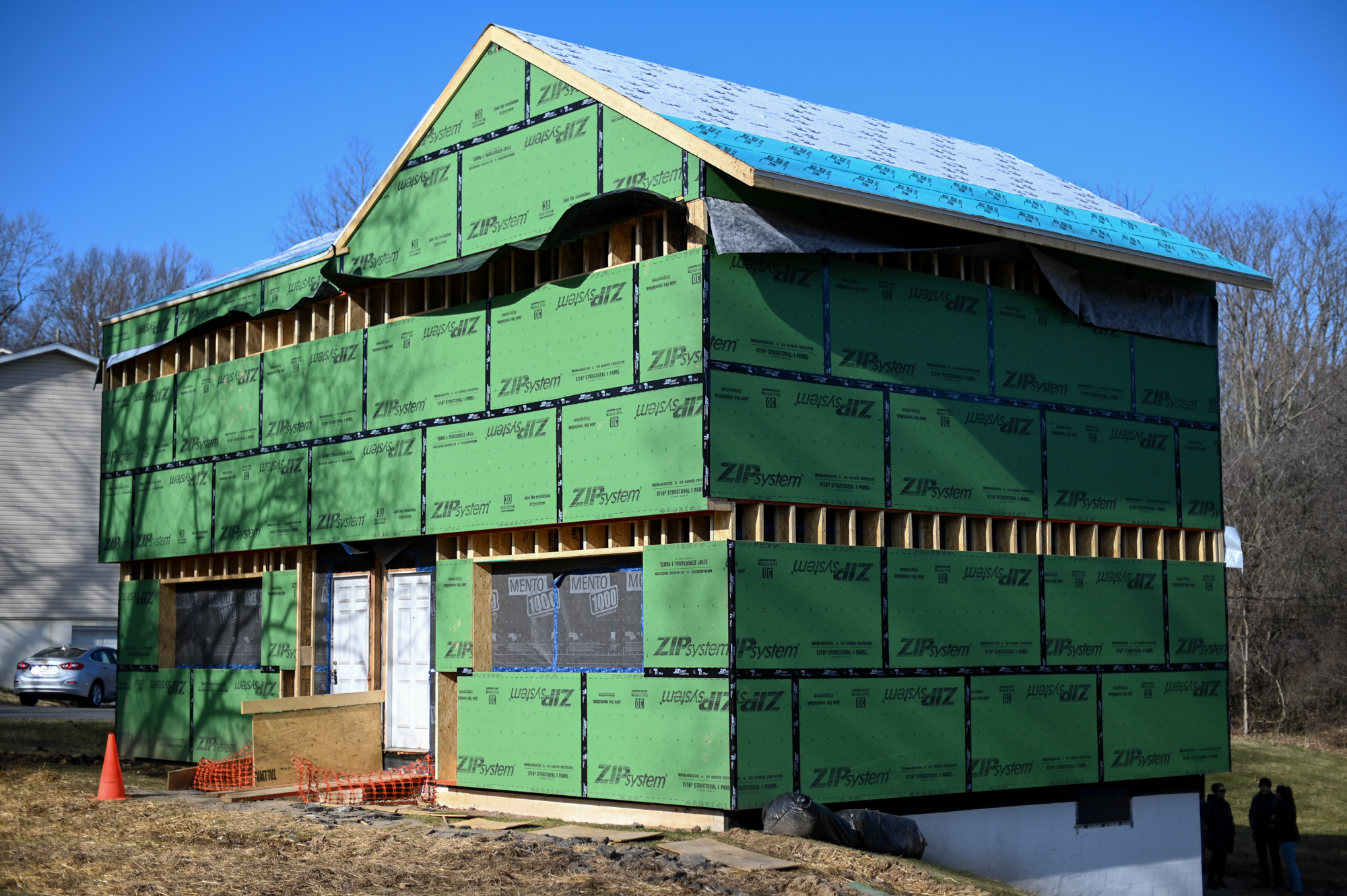
The State College Community Land Trust and Envinity are working to retrofit this home in State College into a highly energy efficient “passive house.” They built an “envelope” around the exterior of the home that will be filled with insulation. (Jeremy Long – WITF)
“This house is going to be pretty much constant temperature,” said Karis Taddei, project manager with Envinity, which is doing the renovations. “So that alone will save tons on energy costs and it’ll be like thermal comfort in your house.”
The focus for the land trust is affordability. It’s listing each home of the duplex for $105,000. But there’s also attention on using materials that are friendlier to the environment and on the overall carbon footprint of the home.
Ritter hopes the passive house can be something of a model for other nonprofits or governments that want to make homes safe, comfortable and efficient.
“We’re not gonna build our way out of a housing shortage. But what we do need to do is to make things sustainable and affordable and energy efficient,” Ritter said.
-
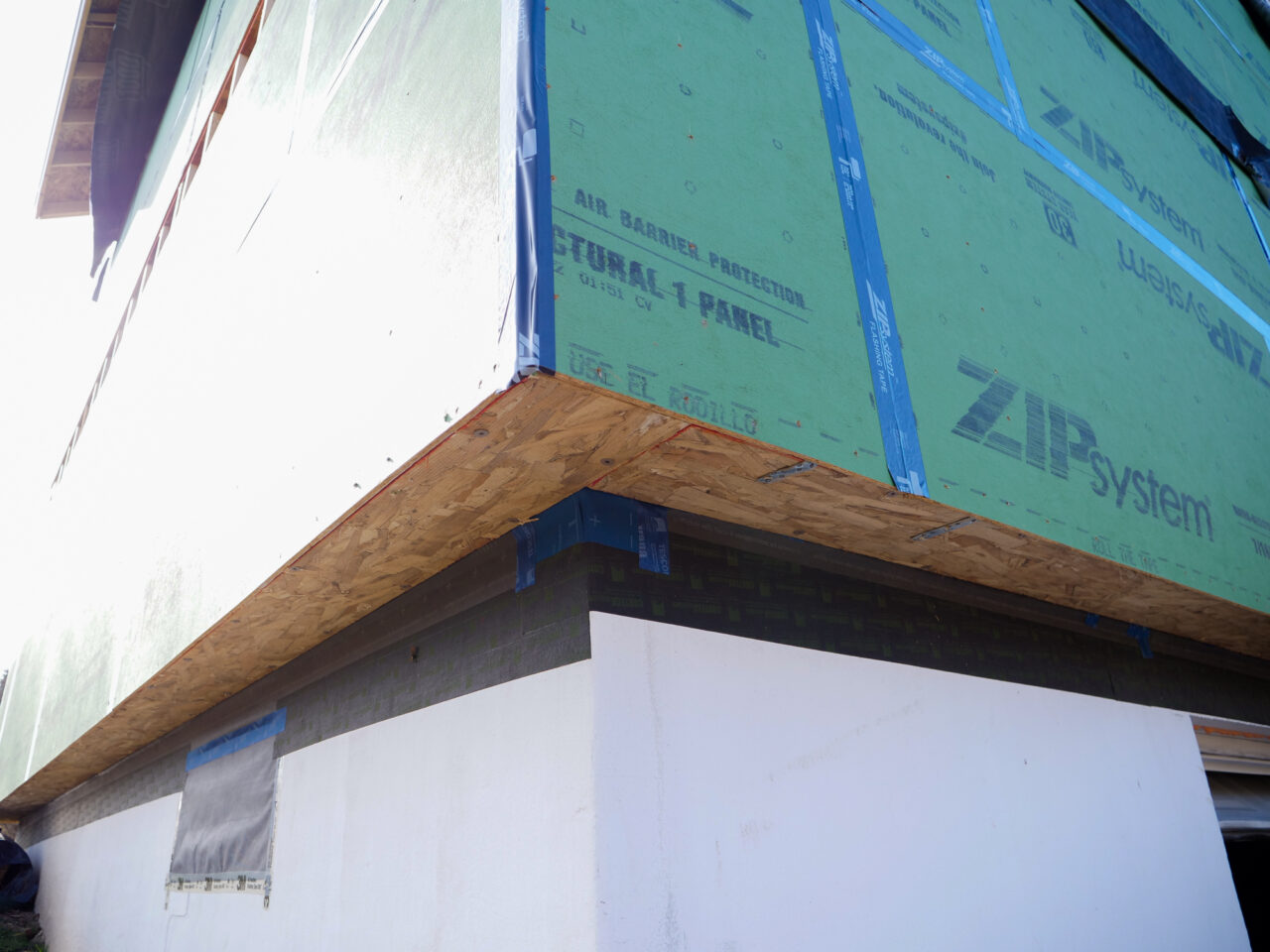
- The State College Community Land Trust and Envinity are working to make a home in State College more energy efficient. The built an 9.5 inch “envelope” around the exterior of the home that will be filled with insulation. (Jeremy Long – WITF)
-
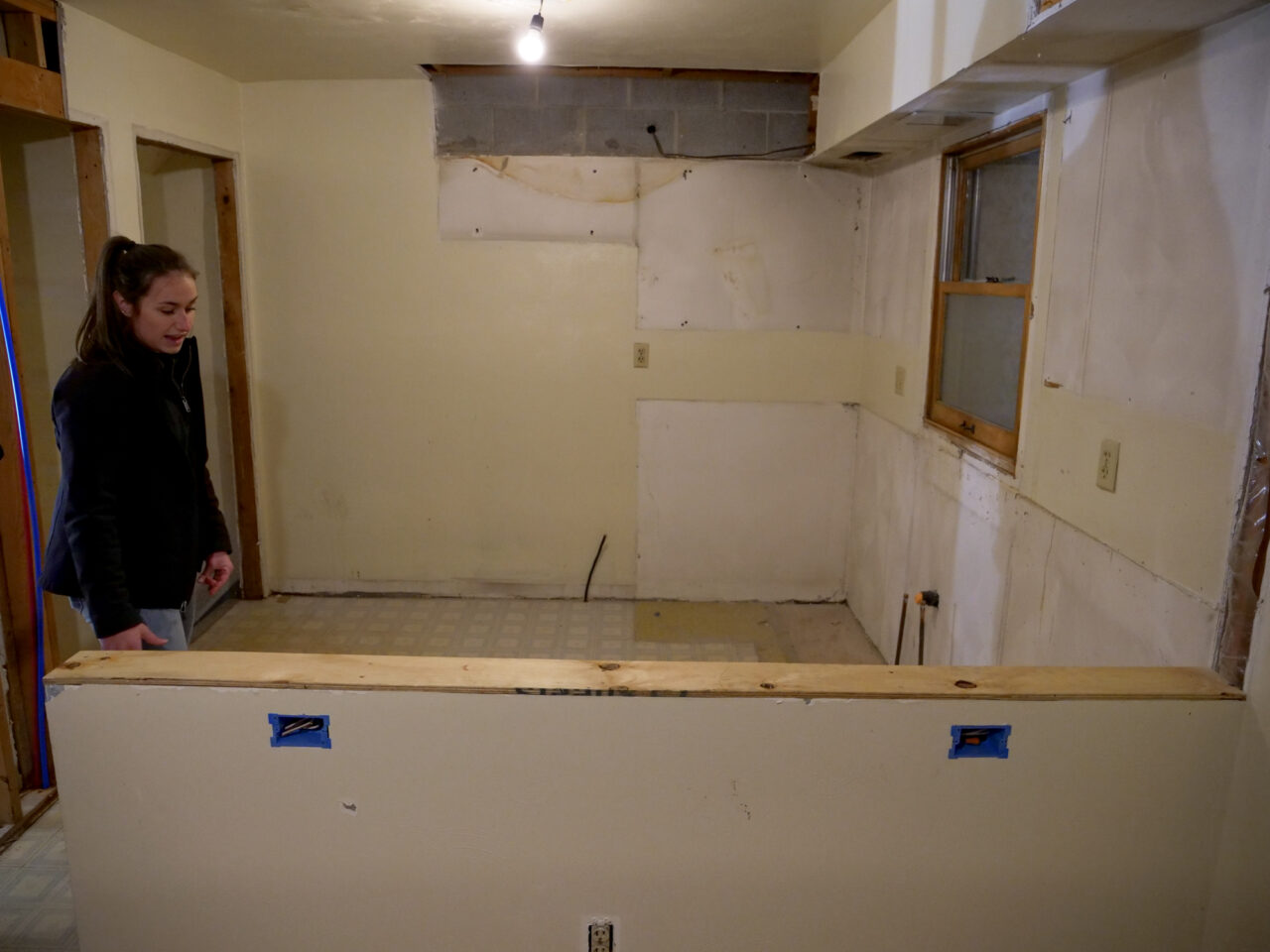
- Karis Taddei, assistant project manager for Envinity, explains how they are remodeling a house in State College. The State College Community Land Trust and Envinity are working to make a home in State College more energy efficient. (Jeremy Long – WITF)
New programs
Communities have an opportunity now to look at issues in housing and prioritize efficiency.
The recent federal infrastructure law expanded weatherization programs and the Inflation Reduction Act is giving $9 billion to home efficiency programs, with the goal of lowering energy bills and emissions at the same time.
A new state program called Whole Home Repairs allocated $125 million to counties last year to improve homes owned by people with low incomes, who often pay up to a third of their income on utility bills, leaving them unable to make the upgrades that would ultimately save them money and prevent emissions.
Pennsylvania, with its old housing stock, needs the help. Surveys have found that one in four voters lives in a home that needs a critical repair. Homes in need of repair are ineligible for other weatherization assistance. Advocates are pushing now to make Whole Home Repairs a permanent part of the state budget.
-
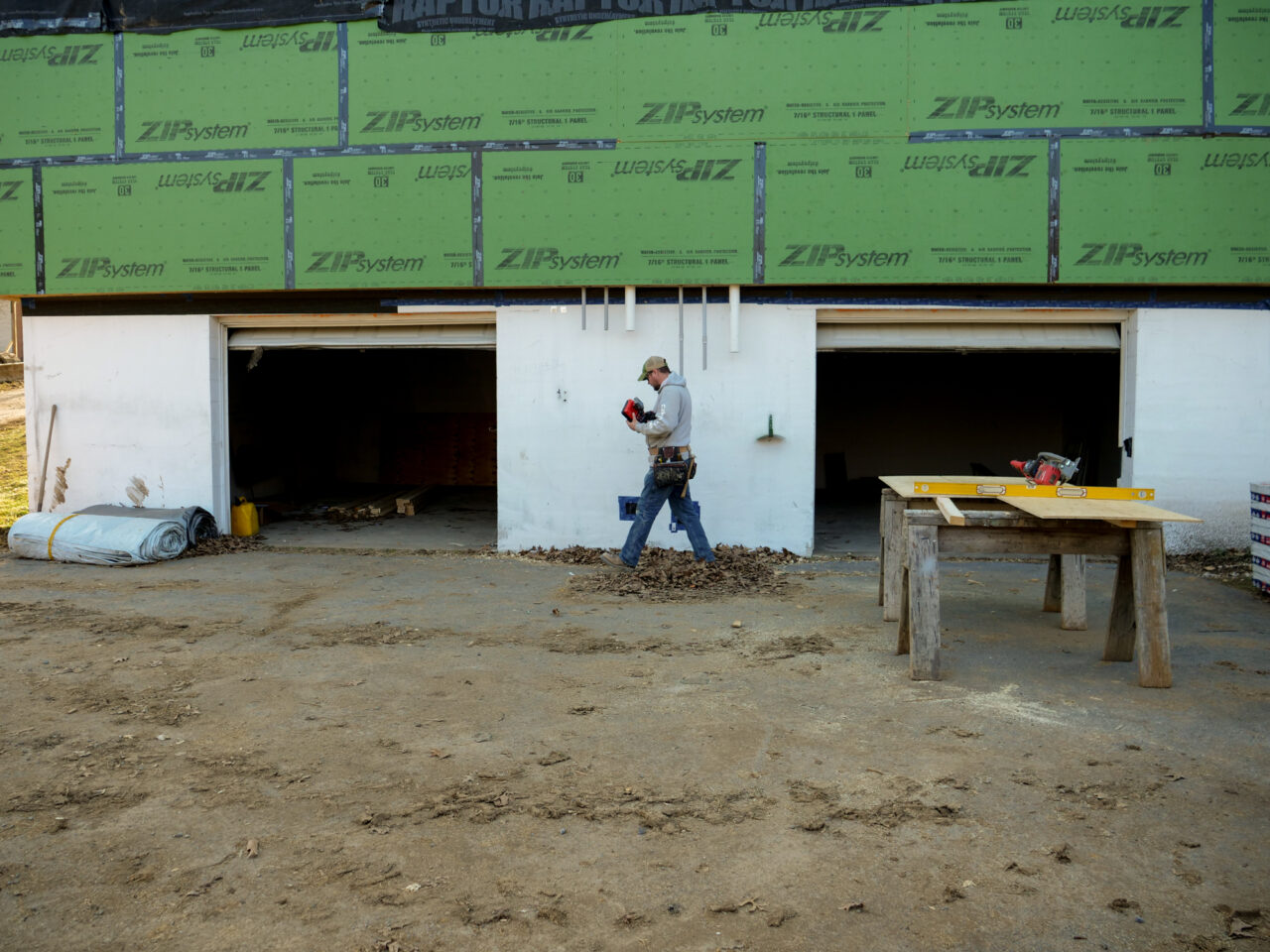
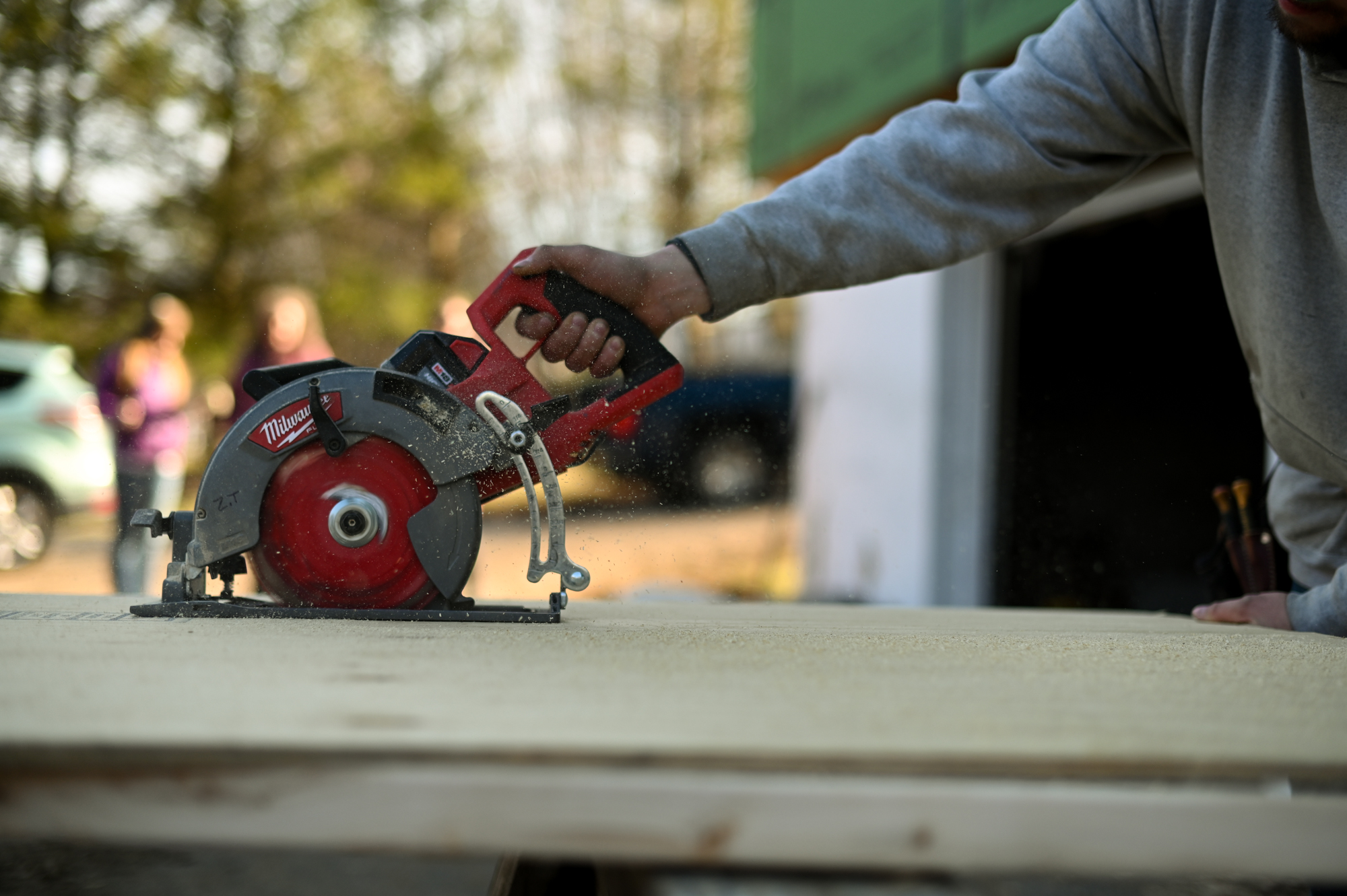
- Zach Tingle, a carpenter with Envinity, works at a home in State College that the company is helping make more energy efficient. (Jeremy Long – WITF)
-
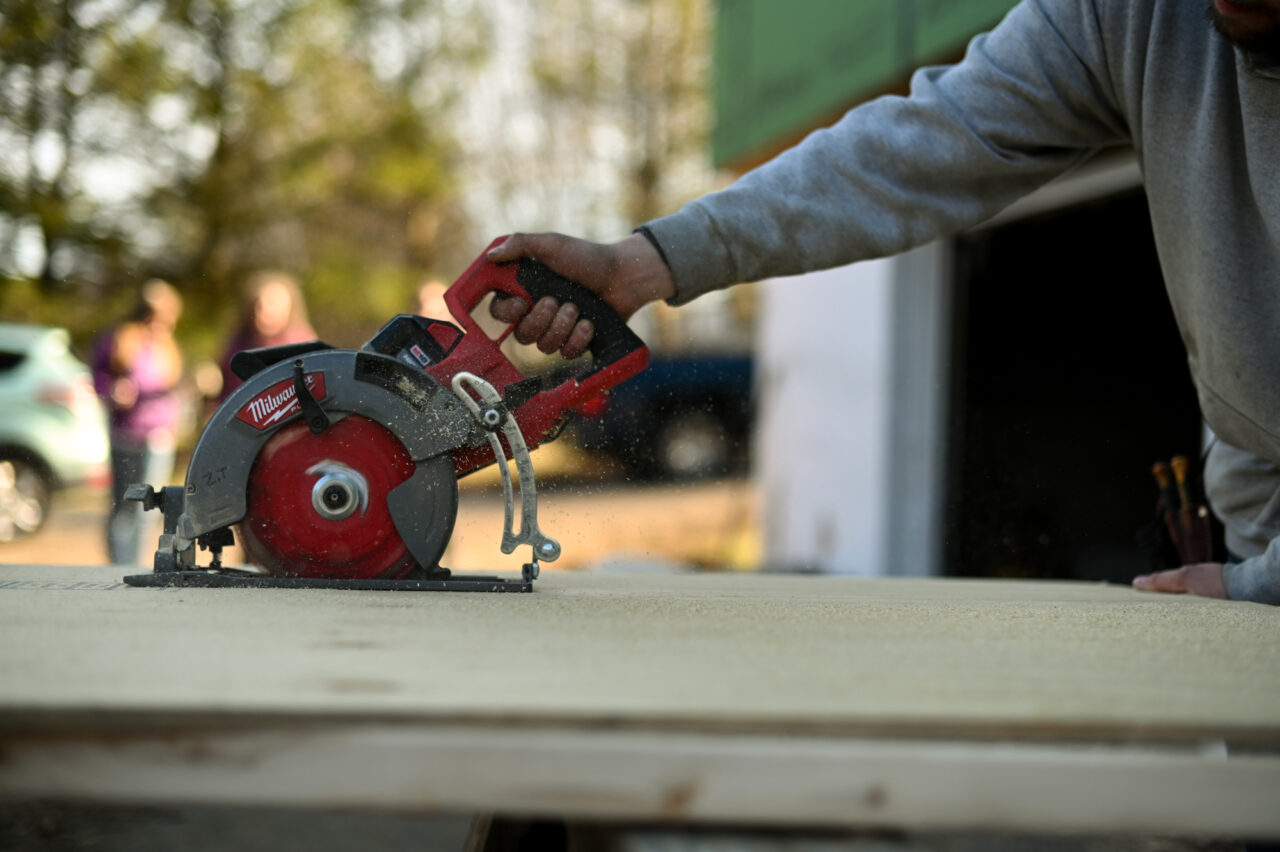
- Zach Tingle, a carpenter with Envinity, works at a home in State College that the company is helping make more energy efficient. (Jeremy Long – WITF)
Pam Adams with the Centre Region Council of Governments has been working on proposals to expand the land trust’s Energy Plus pilot program in the State College area. She’s hopeful the new federal and state programs will achieve multiple goals.
“There is not just climate programs, they have co-benefits and this can help people afford their homes more,” Adams said. But there will be challenges.
Adams said people often don’t want government involved in their homes, and they may be too busy to realize what the programs do and if they qualify.
Then there’s finding people to do the work. Contractors already have more work than they can get to, so going through extra training to understand and work with government programs could discourage some from participating.
Some of the new state money is meant for workforce development.
Adams said outreach and training will be crucial to make the most of the new programs.
Editor’s Picks
[ad_2]
Source link
A Minneapolis startup company wants to become a leader in the emerging carbon capture and storage market.
Carba, co-founded by a University of Minnesota chemical engineering professor and a former student, has developed a portable reactor that converts plant waste into a charcoal-like substance called biochar. That material can then be buried to seal carbon in place for generations.
The company’s backers believe it could prove to be an inexpensive and energy-efficient method to remove carbon dioxide from the atmosphere — something the latest Intergovernmental Panel on Climate Change report, released Monday, says will be necessary for preventing the most devastating effects of climate change.
“There’s a huge negative emissions problem, and nobody has the technology to scale without using a ton of energy or capital,” said Andrew Jones, Carba’s founder and CEO. “We believe we have cracked that nut.”

Andrew Jones, Carba’s founder and CEO. Credit: Carba, Inc. / Courtesy
Related: 6 Meaningful Ways to Reduce Your Company’s Carbon Footprint
Capturing carbon into solid form
Trees and plants are the world’s biggest carbon sink. Through photosynthesis, they store carbon dioxide throughout their lives, but after they die, they decay and release that carbon back into the atmosphere.
Carba’s technology offers a way to lock that into a solid form instead. The company promises to consume a fraction of the energy of other technologies, such as direct air capture methods. In addition, those technologies demand either centralized plants or investments of hundreds of millions of dollars per site.
Carba’s answer: let trees and plants do the work of pulling carbon from the atmosphere, and then lock that biomass into a stable form before it can decay. Jones believes biochar should be buried to remove any chance of carbon release.
“If we harvest all the biomass waste out there and convert it to something more stable, like a char, then bury it underground, we’re reversing the coal mining process,” Jones said. “We can take 1 trillion tons of CO2 that we’ve dug up and put into the air, suck it into the trees and the plants, take their waste product, bury it underground, and store it indefinitely.”

Credit: Carba, Inc. / Courtesy
Partnership with Waste Management
The company was recently named a finalist for an incubator program by Minnesota clean energy accelerator Grid Catalyst. It is partnering with trash and recycling giant Waste Management to deploy its first reactor at a Twin Cities waste facility.
Waste Management said in a prepared statement that it seeks to reduce its carbon emissions by 42% by 2032 and sees biochar as a potential solution. Wood waste at its suburban facility currently either becomes compost or is burned for energy.
The company is “excited to partner with Carba on this sustainability research project that has the potential to demonstrate tangible scientific progress towards climate solutions.”
Jones said biochar offers co-benefits for Waste Management. It helps contain environmentally destructive elements such as the fluoridated forever chemicals (widely known as PFAS), mercury, methane and odors. “That’s a benefit to the whole community,” he said.
Grid Catalyst founder and president Nina Axelson said Carba merges energy innovation and clean energy ecosystems. “I feel like Carba sits exactly between those two because it’s carbon capture technology, but there’s a very big energy efficiency component to their technology,” she said.
Jones met co-founder Paul Dauenhauer in 2005 while he was a chemistry undergraduate at the University of Minnesota. Dauenhauer holds an endowed chair, runs his own research lab, and has won many awards, including a MacArthur Foundation “genius grant” in 2020. The serial entrepreneur has spun off his research into three startup businesses involving biomass.
The two previously co-founded Activated Research Company, which provides chemical analysis for greenhouse gases, biofuels, sustainable aviation fuels, jet fuels and pyrolysis products.
Inexpensive and scalable
An inexpensive, scalable technology like Carba is the key to combating carbon emissions, Dauenhauer said. The energy consumption is a fraction of what direct air capture would consume. “I think a lot of people may be good at chemistry or physics and they understand how to sequester carbon but don’t know how to do it cheaply,” he said. “You have to cut every cent out of the processing and logistical sequence of getting that carbon underground. And that’s where we excel.”
The North American market alone creates a billion tons of biomass annually, which means the company shouldn’t be limited by supply chain shortages. Carba’s technology is also feedstock agnostic, so it can use whatever waste materials are cheaply available.
The mobile reactors can move to different dropoff sites to reduce miles traveled by truckers hauling biomass. The size of a wood chipper, the reactors heat plant waste in an oxygen-less environment to a temperature around that of a commercial pizza oven in a process known as torrefaction.
Initially, Carba considered building a biomass plant before deciding that would take too long, cost too much, and require years of studies and permitting, Jones said. However, that remains the problem of carbon capture facilities at coal or other fossil fuel plants — the cost can top $1 billion and the infrastructure takes years to build.
Several other companies are pursuing similar approaches to carbon capture. CDR.fyi, a community-driven initiative to monitor the carbon removal market, wrote in a Medium post that biochar delivered 87% of the carbon removed from the market last year. Of the 10 most active companies, nine targeted biochar for carbon removal.
Jones and Dauenhauer wrote a peer-reviewed article for ACS Engineering that reported that torrified carbon requires just a small energy input compared to direct carbon capture.
Carba believes the bioreactor will cost less than $200 to break down a ton of biomass. Through selling credits on the evolving carbon removal market Carba should more than pay for the bioreactor’s production costs and generate profits, Jones said.
Carba plans to build and own the reactors, with revenue coming from the sale of carbon removal credits in voluntary markets. The markets reward producers with more money for permanence, defined as carbon storage for at least 100 years.
The global carbon removal market is expected to grow from nearly $2 billion in 2020 to $7 billion by 2028, Fortune Business Insights predicts. CDR.fyi reports 593,000 tons of carbon were purchased last year, a 533% increase over 2021.
Last year Stripe, Alphabet, Shopify, Meta, McKinsey Sustainability and a handful of other companies announced they would invest $925 million in carbon removal companies. More than 3,000 companies have committed to being net zero in the future, a goal that will likely lead to buying carbon dioxide removal credits from Puro.Earth, Carbonfuture or other marketplaces.
Jones identified travel, bank and technology sectors as leaders in the carbon dioxide removal market, with even oil and gas companies expressing interest.
Brendan Jordan, vice president of the Great Plains Institute, said carbon removal technology and markets would become increasingly crucial to reducing global greenhouse gases. The International Energy Agency and the Intergovernmental Panel on Climate Change predict the world will “overshoot carbon budgets, and that’s why there is so much interest in carbon removal strategies,” he said.
[ad_2]
Source link