Welcome to a brand new season of the Affiliate Marketing Podcast.
We are delighted to announce that this season is sponsored by impact.com.
Kicking us off in this season, we begin with an inspiring conversation between Lee-Ann and Robert Glazer, founder and Board Chair of Acceleration Partners.
In this episode, Robert discusses his experience in the affiliate marketing industry over the past few decades.
Talking points include:
- The challenges of running a global remote based Agency.
- The evolution of the affiliate marketing industry – then to now
- The future of affiliate marketing in the current burgeoning digital landscape, and so much more!
This episode deep dives into the importance of affiliate relationships, the impact of AI and modern technology, and the role it plays in the Affiliate Marketing industry today.
Listen in here for all of the insights….
This is still a relationship industry
Lee-Ann asks Robert to share the three biggest things that have stood out for him after working in affiliate marketing for so many years – either the things that have remained the same, or those that have changed fundamentally.
Robert replies, “I think what doesn’t change sometimes is most interesting. What hasn’t changed is that this is a relationship industry. People choose to work with programs and people, sometimes based not on the brand, but on the brand reputation of the affiliate program or the partner program.
“There has been a huge change in the technology used. I think when the SaaS revolution started, it forced everyone to up their game and to get better, and to start thinking about what good services look like and what is good technology like?
“I think the third thing is this sort of globalization of the industry and this convergence of lots of different things into a bigger partnership channel.”
The 80/20 rule
Robert says, “If there’s a principle that is more important in affiliate marketing, it’s the 80/20 rule. 80% of your outcomes will come from 20% of your partners. Therefore, 80% of your partners are only responsible for 20% of the outcome.
“The same rule would also tell you that 20% of your partners, which are probably the ones that aren’t high producing, are responsible for 80% of the aggravation. I think what good affiliate managers realize is you need to execute on a few things well that are really working and to lean into those and not try to boil the ocean.”
Life lessons
Lee-Ann asks, “Now, having built a successful global performance marketing agency, what are some of the biggest lessons that you’ve learned in building Acceleration Partners that you’re willing to share with everybody else?”
Robert shares, “What we’ve learned is, one of my favourite quotes – ‘what the wise man does in the beginning and the fool does at the end’. I think you have to be early on things, when you sense something. We sensed that very early. We went very early with the industry and upset a lot of people in performance partnerships when I said, look, network -based management is a conflict of interest.
“You’ve got to focus on people and leadership. I think, as an agency, as a professional service firm, the people are your product. A lot of people work on the organization and let their product go stale. Maybe more often than not, people are really good at the product, but the organization isn’t good around it. I think, ultimately, you need both of those things to succeed.”
Listen to find out more about:
- The challenges and opportunities in performance marketing
- The paradigm of leaving jobs
- Changing old habits and learning to be excellent
- Why agencies are valuable partners to lean in on
- What’s happening in M&A in the Affilkiate
- Adopting a risk-on mindset for future success
Key segments of this podcast and where you can tune in to go direct:
[08:25] The evolution of affiliate marketing and partnership marketing
[09:20] The impact of technology and relationships in affiliate marketing
[26:13] “No generalization works in this industry”
Rate, Review & Subscribe on Apple Podcasts
If you’re liking this podcast, make sure you hit SUBSCRIBE to never miss another weekly episode packed with information , insights and learning from all four corners of the globe and leave us a 5 Star Review!
AND….
If you’re struggling to launch, scale and grow your affiliate program – join us this year in London at the ELEVATE Summit 2024 – Where Lead Generation and Affiliate Marketing will collide
Taking place for the first time as an in-person event on the 16-17 September in London, take your business to the next level – network with industry experts and grow your business at this informative event built specifically for SME’s , Affiliates, Lead Generators and and Performance Marketers.
EARLY BIRD TICKET PRICES END SOON!
Tickets to this two-day conference are just £349 in our early bird offer:
- Full two-day conference and expert speaker line-up
- Lunch and Refreshments FREE on both days
- Networking and Exhibitor Area to discover new tools, services and resources
- Matchmaking meet-ups and unlimited Networking
Don’t miss your chance to be a part of this groundbreaking ELEVATE summit and take your performance and lead generation marketing efforts to new heights.
Secure your ticket and learn with industry veterans what’s new and trending in Affiliate Marketing and Lead Generation CLICK HERE
[ad_2]
Source link
- Patricia Gonzales is the chief people officer at the creator-commerce platform LTK.
- She described LTK’s remote-first strategy and other tips for productivity in the workforce.
- This story is part of “What’s Next,” a series about business leaders’ strategies for workplace productivity.

The way we work has drastically shifted over the past few years. Now companies are learning how to embrace hybrid work while nurturing new hires and increasing productivity.
Patricia Gonzales, the chief people officer at the creator-economy startup LTK, told Business Insider about how the company has operated since pivoting mainly to remote work and how it’s shifted to accommodate employees and hires.
LTK — formally known as RewardStyle and LiketoKnow.it — is an affiliate-marketing and creator-commerce platform for influencers. The service lets users build storefronts for fans to shop from. The Dallas-based company was last valued at $2 billion in 2021, when it raised $300 million from SoftBank.
Gonzales shared four key takeaways from LTK’s remote-first work culture.
Though LTK is based in Dallas, it employs people across the US
The Dallas office is still available for people to use, but most employees are spread out across the country. The startup says it has over 800 employees, including analytics and insights managers, consultants, and account managers.
“We want people to be as productive as they can be wherever they feel best,” Gonzales said. “And so we have made the decision to be a remote-first company.”
Gonzales said one of the benefits is being able to hire people wherever they are.
“What that allowed was we had access to talent everywhere, rather than limiting ourselves to a local office,” she said.
It hosts monthly events to help employees and new hires feel connected
Gonzales said that to keep employees connected, the company kept “a lot of the long-standing traditions that we had prior to COVID.”
These events include LTK’s anniversary celebration and its kickoff at the start of the year, set up like a conference for staffers to learn and collaborate. The company flies employees out to Dallas for both events.
LTK also hosts virtual events, like Slack celebrations for birthdays, engagements, and marriages, and monthly all-hands meetings. It publishes a weekly newsletter for employees about what’s happening across the company.
Gonzales said the company sometimes organizes in-person events for local employees or teams to gather.
“That is our way to continue to make sure that every individual is still seen, even if they’re sitting at home,” she said.
LTK sets annual objectives and communicates them at the start of each year
Each year the company sets objectives, such as goals for sales, earnings, and creator growth. It uses a model to measure how departments, teams, and individuals are performing within each objective.
Employees also set about three or four annual objectives for themselves before the year starts. Gonzales said the idea is to make sure individual goals are clear and aligned with company goals, adding that leaders revisit their goals monthly or quarterly.
She added: “This is really important for productivity in the remote environment because it can be quite easy, especially as an organization becomes bigger and bigger, to feel a little bit lost. And so you always have a sense of like that North Star of what you’re working toward.”
The company asks employees to keep their cameras on during meetings
As remote work has proliferated, many managers and employees have questioned whether it’s better for people to work from their bed or at a desk, or if it even matters.
At LTK, meeting with colleagues virtually means being present visually: The company has a camera-on policy.
“With the cameras-on method, it means you’ve got to get dressed and be somewhat presentable to be on camera, and you’re participating,” Gonzales said. “It does keep people focused and ensures that there’s this daily requirement of showing up for work every day from a productivity standpoint.”
[ad_2]
Source link
A look at flexibility, productivity, and mental health of working from home
ALBAWABA – Three years post the pandemic that sent countless professionals into remote working arrangements, the landscape of Working from Home is taking an unexpected turn, according to a recent Bloomberg report.
There’s palpable tension between employers yearning for the bustling energy of the office and employees who have grown accustomed to the convenience of working from home.
Both parties are making concessions. Bloomberg reports that some corporate leaders initially embraced the remote-work revolution, but are now experiencing an epiphany about the drawbacks.
For instance, Martin Sorrell, founder of WPP Plc and chairman of S4 Capital Plc, claims that what began as a productive arrangement later gave rise to concerns regarding diminishing corporate culture and engagement.
However, for employees, the reluctance to fully give up on working from home is well-founded.
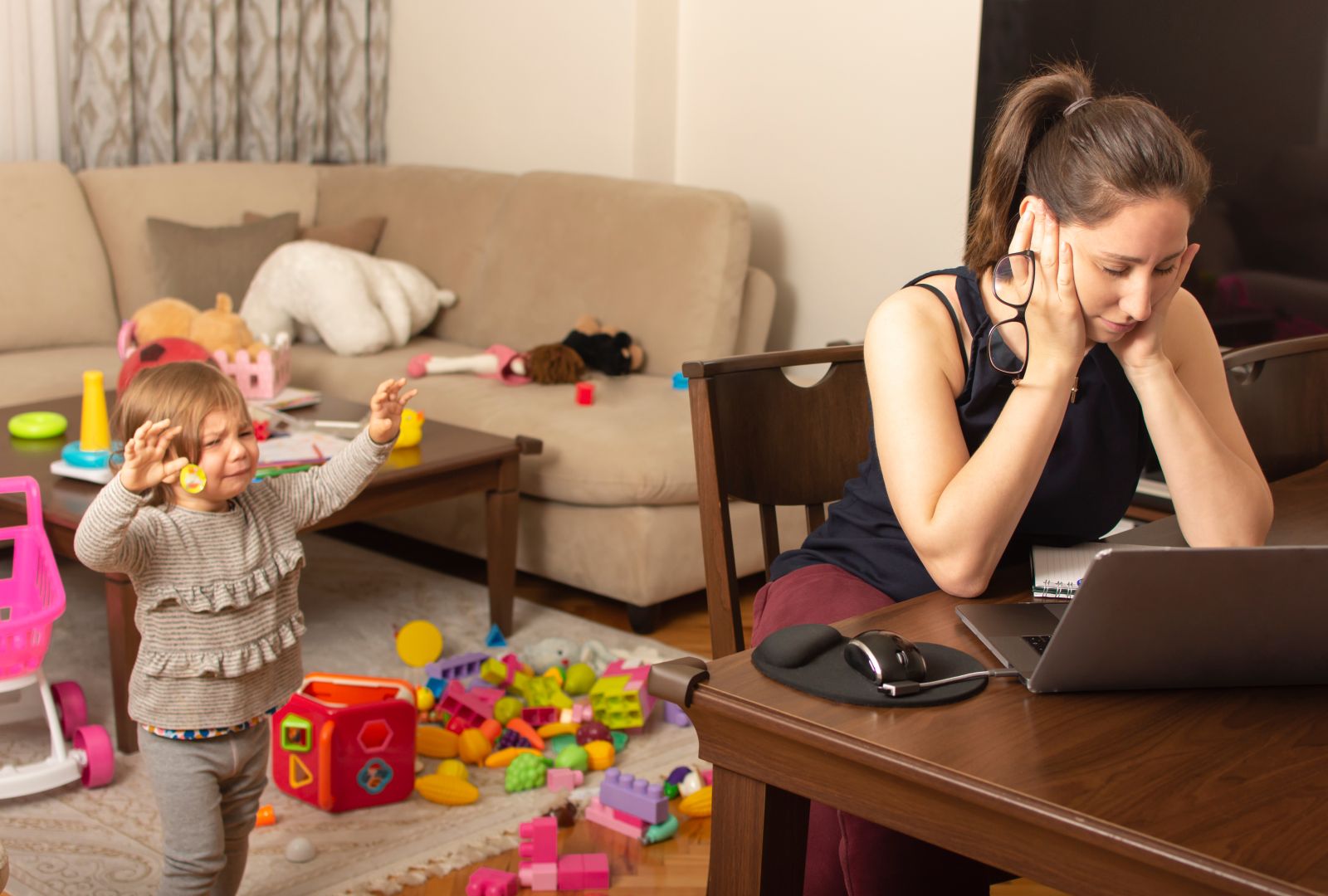
The model has proven to be an invaluable resource, especially for parents and those with long commutes. It has offered unparalleled flexibility in managing work-life balance.
A Pew Research Center survey conducted in March revealed that despite the downsides, about a third of Americans eligible to work from home still prefer to do so.
Rise of hybrid work
Recognizing the merits of both the traditional and remote working models, many companies are adopting hybrid arrangements.
This allows employees to work from home on certain days and requires them to be in the office on others. Google, for instance, mandated a three-day office attendance, making it a factor in performance reviews.
However, these hybrid models are not without challenges.
According to a PwC study, 50 percent of UK businesses report a decline in staff mental health since the onset of COVID-19. The UK-based business consultancy, Ayming, concurs that motivation levels at work have been on the decline for the past three years.
Pursuit of productivity
There’s growing concern among employers that productivity might be taking a hit with remote working. The United States (US) Bureau of Labor Statistics reported that productivity in the US declined in the first quarter of the year.
This is a critical issue that demands attention, as productivity is intrinsically linked to profits.
A crucial element to address is the absence of guidance on when employees should be in the office.
It’s essential to define circumstances that warrant physical presence, such as team meetings or onboarding new members.
Christine Armstrong, a UK-based workplace researcher, suggests that managers actively engage with teams to develop schedules that suit everyone’s personal circumstances.
Mental health and corporate culture
The isolation resulting from extensive periods of working from home can adversely affect mental health.
The US Surgeon General, Vivek Murthy, likened the damage from social isolation to smoking 15 cigarettes a day. This is echoed by Hannah Ingram, a marketing manager in England, who experienced loneliness and a drop in productivity due to the absence of social interaction, according to Bloomberg’s report.

To cultivate a thriving corporate culture, companies need to reimagine HR processes.
Jonathan Best, Chief Customer Officer at GoodShape, highlighted to Bloomberg the importance of informal interactions which are largely absent in remote working. Replacing these with structured virtual engagements is vital for sustaining team spirit and company culture.
Road ahead
As the debate over “working from home” versus “returning to the office” rages on, it’s evident that an equilibrium must be achieved. This requires adaptation, open communication, and understanding from both employers and employees.
Moving forward, it’s imperative that organizations develop robust frameworks that not only encourage productivity but also prioritize mental health and foster corporate culture.
The transition to a new normal is an ongoing journey, and collaboration will be the glue that holds the corporate world together in these changing times.
In conclusion, the Working from Home landscape is an ever-evolving one.
The burden lies on both employers and employees to embrace change, innovate, and adapt to safeguard careers, profits, and most importantly, mental well-being.
[ad_2]
Source link
Looking to transform your leadership? Then join our upcoming live webinar to learn the key principles to help you become a more effective leader.
Hosted by Susan S. Freeman, author of the new book, Inner Switch: 7 Timeless Principles to Transform Modern Leadership, you will walk away with the skills needed to create positive change in yourself and in your organization, including how to:
-
Apply ancient wisdom principles from yoga to lead with self-awareness and effective communication
-
Cultivate qualities like openness, letting go of reactive patterns, and integration of body, mind, and heart
-
Implement examples and exercises for leadership moments, even without yoga experience
-
Create a safe and trusting environment for collaboration and co-creativity
-
Increase productivity, healthy relationships, and joy in the workplace
-
And more!
Register now to secure your seat!

About the Speaker:
Susan S. Freeman, MBA, PCC, NCC, is an executive coach, team coach, author, and speaker, dedicated to helping leaders expand their influence and change the world by making the “inner switch.” Her groundbreaking approach to coaching creates leadership transformation through the integration of Eastern wisdom derived from more than 25 years of studying yoga and yogic philosophy. Through Susan’s unique Inner Switch™ method, leaders learn how to shift from simply “doing” in the world to first “being” within themselves so they can then authentically influence others.
[ad_2]
Source link
Opinions expressed by Entrepreneur contributors are their own.
Walk into any hip startup and what’s the one word you’ll hear echoing across the cubicles and over the Keurig despite best efforts to rein in its use? No, it doesn’t rhyme with luck or hit. This one rhymes with hike and should be wildly familiar to anyone who’s seen the movies Valley Girl or Clueless. Like may sound juvenile, but it has taken over our linguistic nooks and crannies in almost every variety of global English. It appears at the beginning of sentences, in the middle of clauses, and now it even introduces quotes. This expanded use of like is so widespread that news outlets ranging from The Atlantic to Time to Vanity Fair to The New York Times have covered what seems to be its troubling and meteoric rise.
Related: 9 Best Practices to Improve Your Communication Skills and Become a More Effective Leader
But before condemning like as a blight on all that we hold professionally dear, let’s take some time to consider why it might actually serve the greater communicative good. Just maybe, there is more to like than we might at first believe.

Image Credit: Nicolás Ortega
LIKE IS AN INCREDIBLY AMORPHOUS WORD. Even when it’s “appropriately” used, it’s a syntactical workhorse. Primarily, we hear like as a verb, to discuss a fondness for objects or people (“I like ice cream”). As a noun, we have preferences (likes) and their opposite (dislikes). As an adjective, the word is infinitely applicable (swanlike, buffoonlike) to mean “similar to” or “in the manner of.” We also see like used as a preposition, as found in a simile construction (“She has eyes like the sky”) and as a conjunction to embed another clause (“She rode the bike like she was on fire”).
But while these are considered the “appropriate” forms of like, they too have not always been so well received. For example, back in the 1950s, the grammar police were appalled by a cigarette ad that said, “Winston tastes good like a cigarette should.” Prescriptivists of the time denounced this “misuse” of like as a conjunction where, standardly, the word as should have reigned. (“Winston tastes good, as a cigarette should.”) Of course, those people should have been more worried about cigarettes’ long-term effects on our health rather than our grammar.
Nowadays, the conjunction like is so pervasive that its colloquial past is unknown to many of its users — even though our traditional grammar books still label that use as incorrect in formal written English.
Related: Choose Your Words Carefully to Transform Your Mindset (and Your Success)
What people complain about today is the newest type of like. In my college linguistics classes, when I ask the students to name the things that bug them the most about language, like is always at the top of the list — often comically appearing in the very sentence that denigrates it. “I hate how people, like, use like all the time,” they’ll say. Once the offending word is mentioned, the students can’t stop noticing how often it pops up in everyone’s speech for the rest of the class period — and then the rest of the day, week, month, and year. What drives this ceaseless advance? Ask most parents and they’ll probably say it has something to do with adolescent laziness or linguistic rebellion. Ask most employers and they’ll probably say it has to do with a shift from a more formal workplace to a casual, less professional setting.
Ask most linguists, though, and they’ll probably tell you we’re missing the mark.
This new like is what linguists call a “discourse marker.” English has an arsenal of these markers — such as so, you know, actually, oh, um, and I mean — that don’t directly contribute to the literal content of a sentence. Instead, they contribute to how we understand each other by providing clues to a speaker’s intentions. For instance, when I say, “Oh, I finally got a job!” my use of oh is a shorthand way to prompt a listener to mimic my surprise. Discourse markers provide the social greasing of the conversational wheel. Without them, our speech would sound more computerlike. In fact, try not using any. Not only will you find it quite difficult, but others will find you a less appealing speaker.
Related: 4 Expert-Backed Strategies for Improving Your Communication Skills
Discourse markers are by no means new or unusual. Shakespeare made liberal use of them. The epic poem Beowulf even begins with one (Hwæt!), meaning “what” in Old English, which was a signal to the audience that something worth paying attention to will follow. Old English texts from the fifth to 11th centuries are full of the word þa, meaning “then,” which seemed to serve a similar role. By the early modern period (15th through 17th centuries), interjections such as alas, ah, and fie, among others, functioned to give a sense of a speaker’s intentions or emotions (alas, ’tis true). The use of like as a conversational marker, which today’s critics often blame on modern youth, dates back centuries. The Oxford English Dictionary (OED) cites an example from 1778: “Father grew quite uneasy, like, for fear of his Lordship’s taking offence.” It also cites another example from 1840, in a magazine of the era: “Why like, it’s gaily nigh like, to four mile like.”
Like emerged as a discourse marker centuries ago for the same reason that it has become so popular today: It is a surprisingly useful conversational tool.

Image Credit: Nicolás Ortega
TO SEE HOW LIKE COMES IN HANDY even in professional settings, take a sentence like, “I worked for, like, 80 hours.” The like that appears in this example might not seem as if it is serving any strictly necessary role. In fact, it could be deleted and the strict semantic sense of the sentence would remain (“I worked for 80 hours”). But you would lose some of what the speaker intends to convey, a certain linguistic je ne sais quoi. This use of like suggests the speaker is not completely certain of how long they worked (or doesn’t really care to be more specific) but is emphasizing the fact that the work period was impressively long.
Related: The 4 Most Important Words in Leadership Development
We will often state things strongly or weakly in order to persuade a listener about a position we present, or to resist making a strong claim, or even to share useful but potentially not exact information. In our example, “I worked for, like, 80 hours,” the speaker’s intent is to persuade the listener that the work was long and grueling, but probably not that it actually lasted 80 hours. In fact, if taken literally, one might not have much interest in pursuing conversation with someone so obviously in need of alternate leisure-time pursuits.
While often characterized as empty or meaningless in terms of the semantic contribution, such markers can be an important component of what we consider informative discourse. Compare the sentence, “John was, like, 21, when he launched the company” with the roughly equivalent utterance, “John was 21 when he launched the company.” Should a listener know John, and also know that he actually started his company at 22, the conversational import (that he founded a startup at an early age) intended by the speaker may be missed because the listener is more concerned that the sentence violated what they know about John. In linguistics we call this the truth-conditional meaning of sentences. Sarcasm and humor aside, speakers and listeners tend to aim for credibility. Thus, there is a subtle difference added by the use of like that may help a speaker make a point about John launching his company without getting sidelined by information regarding his age that could mess with our truth conditions. One could easily have said, “John was about 21 when he launched the company,” but that comes across as more reserved than carefree and hip.
Related: 5 Tips to Feel More Confident With Public Speaking
Just think about it this way: We hedge and qualify all the time in business. Along with the perfectly acceptable terms “think,” “may,” “possibly,” or “maybe,” like is just another way of expressing degrees of certainty.

Image Credit: Nicolás Ortega
HERE’S ANOTHER WAY that like adds nuance.
My daughter (a model like user) and I were recently talking about a party she attended. When describing a fellow attendee, she said, “She’s, like, one of the popular girls,” and then proceeded to tell me about this tween Amazonian’s death-defying acts of coolness. Now, I am doubtful that my daughter was trying to be vague about the girl’s popularity. Instead, by introducing the noun phrase “one of the popular girls” with like, she was highlighting the point she was trying to make. In other words, she was using like as a linguistic focuser. This function alerts the listener to a speaker’s emphasis or subjective take on a particular aspect of the sentence.
The problem for some is that when like is used in this way, it can seem to show up anywhere. But there is a method to the madness. One study looked at how discourse marker functions of like were deployed by speakers when retelling stories. It discovered that both the original speaker and the listener tended to recycle likes at the same points in the story when retelling it, suggesting that those specific likes really did matter in qualifying or supplementing the meaning. Like it or not (pun absolutely intended), like usage seems to be intentional and essential.
And now the plot thickens. While the above examples demonstrate the power of like as a discourse marker, the usage that seems to really rally the grammar prescriptivists is like as a quotative verb. As in, “I was like, ‘I can’t stand it!’ and she was like, ‘I know! I don’t like it either.'” This form of nonstandard like use seems to be the one people find most difficult to digest, which is unfortunate, because it’s also the most rapidly expanding one in English.
Related: 14 Proven Ways to Improve Your Communication Skills
In contrast to the long history of discourse-marker like, such quotative like use is a fairly recent development, with the OED first noting its appearance in a Time magazine article from 1970, where it was used to report internal dialogue of the speaker: “And I thought like wow, this is for me.” According to like experts, this reference is a throwback to the “Like, wow” phenomenon associated with beatniks in the 1950s and beat/jazz culture in New York City in the 1960s.
The popularity of quotative like use was mainstreamed by the song “Valley Girl” by Frank Zappa, with help from his daughter Moon Unit, in 1982. This song took popular culture by storm, drawing a caricature of the speech style used by girls from Southern California. Along with introducing the iconic phrase, “Gag me with a spoon,” it acquainted many of us with like in both its discourse-marker and quotative functions, helping to accelerate its spread. Still, the song simply reflected, rather than started, an undercurrent already in play well before it came on the scene.
When looking at how this be-like form is most often used, Canadian researchers Sali Tagliamonte and Alexandra D’Arcy find that it occurs most often with first-person narration of inner dialogue (e.g., “I was like” or “We were like”). Their findings echo research from the early 1990s that discovered speakers alternating between say and like to take on different narrating roles — using “they said” when directly reporting someone else’s speech but “I was like” mainly when characterizing their own thoughts or feelings. This suggests that be like is used primarily to help us convey different perspectives while describing a story or an event, perhaps to heighten dramatic tension.
Intriguingly, this rapid uptake and selective replacement of the verb “to say” appears to correspond with a fundamental shift in our narrative style during the latter half of the 20th century. Prior to the rise of be like, our stories were primarily intended as retellings of events. Now, however, we are also interested in narrating our thoughts as if spoken out loud during the moments we are describing. As a result, the focus has moved from strict reportage of the events themselves to our processing of these events. The verb “to say” didn’t sufficiently capture the subjective sensibility this new approach required, which led to the rise of be like, serving to inject first-person reflections. Think of the difference between “Then I said, ‘Hello there!'” versus “Then I was like, ‘Helloooo there!'” To say comes across as a verbatim quote while be like communicates a “something along the lines of” sentiment, and in fact might be taken here to describe what I was thinking rather than anything I actually said. Gradually, these first-person uses of quotative like extended to use with all potential subjects, so that now she can be like, he can be like, and so can they.
Related: Remote-Communication Tips from 7 World Champions of Public Speaking
Not surprisingly, most studies have found a greater use of modern like by younger speakers. But research suggests that it’s increasing among older speakers too, and there’s little evidence that its spread will be halted. Like it or not, like is becoming the new norm.
What does this all mean for you? Whether it falls from the lips of those you work with or even your own, you won’t go wrong being among the first to recognize this new like‘s utility and purpose. It’s especially helpful if you want to connect to millennials and Gen Z, who will find you more appealing and approachable. So, leaders of all sorts should relax about censoring the likes out of their speech or the people they oversee. And for those who remain unconvinced, instead of dismissing it as simply something to eradicate, consider how like has traveled from the innovative edge to become an enormously pervasive and popular feature of speech today — a true linguistic entrepreneur if ever there was one.
What’s not to like about that?

→ From LIKE, LITERALLY, DUDE by Valerie Fridland, published by Viking, an imprint of Penguin Publishing Group, a division of Penguin Random House, LLC. Copyright © 2023 by Valerie Fridland.
[ad_2]
Source link

Khloé Kardashian: Makeup, Ash K Holm; Hair, Irinel De León; Stylist, Dani Michelle: Seamstress, Mia Paranto; Manicurist, Zola Ganzorigt: Pedicurist, Millie Machado. Emma Grede: Makeup, Christina Cassell; Hair, Vernon François; Stylist, Simon Robins.
Image Credit: Greg Swales
The model wears a faded denim jumpsuit that hugs her curves like slalom skis. She’s tugging at the zipper that goes up the front. And the photo of her appears on the Instagram page for fashion brand Good American, where it garnered more than 3,000 likes and comments along the lines of “OMG,” “NEED,” and “OBSESSED.”
But amidst the emoji flames and heart-eyed smiley faces, a user who goes by the handle @jazziolebabe writes: “Prices r too high.” That’s sure to have a familiar ring to anyone with a company that sells things. “Customer obsession” is hot lingo these days, especially in retail. Everyone is scrambling to know what their shoppers want and need — and comments on social media are an obvious destination, because even negative feedback can be incredibly valuable. But finding useful insights often means dredging through the sewer of knives-out viciousness and abusive one-upmanship. And what do you do with something like “Prices r too high”? OK, sure — but last time you checked, you were in business to make a profit.
Related: How to Accelerate Your Success as a Female Founder
Making use of social media comments and other customer feedback is always tricky, whether you’re an everyday entrepreneur or someone like Khloé Kardashian, who has more than 300 million followers on Instagram alone. She also happens to be the cofounder of Good American along with Emma Grede, a fashion-industry veteran who’s becoming increasingly famous herself for her Shark Tank “guest shark” appearances. “You have to get a good sense of when people are just talking to talk,” Kardashian says, “and when to go, ‘You know what? I’ve read this enough, and where there’s smoke, there’s fire. Let’s pay attention to this.'”
More than anything else, learning to pay attention is what’s helped Grede and Kardashian build their size-inclusive brand Good American into a serious force in fashion, employing over 100 people and doing more than $200 million in sales last year.
A few years ago, when they saw a number of comments piling up about prices, they took note. While they’d always meant for their clothes to be accessible, Good American is not a low-end brand; jeans go for around $99 to $199. That’s because the production costs to make well-fitting apparel from sizes 00 to 32 Plus are hefty. Lowering the price by decreasing quality was not an option. So they focused hard on their customers, both on social media and off, and tried to look at shopping through their eyes, asking: What are we spending so much money on?
That’s when they saw the problem: A woman’s weight fluctuates. “It’s true regardless of where they are on the size scale,” says Grede. “I mean, I’ll be up or down six pounds depending on the time of the month — “
“Depending on the day,” Kardashian quips.
The point, says Grede, is that “these women have two or three different sets of jeans in that closet.”
What if they could solve this? The question led to an idea: They’d innovate a fabric that stretches four sizes, as magically as the fictional jeans in the 2005 movie Sisterhood of the Traveling Pants. Instead of lowering their cost, they’d increase their product’s value — saving their customers from having to buy multiple sizes. It was frustratingly slow and expensive to pull off, but in the end, definitely worth it: Their “Always Fits” jeans, launched in 2020, have become one of Good American’s best-selling denim products.
Related: Supermodel Karlie Kloss’s Lesson to Young Women: Never Be Afraid to Ask Questions!
For Grede, it was proof of a process that now underlies the brand’s success: You listen, identify pain points, and then invest in creating features that aren’t being duplicated elsewhere. “It puts a moat around our company, right?” she says.
It’s a moat built on voices.
You probably know who Khloé Kardashian is — but just in case you missed all 20 seasons of Keeping Up With the Kardashians, the various spinoffs, and the current show, The Kardashians, then here’s the quick of it: Khloé is the youngest of the three original Kardashian sisters. She is “the funny one,” down-to-earth and good-natured, and always trying to make peace.
Grede, on the other hand, did not come from celebrity royalty. She grew up in East London, a scrappy Black girl raised by a single mom, in a family of women who embraced their curves. She was barely 26 when, in 2008, she started a brand marketing company called ITB Worldwide that was eventually acquired by Rogers & Cowan (she won’t say for how much). By then, she’d already embarked on her next act.
The idea for a size-inclusive apparel line came to her when she realized she was part of a problem. “I was working for the biggest fashion brands in the world, casting these seemingly diverse campaigns, and I thought, Wouldn’t it be amazing if they actually made clothes to fit some of these girls?” she says. “We talk about women having equal opportunity, and yet we let the fashion industry dictate that if we’re over a certain size, we aren’t important enough to service. It felt archaic to me. I just thought there was a huge opportunity.”
Related: 8 Qualities to Drive Your Success as a Female Entrepreneur
In 2015, she shared these thoughts with Kris Jenner, the Kardashian family matriarch, whom Grede had met through her fashion work. The following week, Grede was on a plane to Los Angeles to pitch the idea to Khloé. The meeting was in a conference room in Culver City, California, and all she had was a PowerPoint she’d worked up on the flight — essentially a manifesto of values, some images pulled off the web, and a bad placeholder name. Kardashian was wary.
“When I was younger, I took every opportunity to hawk products or do this and that — I didn’t even know what I was doing half the time,” Kardashian says. By 2015, however, she was much better equipped to evaluate a good business deal, and she was only interested if she deeply cared about the project. She took the meeting with Grede, but wasn’t expecting much.
In the room, though, Kardashian was impressed by Grede. She also immediately understood the presentation: The customer was her.
Growing up, before all the fame and social media, Kardashian was a cheerful, confident, athletic kid. She liked being physically bigger than Kim and Kourtney — until she became an object of the gossipy press. “I never knew I was, I guess, chubby or fat until the weeklies and tabloids started telling me I was,” she says, her voice hovering for a split second, as if careful to sidestep that old cavity of insecurity. But even in her younger days, she hated shopping. In the ’90s and early 2000s, there was no e-commerce, and in stores, larger clothes were ghettoized. “My sisters loved to go to little boutiques or chichi department stores. I was always being ushered to some underground basement, always being thrown a mumu or just being told, ‘No, you can’t shop here.’ And it made me feel so much less than.” Nothing was worse than trying to buy jeans, especially trendy ones like Frankie B. “No disrespect to Frankie Bs — but I have a butt and it’s not getting in Frankie Bs!”
Despite all that, Kardashian still felt sexy and attractive. “More power to me,” she jokes. But she knew other women did not feel the same. In Grede’s presentation, she saw a brand that could channel and spread that confidence around.
“The only thing I didn’t enjoy,” says Kardashian, “was the placeholder name. I don’t even remember what it was.”
“I do,” Emma mutters.
Related: 7 Practical Ways to Celebrate and Support Women Entrepreneurs
At this point, we’re all lounging couchside in a nook of a cavernous photo studio in Calabasas, the Los Angeles suburb of gated communities where Kardashian lives. Having ditched her stilettos and tight jeans, Kardashian is now dressed as if for a kid sleepover, in a fuzzy onesie. She nestles into the cushions and floods the space with a warm “we got this, girlfriend” appeal. Next to her, Grede is clad in Good American jeans and a work shirt. She has an easy confidence around her famous cofounder, and bristles with barely contained enthusiasm. Come on, I prod. Tell us the placeholder name.
Grede busts out laughing: “Absolutely not.”
Even without a name, from that first meeting, the two women saw what their advantage was. “The people making the decisions in fashion,” says Grede, “were largely white men and not connected to the customer.” She and Kardashian knew the customer intimately. And they realized that if they could get inside her head even more, they could make a lot of clothes for her.
So that became their game plan: Focus on the connection, consistently improve it, and learn to watch their followers as intensely as their followers have always scrutinized Kardashian.

Image Credit: Greg Swales
Good American launched on October 18, 2016. It was a nerve-wracking day. Kardashian may have many advantages over the average entrepreneur — in reach, in resources — but to her, this also meant the bar for success was extraordinarily high. Anything short of a smash hit could be portrayed as a humiliation. And this was the first time she wasn’t just endorsing a product or partnering with a sibling; it was a genuinely new business. Good American was producing jeans in sizes 00 to 24 — designed to look cute and sexy on women of all shapes, which was something of a groundbreaking proposition at the time.
Right as they were about to launch, Grede told Kardashian that they should aim for $1 million in sales — that day.
“The number just came from foolery,” Grede says now. “I never thought we’d do it.” But Kardashian took it seriously. “In my head, I was like, “Let’s do a million? Sure, Emma, that’d be amazing,” she recalls. “But it’s a lot of fucking money! And then to have it be filmed? I can’t go down like this.”
Because, of course, it was being filmed: The tape was rolling for Keeping Up with the Kardashians. Kardashian leaned into a full-fledged freak-out. “I’ve always been known as the fattest sister,” she told the camera. “And now that I’m over it, I don’t want to be known as the failing sister.”
Before that day, she and Grede had given retailers an ultimatum: They’d work only with stores that agreed to carry their full size range and display it all in one place — no separate floors for “petites” or “plus-size” (a term they avoided because of its negative connotations). In 2016, this was still not how stores tended to organize their clothes, but Nordstrom agreed and became their launch partner. “It meant trusting their vision,” says Pete Nordstrom, the company’s president and chief brand officer, explaining, “The brand had widespread appeal, as it was the first denim line to offer expanded sizes at a great value.”
Getting to launch was harder than they thought. Maybe Good American had product-market fit, but the actual fit of jeans on all these bodies was elusive. At the top of the size range, body shapes vary widely, so you can’t just enlarge smaller sizes. You’ve got to create different patterns, innovative fabric, and altered manufacturing processes. Factories just threw the specs back at Kardashian and Grede and said they didn’t make sense. Hiring was a pain, because there were so few fashion people who had worked with larger apparel. And then they needed models. “Back then, there was Ashley Graham…and Ashley Graham…and Ashley Graham,” says Grede of the trailblazing curvy supermodel. That left real women. So, how would they find them?
“We posted for our first open casting call,” Kardashian says. She did it on Instagram.
“We posted?” Grede cuts in. “Khloé, you posted. I had, like, 27 followers.”
Kardashian ignores her. “We didn’t even have the name yet. We were, like, hoping 10 girls come.”
They nervously waited on the appointed day at Milk Studios. Some 5,000 women showed up — a lesson about what their customer connection could do. “I knew Khloé had an enormous fan base, but I didn’t get that it was a two-way street,” says Grede. “I was like, That’s gonna be super useful for us.”
When they debuted online and at select Nordstrom stores, Good American did indeed hit $1 million in sales on day one. And immediately, the founders faced a major decision. “Another retailer, who should remain nameless because they are now our client,” says Grede, “put in an astronomical order for sizes 0 through 8.”
In scale, this was the kind of put-you-on-the-map order any young brand would dream of — but again, their sizing went up to 24. If that retailer only sold sizes 0 to 8, it would chip away at what made Good American special. It would also kick their core customer back down to the basement. “And then what does that make us? Just like everyone else?” asks Kardashian. “We were like, ‘You either take the full size range or you don’t. We’re not gonna sell our souls any more than we already have.'”
She smiles. Still, it was a hard decision. “Saying no to that level of sales from that type of retailer?” says Grede. “That was very difficult.”
Once Good American was out there, it was time to refine the brand. Buoyed by the responsiveness to the open casting call — which Good American has made a regular part of its marketing strategy — Grede and Kardashian started holding targeted focus groups on social media, asking women how the clothes could be better, what else they wanted, what their needs were. “But even with focus groups,” says Kardashian, “it gets murky, because everyone has an opinion.”
So they started looking closely at the returns. Early on, they noticed that a lot of size 14s and size 16s came back. “When you see that,” Kardashian says, “you do have to go, OK, why? Let’s look again at these comments.” What they learned is that customers were falling between the cracks of the even-numbered conventional sizes. So in 2018, they invented a size 15. “To this day, it’s our third or fourth best-selling size month-to-month,” Grede says.
Then they discovered another problem with customer feedback: Sometimes what people say they want is different from what they’ll actually buy. And sometimes the thing they’re asking for just doesn’t make sense for the business. Grede and Kardashian haven’t always gotten it right. Like when everyone was going crazy for rigid jeans, “we made them — of course we did,” Grede says dryly. It didn’t take long for them to realize that rigid jeans are not the most natural fit for curvy ladies. “We were quick to be like, ‘OK, we fucked up, and we gotta figure this one out,'” says Kardashian, putting an optimistic spin on it. “But it was also a great learning experience, because you wanna be with the trends, but maybe it’s okay to do ‘rigid’ with a smidge of stretch. Like, our girl needs that.”
Eventually, Grede and Kardashian built a data and analytics team to formalize the feedback process. But they continued observing their audience on their social channels, like detectives searching for clues. And about four years ago, they noticed something curious. By then, Good American had expanded into bodysuits, and customers were posting photos of themselves on social media swimming in them. Which was great, except…
“We were like, ‘The bodysuits are not made to get wet!'” says Kardashian.
“There’s an opening in the crotch,” explains Grede.
“Right,” Kardashian seconds. “It could snap open.”
Should they develop a swimwear category? they wondered. Their customers clearly wanted it. And selling swimsuits in the smaller sizes seemed like a no-brainer. But what about the higher sizes? Would really curvy women buy teeny bikinis and monokinis? The cofounders looked more carefully at the bodysuit category and noticed that in the sexier cuts, the larger sizes were actually selling better than the smaller ones. “So the wheels were turning, and we could get a little bit of a foreshadowing based on what other things were selling,” says Kardashian.
They decided to risk it, and the first line was ready in June 2020, just as beaches had emptied for COVID and Good American’s retailers were shutting stores and sending back orders. It was a hard time, but they launched the suits anyway, and swimwear grew into their second biggest category.
The next decision involved something their stylists picked up on: The models at the open-casted campaign shoots didn’t have attractive shoes or boots that fit around their calves. Grede saw an opportunity — they could get into footwear. But Kardashian worried that, unlike the swimsuits, this would be expensive, and the final product would be too high-priced.
“I’m not gonna lie, we were both scared,” Grede says.
“You were way more on board than I was,” Kardashian says.
“Well,” Grede concedes, “I do have that kind of mindset that, you know, we’ve done a lot of difficult things at Good American. Like, come on, we do it.” Grede’s energy can be persuasive. Six months after the swimwear, they launched their shoes — now their third biggest category.
In 2021, they stopped to take a breath. Grede had become a founding partner of Kim Kardashian’s shapewear label SKIMS (which has a reported valuation of $3.2 billion) and was launching the plant-powered cleaning brand Safely with Kris, while starting to appear on Shark Tank. Kardashian was busy with her show and, like Grede, now a mother. Until then, Good American had been focused on growth. But customers everywhere were increasingly concerned about climate change and social equality — as were Grede and Kardashian. So they decided to become a certified B Corporation, an arduous process verifying that Good American adheres to high standards of social and environmental responsibility. It also means being accountable for balancing profit with purpose.
“Good American isn’t doing this just because we wanted to have a buzzworthy moment. This is something that we genuinely believe in,” says Kardashian. “I never want my daughter — or anybody — to go through that experience that I went through. I want them to feel seen and represented.”

Image Credit: Greg Swales
Even with the B Corp, from 2021 to 2022, Good American’s sales increased by 30%. Today the brand offers sizes up to 32 Plus and has wholesale partnerships with Saks Fifth Avenue, Revolve, Bloomingdale’s, and Net-a-Porter. Last year it pulled off a collaboration with the multinational fast-fashion chain Zara — a milestone for both. As for Pete Nordstrom, he says pioneering with Good American has not only been a win, but has also influenced the department store chain. “The positive customer response to Good American has inspired us to expand our approach to size inclusivity,” he says.
But Good American’s success — and a broader body positivity movement — has also created competition. Nordstrom’s team has asked more of their brand partners to produce extended sizes, for example. And in the past seven years, the U.S. plus-size fashion market has grown from around $23.7 billion to an expected $30 billion in 2023, according to a recent analysis by Future Market Insights (FMI). Small size-inclusive brands like Big Bud Press, Henning, and Universal Standard are grabbing attention, while large companies from H&M to Nike have extended their lines to include clothes for larger bodies. “One of the fastest-growing markets in the apparel business is plus-size fashion,” says Sneha Varghese, lead analyst for consumer goods at FMI. “And there is still a lot of space for expansion.”
Related: Lewis Howes Has Built An Eight-Figure Personal Brand. He Did It By Constantly Reinventing Himself.
The fact that Good American sells casual clothes at a midrange price point puts it in the sweet spot, according to FMI’s analysis. It’s also got history on its side. “I believe any brand that is size-inclusive from the start has a huge advantage over straight-size brands — the grand majority of which have flat-out ignored extended sizes for years,” says Melissa Moylan, vice president of womenswear at Fashion Snoops, a global trend forecasting agency. “It’s not easy to simply extend straight-size patterns, and getting the fit wrong for a plus-size customer may mean they’re not coming back anytime soon.” She points to Bodequality, the inclusive effort that Old Navy rolled out with fanfare but ended up pulling back from stores last year. “That’s exactly when a brand like Good American holds its value; with not only a message of inclusivity and representation, but a proven track record.”
Grede and Kardashian say they are excited by the competition. But rather than racing ahead in their stilettos (which, take it from a witness, they can) to scoop up new clothing categories, the cofounders are standing by their playbook — listening to where their customers are now, and perfecting the products they already have. It’s a good strategy, according to Moylan: “No brand is good at everything.” So it’s wise to double down on what makes yours special.
As this magazine went to press, Kardashian and Grede were getting ready to open up a new channel for connecting with their customers — face to face. It will be Good American’s flagship store in Century City, California. “We’ve thought about this idea of inclusivity very much in a product-focused way,” says Grede, “and now we’re figuring out: What should the new shopping experience for our customers be? How do we make them feel good as soon as they come in?”
They have their questions. Now, as always, they’re waiting for their customers’ answers.
[ad_2]
Source link
The Minnesota Hospital Association has selected Sanford Health as its inaugural winner of the Organizational Team Culture Award. The honor was presented during the MHA’s Workforce Innovation Conference this week in Brooklyn Center, Minnesota.
The MHA Workforce Innovation Awards recognize the outstanding work of Minnesota hospitals and health systems to invest in and support their employees. These awards celebrate achievements in workforce development, despite a difficult and changing landscape.
“We would like to thank the Minnesota Hospital Association for recognizing the commitment we have made to invest in the growth, engagement and well-being of our Sanford family,” said Ashley Wenger-Slaba, vice president of employee experience at Sanford Health. “Throughout our footprint, we understand our employees need to feel valued, cared for and listened to, so that they can in turn provide the ideal patient and resident experience to those we serve.”
Sanford Health ranks in the top 25% among peers in the health care industry for meaningful work and inclusiveness as a strength based on employee experience survey results.
Sanford Health has significantly grown its diversity councils, employee resource groups and multilingual capabilities as well as advancing work focused on health disparities among certain populations. Recent commitments include:
- Initiatives that ensure representation, creating awareness, driving inclusivity and feeling of belonging in the workplace
- An Equity in Education Scholarship Program which awarded $50,000 to first-generation Americans, first-generation college students and non-traditional students
- Enhancing translation and interpretation capabilities for employees
- Establishing DE&I councils and employee resource groups within our four major markets
Clinician well-being is also a priority at Sanford Health. A clinician well-being council serves as ambassadors to proactively support meaningful engagement, vitality, efficiency and fulfillment in medicine for clinicians. They are committed to promoting a culture of wellness, resiliency and work-life integration across the organization and serve as a liaison between clinicians and administration on well-being priorities.
Sanford Health placed in the top 10 on the 2023 Military Friendly® Employer list and 2023 Military Spouse Friendly Employer list. In November of 2022, Sanford Health was recognized at No. 4 on the Best for Vets: Employers List by Military Times. This year, Sanford Health ranked No. 1 in the nonprofit category of employers and No. 1 in the health care category of employers. This is the fourth year in a row Sanford Health has been recognized as a Military Friendly® Employer and the first year being featured on the Military Friendly® Spouse Employer list.
Sanford Health has also created a variety of honor and recognition awards for employees that are making a true difference in the lives of those around them. Several award examples include Employee of Year, Brand Ambassador, HERO awards and various service awards.
Learn more
…
Posted In
Awards & Recognition, Company News, Inclusion at Sanford, Leadership in Health Care, News, People & Culture, Veterans
[ad_2]
Source link
Opinions expressed by Entrepreneur contributors are their own.
Successfully navigating the ever-evolving world of marketing necessitates a strong understanding of consumer demographics. The ability to tailor your strategies to your audience is essential in driving engagement and fostering brand loyalty. Lately, emerging data on the Black population demographics have signaled significant shifts, bringing forth new opportunities and challenges for businesses.
In such a dynamic landscape, marketers must remain adaptable and vigilant, adjusting their targeting tactics and ensuring that advertising messages resonate with the values and aspirations of these communities. By staying attuned to these demographic changes, businesses can tap into the potential of one of the fastest-growing consumer segments while fostering an environment of trust and respect.
Over the past two decades, the Black population in the United States has grown by 30%, totaling 36.2 million individuals as of 2021. This significant change in demographics is characterized by the fact that roughly one-in-five Black Americans are immigrants or the children of immigrants, showcasing Black Americans’ diverse and multifaceted nature. This reality highlights the importance for marketing teams to delve deep into the nuances and complexities of this dynamic population to engage and cater to their specific needs and preferences effectively.
Additionally, with income levels and purchasing power continuing to evolve within the Black community, businesses must adopt innovative and culturally sensitive approaches in their advertising efforts that acknowledge and celebrate the rich diversity of this expanding demographic, ultimately fostering more authentic connections and driving successful campaigns tailored to the unique experiences and backgrounds of Black consumers.
Related: Spanning the Globe: This Digital Marketer’s Approach Caters To Different Cultures Around the World
Understanding the diverse experiences of Black Americans
Understanding the diverse experiences of Black Americans is an essential part of developing effective marketing campaigns. It is important to recognize Black Americans’ nuanced history and diverse culture so that campaigns can be crafted specifically with each subgroup in mind. For instance, Black Americans’ cultural values and preferences with West African roots may diverge significantly from those hailing from Caribbean nations.
By understanding the vast array of cultural layers and embracing individualized language, subtle cultural distinctions and specific requirements, advertisers can forge a stronger connection with the diverse Black community, ensuring a more meaningful and enduring impact within contemporary multicultural audiences.
Taking note of differences in language and cultural practices
When formulating marketing campaigns targeted toward Black Americans, it is essential not to treat everyone as if they were a monolith. People from subcultures within the Black American population may have strong ties to their language and cultural practices, which must be accounted for when crafting an effective campaign.
These distinctions — such as differences in language or specific customs — can provide insight into what marketing tactics will most effectively engage with the target group. Failure to recognize these subcultural variances could easily result in missed opportunities or dampened results during a campaign.
Related: The Time for Diversity in Advertising Is Now
Acknowledging how socioeconomic factors impact consumer habits
The untapped potential of the Black community in America represents a significant opportunity for businesses seeking to expand their market reach and generate substantial profits. A recent McKinsey analysis has revealed a staggering $300 billion in unmet demand within this demographic, indicating a transformative possibility for companies willing to adapt their strategies and cater to these specific needs.
In addition, with the Black American population’s buying power projected to exceed $1.8 trillion in the coming year — surpassing the annual GDPs of nations like Mexico and the Netherlands — it is evident that engaging with this lucrative market is a forward-thinking investment. Businesses that recognize the potential of tapping into this expanding revenue base will foster a connection with a powerful consumer segment and position themselves for enduring success in the future.
Understanding the intricate mosaic of the Black American community is fundamental when developing marketing campaigns. It is critical to recognize the common threads that unite this diverse group and the distinct characteristics that set them apart. Successful companies take the time to delve into subtle cultural nuances that could significantly impact a campaign’s efficaciousness.
For example, merely relying on images or ideas catering to U.S.-born Black Americans may inadvertently ostracize Black immigrants from other countries. A key component to bridging these potential gaps is enlisting spokespeople possessing a solid grasp of cultural competencies, ensuring that messages resonate with the full spectrum of the targeted communities. Though the process may demand a higher investment of resources and effort, the advantages of tapping into this market and solidifying customer relationships will undeniably yield a tremendous return on investment.
Related: How Marketing Agencies Can Integrate Inclusivity Into Their Organization and Work
[ad_2]
Source link
We see it, we like it, we want it, we buy it.
It looks like Super Bowl commercials may leave an impact on consumers for well over 30 seconds.
According to a new study by behavioral research company Veylinx, which analyzed the behavior of 1,610 U.S. consumers pre- and post-Super Bowl LVII, ads shown as this year’s big game increased product demand among viewers by 6.4%.
RELATED: ‘Get Off The Remote!:’ Tubi’s Super Bowl Ad Made Everyone Really Confused — And Was a Big Winner

Image credit: Courtesy of Veylinx
The research measured the change in demand for eight brands (Michelob Ultra, Heineken 0.0%, Hellmann’s, Downy Unstopables, Crown Royal, Frito-Lay PopCorners, Pringles, and Pepsi Zero Sugar) and found that Michelob Ultra, which aired a commercial featuring Netflix‘s new show “Full Swing” and former NFL player Tony Romo, had the highest “in demand” increase after the game at 19%.
Pepsi Zero Sugar followed behind with an 18% increase after the soda company played an ad featuring Ben Stiller. Frito-Lay PopCorners’ commercial included Breaking Bad’s Bryan Cranston and Aaron Paul and saw a 12% demand growth, while Heineken had an 11% growth after its Super Bowl Ant-Man ad.
RELATED: Amid Planned Layoffs, Disney Ran a Super Bowl Ad That Cost Millions
The research also found that women accounted for 21% of the increased demand. Based on this survey, the ads didn’t affect men at all — they only made up 1% of the demand growth. However, women make 80% of all purchases and account for 70% to 80% of all consumer spending. Meanwhile “Gen Z viewers were largely unimpressed by the Super Bowl ads,” Veylinx noted in a press release, adding that demand decreased by 1% among 18 to 25-year-olds.

Image credit: Courtesy of Veylinx
Commercials at the 2023 Super Bowl hit a record high with a $7 million price tag for a 30-second ad.
[ad_2]
Source link