As the world faces increasing environmental challenges and the agreements reached during COP 28 place ever greater emphasis on the importance of a collective approach in tackling climate change, businesses are facing more pressure than ever to play their part in reaching ‘net zero’. Adding to this pressure, consumers are becoming increasingly discerning when choosing sustainable brands which take a proactive and meaningful approach to minimising their environmental impact.
In an attempt to respond to these mounting pressures, businesses have sought to harness the power of advertising to promote their environmental efforts, but this has all too often resulted in adverse reputational fallout resulting from sweeping (and often misleading) environmental claims or “greenwashing”.
Additionally, businesses can face significant repercussions if they get it wrong – greenwashing may infringe consumer protection law, resulting in the Competition and Markets Authority (CMA) or other bodies (such as Trading Standards Services) bringing court proceedings or requirements to pay redress to harmed consumers. Once the Digital Markets, Competition and Consumer Bill is adopted (Royal Assent is expected in April), the CMA will also have powers to impose significant fines – up to 10% of worldwide turnover – on companies found to have engaged in greenwashing. The CMA has issued guidance for businesses in the form of the Green Claims Code and is actively reviewing potentially misleading green claims in various sectors (see our previous blog posts here and here). Most recently, on 27 March 2024 the CMA published an “open letter” to all businesses in the fashion retail sector highlighting the need to consider obligations under consumer protection law when making environmental claims (see our blog post here).
In this blog, we explore the interplay between sustainability reporting standards and advertising from a UK and EU perspective and assess the factors that businesses need to consider when making claims relating to their environmental impact. We discuss recent Advertising Standards Authority (ASA) guidance and rulings regarding environmental claims, the sustainability of the advertising industry itself, and certain other regulatory developments, including the introduction of sustainability disclosure regimes in 2023, which may impact business strategies in 2024 and beyond. For further insight on international dispute risks around greenwashing refer to our piece here.
The ASA’s role in regulation
The ASA is the independent regulator of advertising across all media in the UK and is responsible for applying the CAP and BCAP Advertising Codes. While the ASA applies the CAP Code, the fact that the ASA was voluntarily established and is funded by advertisers, and that the CAP Code, which set outs the non-broadcast advertising standards, is written (through CAP) by advertisers, means that the advertising industry is partially self-regulating. In another sense, as Ofcom is the ASA’s co-regulatory partner for broadcast advertisements (governed by the BCAP Code), the broadcast advertising industry is subject to co-regulation. Through a contract with Ofcom, the ASA is responsible for the day-to-day application of the BCAP Code but can refer issues to Ofcom if needed (which rarely happens in practice).
Both the CAP and BCAP Codes contain specific rules relating to environmental claims which prohibit greenwashing and other forms of misleading and socially irresponsible green claims. A key rule in the Codes is that, in order to avoid misleading consumers, the basis of environmental claims must be sufficiently clear and must not include unqualified claims which omit significant information (as set out in rule 11.1 of the CAP Code and rule 9.2 of the BCAP Code respectively). The meaning of all terms should be clear to consumers (rule of the BCAP Code). Another key rule is that marketing communications and advertisements must not mislead by omitting material information. Material information is information that consumers need in the context to make informed decisions about a company’s products or services. In order to ensure businesses are meeting this standard, marketers need to ask themselves how consumers are likely to interpret a claim in the context of the information provided.
The Codes also distinguish between ‘absolute’ claims (which must be supported by a high level of substantiation), and ‘comparative’ claims such as ‘greener’ or ‘friendlier’ which can be justified, for example, if the advertised product provides a total environmental benefit over that of the marketer’s previous product or competitor products and the basis of the comparison is clear ().
Recent ASA guidance on environmental claims
In June 2023, the ASA published its updated guidance on environmental claims. In the guidance, the ASA has stated that it will begin to apply a stricter interpretation under the Advertising Codes, where evidence exists of misleading or socially irresponsible advertising that concerns the environment. In its reasoning for taking this stricter approach, the ASA recognises the role that advertising can play in influencing consumer behaviour and cites experts’ emphasis on the need for consumer behaviour to change in order for the UK (and the rest of the world) to meet net zero targets. The ASA also notes that advertisers should take into account the CMA’s guidance on environmental claims when marketing goods and services (which is intended to be consistent with the requirements of the Advertising Codes).
Some key themes in the recent guidance
Claims about initiatives designed to reduce environmental impact
Much of the guidance focuses on ads which make positive environmental claims about specific aspects of a business, in circumstances where that business remains responsible for a significant amount of emissions or environmental harm. The ASA makes it clear that these advertisements will be more likely to mislead if they do not include balancing information about the business’ significant ongoing contribution to such other harm. The ASA also notes that imagery of the natural world may, depending on the context, contribute to the impression that the advertised business is making a significant contribution towards reducing greenhouse gas emissions.
Both of these issues were addressed in a ASA ruling which concerned two posters that appeared in the lead up to a COP summit. The posters included imagery of waves crashing on the beach and made claims about the company’s positive climate actions, including that it was aiming to provide significant financing to help its clients transition to net zero. The ASA considered that the claims would be interpreted by consumers to mean that the company was making, and intended to make, a positive overall environmental contribution and the use of imagery from the natural world contributed to that impression.
On this basis, the ASA found that the advertisements were misleading, because they omitted significant information about the company’s contribution to carbon dioxide and other greenhouse gas emissions. This ruling is consistent with statements in the guidance that ads which focus on specific initiatives as a way of achieving net zero should clearly contextualise those claims with information about the role that the initiative would play in that net zero plan, and how and when net zero emissions will be achieved. It also demonstrates that ads addressing a business’ overall environmental impact should include all material information to avoid exaggerating the business’ overall environmental credentials.
Green disposal claims
The guidance also focuses on the use of green disposal claims in ads, like ‘recyclable’, ‘biodegradable’, ‘compostable’ and ‘plastic alternative’ claims (on which the ASA published independent research into consumer understanding in 2023). In this section, the guidance notes that green disposal claims such as ‘recycled’ or ‘recyclable’ are more likely to comply with the Advertising Codes if they are qualified, to make it clear which parts of a product or packaging the claim refers to. It also provides that if the disposal process referred to in an ad is likely to differ from the average consumer’s expectations of what that process entails, this may be considered material information, and the claim is likely to need qualification, for example by making clear where, and how, the product should be disposed of.
A recent ASA ruling addressing green disposal claims concerned a poster and digital billboard published by a vape manufacturer. The advertisements stated ‘RECYCLING FOR A GREENER FUTURE GreenAwareness’ followed by the recycling symbol and included two pictures of a single-use vape. In its decision, the ASA noted that in the absence of any information about how to recycle the products, consumers were likely to expect that if they purchased the single-use vape they would be able to recycle them through easily accessible routes, such as general recycling provisions at home. On this basis, the ASA found that the advertisements were misleading because they did not make clear that the products were not 100% recyclable, and that there were only limited recycling options for the products.
‘Carbon neutral’ and ‘net-zero’ claims
Another key focus of the guidance is on ‘carbon neutral’, ‘net zero’ and similar claims (on which the ASA published research in 2022). In its guidance, the ASA notes that net zero or carbon neutral claims will be assessed in light of the low understanding and lack of consumer consensus around the meaning of these terms. When making claims about initiatives intended to meet net zero, the timeframe to achieve that goal is likely to be considered material information and should be stated in the ad.
Two recent ASA rulings against electric vehicle manufacturers, serve as examples of how using a ‘zero emissions’ claim while omitting significant information could risk misleading consumers. Both manufacturers used the term ‘zero emissions’ in their paid-for ads on Google. The ASA’s view was that consumers would understand this term to mean that the cars would produce zero emissions in all circumstances.
In both cases, at least one of the cars being advertised was an EV that produced no emissions while being driven; however, the marketers omitted the fact that in other circumstances, such as during the manufacture or charging of the EVs, emissions were generated. In the absence of any such qualification, it was not sufficiently clear to consumers that the ‘zero emissions’ claim related only to emissions generated whilst the cars were being driven.
These rulings are consistent with ASA statements in the guidance (as well as requirements under the CMA’s Green Claims Code) that environmental claims must consider the full lifecycle of the product or service. The guidance notes that a zero emissions claim may be acceptable when made about an electric vehicle, if the ad makes clear that the claim relates to driving only. They are also consistent with a long line of ASA rulings illustrating that absolute and unqualified claims such as ‘zero emissions’ will usually be subject to a high degree of scrutiny and will only be compliant with the Advertising Codes where they are backed up by a high degree of substantiation (i.e., documentary evidence).
Social responsibility
The guidance also highlights rules relating to social responsibility under the Advertising Codes, namely that marketing communications must be prepared with a sense of responsibility to consumers and to society. The ASA notes that it will take into account the fast-changing context of domestic and international legislation on climate change when applying these rules. As an example, the ASA has indicated that in future it may consider reviewing complaints under the social responsibility rules that advertisements encourage or condone consumers to trivialise or disregard the harmful environmental impact of their actions.
The sector-specific overlay: Spotlight on financial services
In addition to the sector-agnostic regulation we have referenced, navigating the sustainability and advertising interplay would not be complete without also considering any sector-specific regulation or regulatory guidance governing the industry in which an organisation operates as well. The ASA is working with a range of other regulators including the FCA and CMA. For example, in the financial services sector, all FCA authorised firms that make sustainability-related claims about their products and services will need to comply with a new anti-greenwashing rule from 31 May 2024. The rule will require regulated firms to ensure that any reference to the sustainability characteristics of a product or service is: a) consistent with the sustainability characteristics (i.e. the environmental or social characteristics) of the product or service; and b) is fair, clear and not misleading. To help firms in the regulated sector to meet their obligations, the FCA will publish finalised guidance on the anti-greenwashing rule ahead of the May deadline. See our blog post on the FCA’s anti-greenwashing rule here. The rule will exist alongside the FCA’s sustainability disclosure rules and investments labels which are set out in more detail in our blog .
Sustainability of the advertising industry
It is not just the advertisers who are coming under scrutiny from a sustainability perspective – the advertising industry itself (and especially the media owners) are also coming under the spotlight. Surveys show that agencies are turning down work with industry partners if their sustainability credentials are not up to the mark, and that more agencies plan to do so in future. The study also shows that brands will assess an agency’s sustainability plans as a key factor to determine whether or not that agency will win a pitch.
Launched in the UK in November 2020 by the Advertising Association and other key industry players, the Ad Net Zero programme is an industry-wide drive to reduce the carbon impact of developing, producing and running advertising to real net zero, and commit to making practical changes in the way advertising operations are run. With headline partner Google, the 2023 awards were held in November and recognised the trailblazing businesses, organisations, and individuals in the advertising industry, who are helping to reduce emissions and build a net zero economy.
As well as industry recognition, there has been recent progress in the methods advertisers can use to evaluate the environmental impact of their media investments across the supply chain. In order to provide businesses with a means to gain greater visibility of the societal and environmental impact of their investments, in late 2023, advertising agency and consultancy, Omnicom Media Group (OMG) launched an ESG accountability tool. The tool allows OMG to measure media owners on 12 ESG factors and practices, including energy and climate change, community and development, and diversity and labour rights. The UK Government has been the first to use the tool, which is being rolled out to other businesses in 2024. It is hoped that the tool will provide advertisers with a framework for responsible decision-making and can be used to track how media investment strategies align with businesses’ ESG commitments.
ESG disclosure regimes and reporting in 2024
Whilst on the one hand the ASA (along with other advertising regulators worldwide) are increasingly restricting what businesses can say in a consumer-facing context about their environmental impact, on the other hand, over the past 12 months we have seen the roll-out of various new sustainability-related mandatory disclosure regimes.
2023 was a particularly active year, with the introduction of a range of sustainability disclosure regimes such as:
- the first set of mandatory European Sustainability Reporting Standards (ESRS) under the Corporate Sustainability Reporting Directive (CSRD) published by the European Commission, which provide a set of disclosure requirements for companies to report on material sustainability-related risks and opportunities over the short, medium and long term;
- the sustainability standards from the International Sustainability Standards Board (ISSB) which seek to provide a global baseline for companies to disclose sustainability-related information as part of their annual reports;
- final recommendations from the Taskforce on Nature-related Financial Disclosures (TNFD), which aim to help businesses get started with the identification, assessment, management and disclosure of their nature-related risks and opportunities; and
- the final disclosure framework published by the UK Transition Plan Taskforce (TPT), which is intended to help private sector companies develop, disclose, and deliver ‘gold standard’ climate transition plans.
Governments and regulators all over the world are consulting on the integration of the (currently voluntary) ISSB standards, TNFD recommendations and the disclosure framework from the TPT, into domestic reporting regimes.
Notably, the EU Directive on empowering consumers for the green transition through better protection against unfair practices and better information came into force on 26 March 2024, and EU Member States will have 24 months to implement the new rules into law. The new Directive aims to ban greenwashing and misleading product information by amending the Unfair Commercial Practices Directive (UCPD) and the Consumer Rights Directive (CRD), in order to seek better consumer information, improved product labelling and more visible guarantee information. The new Directive will be complementary to the Green Claims Directive and will provide more detailed conditions on the substantiation and communication of environmental claims.
In parallel, on 15 March 2024, after months of speculation and questions, the EU Corporate Sustainability Due Diligence Directive (CS3D) was agreed by the European Council. The CS3D will now need to be formally approved by the European Parliament before being published in the EU Official Journal. The due diligence rules envisaged in the CS3D oblige organisations to alleviate the adverse impact their activities have on human rights and the environment (including slavery, child labour, labour exploitation, biodiversity loss, pollution and destruction of natural heritage).
Collectively, the introduction of the new regimes reflects a global commitment to transparency and accountability, where sustainability considerations are not just regulatory imperatives but integral to the long-term viability of businesses. We expect that the coming year will bring even more developments in this space. For a full summary of the ESG trends we expect to see in 2024, see here.
A coordinated approach to communications
The new disclosure regimes present an interesting means through which businesses can communicate their positive environmental actions to stakeholders and to the increasing number of consumers who take an active interest in the sustainability profile of their preferred brands. However, businesses will need to take care to ensure that environmental claims and related messaging in their broader communications strategy (including advertising, information on websites, PR etc.) stacks up against, and contains any relevant information set out in, their mandatory disclosures.
Whilst such mandatory and voluntary disclosures are not in themselves likely to amount to advertising (at least in the UK), the ASA has shown in its recent guidance and rulings that it will take into account the contents of these disclosures when investigating advertising claims. In its assessment of whether an environmental claim is misleading, the ASA is likely to consider publicly available information, such as a water company’s Environmental Performance Assessment (EPA) issued by the Environment Agency (as noted in the guidance), or a company’s annual report (as demonstrated in previous ASA rulings).
These examples also demonstrate that as companies are subject to more stringent disclosure requirements, it will become increasingly important for them to take a coordinated approach to environmental and sustainability messaging across all forms of communication and media (irrespective of whether such communications are aimed at corporate stakeholders, business customers or consumers).

For further information, please contact:
Hayley Brady, Partner, Herbert Smith Freehils
hayley.brady@hsf.com
[ad_2]
Source link
Cleaning ranks pretty low down on our list of favourite things to do. There’s Netflix to watch, friends to see and bottomless brunches to attend, after all. However, from time to time we can admit there is a certain satisfaction in making your space squeaky clean. And when it comes to this time of year, we’re actually quite looking forward to the big annual spring clean.
Spring cleaning is one of those weird traditions where everyone has generally accepted that with the new season, comes the chance to give your home a deep clean. But of course you can do a big clean of your home whenever you choose. As well as giving the home a once over it’s also a chance to do those big cleaning jobs you don’t tend to do every week (read: deep cleaning the oven).
But where do you even start? We spoke to the cleaning experts over at method who gave a full rundown of how to tackle the big spring clean, including their most important tips.


So you can essentially consider this your spring cleaning checklist. Happy cleaning! (If that’s a thing?)
1.Prep, prep and more prep
Before you even begin the cleaning process, get yourself a checklist of all the jobs you need to do and divide them up between each room.
This will make the tasks feel more manageable and you’ll get a bigger sense of achievement when you tick something off your list.
Once you know how much you have to do, you can then see if you’re going to do all the jobs in one day, or split them across multiple days. We’ll definitely be doing the latter.
2. Stock up
Now that you know which jobs you have to do, you can assess your cleaning product situation, and see which products you may need for certain jobs.
Make sure you’ve got a good mop, vacuum, reusable cleaning cloths and cleaning products such as a surface cleaner, polish and floor cleaner before getting started.
Method’s multi-surface concentrate is ideal for tackling multiple jobs at once because you can dilute it with water and use it as a spray, pop it in a mop bucket or apply neat for tackling tough grime.
Our Spring Cleaning Essentials


Shark Anti Hair Wrap Cordless Stick Vacuum Cleaner
Now 15% Off
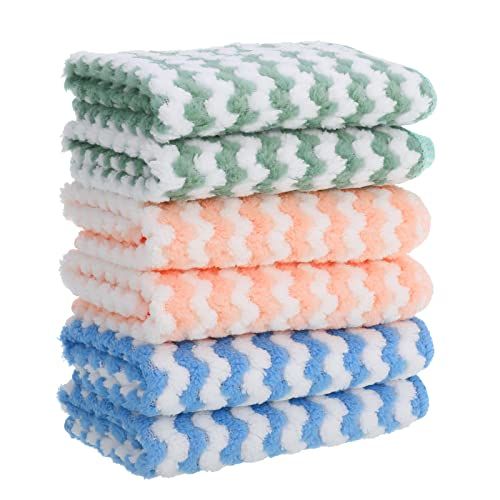
Cerolopy 6 Pieces Microfibre Reusable Cleaning Cloths
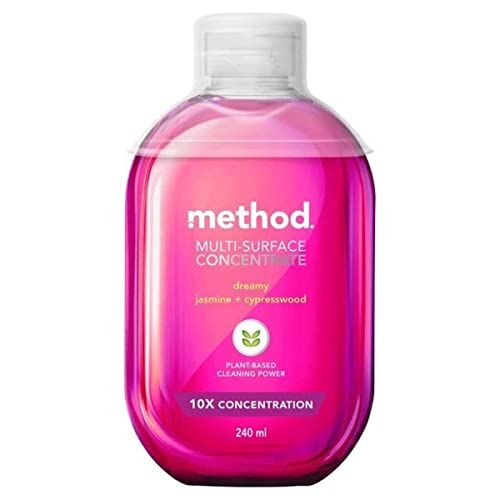
Method Multi-Surface Concentrate
3. De-clutter
It sounds obvious but getting rid of items that no longer serve purpose will reduce the amount of work that needs doing during the spring cleaning and will also free up space – rather than simply letting unwanted items sit gathering dust.
Struggling to get rid of items? We feel you, but there are two hacks we love for when it come to de-cluttering.
The first is the 80-20 insight. The principle is pretty simple and is based on the fact that we only actually use 20 per cent of what we own around 80 per cent of the time. Keep this in mind when clearing out rooms, shelves and cupboards, do you really use all those weird utensils in that forgotten drawer? This will help you prioritise what stays and what doesn’t make the cut.
The other hack is the ski slope’ method, which involves breaking down a room into separate zones which you can glide between one after the other, crisscrossing across the room to reach your end goal. When decluttering, it’s great to have four distinct piles – ‘keep’, ‘dump’, ‘recycle’ or ‘donate’.


4. Start from the top down when it comes to cleaning
When cleaning each room start by cleaning high, then going low. Overhead fixtures that we sometimes forget about, like lighting, are prone to dust build-up and usually don’t get cleaned as often – and when they do, the dirt and grime will sprinkle down to the floor and surfaces below them.
So, avoid creating more work for yourself by starting from the top and cleaning down in each room. We love any hack that saves us some time.
5. Start with the kitchen
Ok, now we can finally begin actually cleaning and let’s start with one of the most important rooms – the kitchen.
Understandably, the kitchen is one of the highest ‘touch’ areas in the house and therefore one we’re more likely to clean regularly – meaning half the work should (hopefully) be done. A nice place to start. Begin by removing all food, products, crockery and other equipment from drawers, cupboards and other surfaces, to give yourself a decluttered, blank slate for the kitchen deep-clean.
Remember the high-before-low rule too, and begin cleaning high fixtures before moving to appliances – making sure to move them away from the wall where possible to clean under and behind them (it’s called a deep clean for a reason!), before finally moving on to counter-tops, drawers and lower cabinets. We’d recommend using the method multi-surface concentrate mixed with water in a spray bottle.
6. Then tackle the bathroom
Again, start high then go low, before moving your attention to blitzing and disinfecting the shower, bath, and toilet. method’s bathroom cleaner is perfect for these tasks, and its eucalyptus mint fragrance will leave the room smelling minty fresh.
Pay special attention to under the rim of the toilet and the back of the toilet bowl, as these can often be forgotten in your more regular cleaning routines. Given it’s a deep clean, repeat the spray-leave-wipe technique several times for optimum results. Once you’ve blitzed the bathroom, finish with an antibacterial spray and wipe all-over just to get rid of any lingering germs.
7. Focus on the rest of the house
When it comes to bedrooms, living rooms, hallways, and the rest of the house, save time and avoid chopping-and-changing between cleaning products and equipment by tackling them task-by-task, as opposed to room-by-room. Don’t forget the overlooked areas too, like door handles and skirting boards.
Skirting boards and door knobs can make or break how clean a room appears. You’ll want to make sure they’re in tip-top condition. So, use your favourite spray cleaner and a cloth to gently damp-dust skirting boards and help prevent any future dust from sticking to the surface.
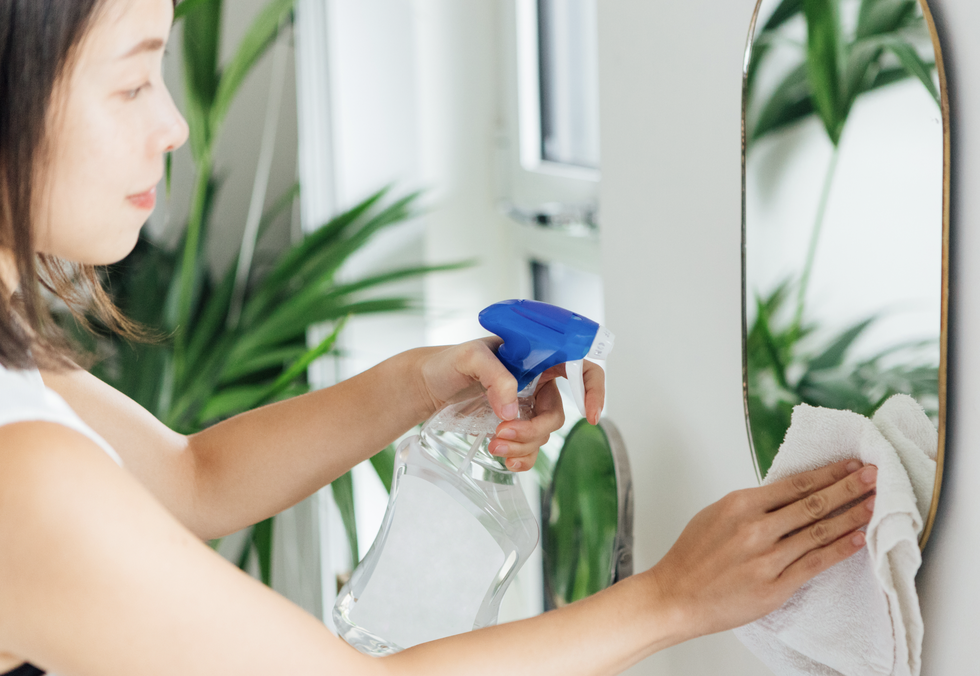

8. Don’t forget the door knobs
Yes even the door knobs and handles need cleaning!
Where plastic or painted door knobs and handles are easy-peasy to clean, making brass or copper sparkle is a different story.
But fear not, as using a combination of flour, salt and vinegar (one tablespoon of each) on a cloth creates a simple paste that can be painted onto the surface and rinsed off after a couple of minutes with soapy water. Simply buff it with a soft cloth and regularly clean using your favourite spray cleaner to maintain the shine!
9. Finish with the floors
Working from top to bottom, leave the flooring until last. For hard flooring, like wood and tiles, start with a deep vacuum and thorough sweep – ensuring all corners, tight spaces and hard-to-reach areas that you may usually turn a blind eye to are covered.
Finish up with a thorough mopping, ensuring you use a product that’s safe for the type of flooring.method’s Almond Wood Floor Cleaner is perfect for sealed hardwood and laminate floors and will leave flooring looking spick-and-span. These tasks will be much easier to complete without all the furniture and clutter, so take your time and *be thorough*.
To keep your laminate or wood flooring looking pristine – and save yourself from being caught short by the unpredictable sunny spring spells – mop once a week after the deep clean. Just don’t use too much water, as this can cause water spots or warp laminate surfaces. Be mindful to avoid polishing, waxing or doing any abrasive cleaning too, as these all have the potential to scratch the floor and damage the protective finish.
10. Stay on top of regular cleaning tasks, to prepare for the bigger deep clean
It sounds super boring but to save yourself time and energy for the big spring clean, staying on top of your daily, weekly, monthly and even quarterly cleaning regimes really does pay off in the long run.
For example, deep cleaning the fridge should be done every 3-6 months to banish germs – just ensure it’s done before the weekly food shop, when it’s not fully stocked up. Clear all food and other items from the fridge, then remove the shelves and fittings – a key hack here is to wait until they reach room temperature before cleaning to prevent them from cracking.
Next, thoroughly rinse the shelves and salad drawers with warm soapy water. Whilst the fittings are air-drying, get to work on the rest of the fridge!
The same rule applies for every other room, including the bathroom. We all want that dazzling shine on the shower, but it really does come down to regular weekly cleaning.
[ad_2]
Source link


Price: [price_with_discount]
(as of [price_update_date] – Details)

[ad_1]
This thoughtfully crafted blend combines our alkalizing farm fresh greens with over 24 cleansing ingredients, 1 billion probiotics and ACTAZIN Kiwifruit shown to increase the growth of ‘good’ bacteria in the gut. This natural blend helps with the daily elimination of toxins and provides soothing digestive support to feel mazing every day. At Amazing Grass our roots run deep…Back to our family farm in Kansas, where for over 3 generations Amazing Grass has organically grown & harvested the most nutrient-dense greens on earth. Today, we thoughtfully craft our greens with the highest quality, plant-based ingredients curated from like-minded farmers from around the world. Amazing Grass products are a delicious way to nourish your body with the whole food nutrition it needs to feel amazing every day.
Is Discontinued By Manufacturer : No
Product Dimensions : 4.6 x 3.6 x 3.6 inches; 7.4 Ounces
Item model number : 829835004737
Date First Available : July 1, 2016
Manufacturer : Amazing Grass
ASIN : B01HTMLU64
Country of Origin : USA
Domestic Shipping: This item can only be shipped to the 48 contiguous states and to APO/FPO/DPO addresses. For APO/FPO/DPO shipments, please check with the manufacturer regarding warranty and support issues. International Shipping: This item is not eligible for international shipping. Learn More
CLEAN AND GREEN: Made with ingredients you can trust, our Greens Blend are Certified Organic by CCOF, Sugar Free, Gluten Free, Plant Based, Kosher and Non GMO.
SUPPORTS IMMUNITY AND GUT HEALTH: Packed with 2 full servings of wholesome fruits, vegetables, vitamins & minerals in every scoop, our Greens Blend ensures you are getting the right amount of nutrients to support overall health and immunity.
NATURAL ENERGY BOOST: Packed with superfoods, our Greens Blend provides that extra boost to your day. With added probiotics, our Greens Blend promote healthy gut bacteria so you can feel your best!
ONE SCOOP A DAY: Whether it is starting your day off on the right foot or for an afternoon pick me up, our Greens Blend are easy to incorporate into your daily routine.
[ad_2]