\" plugin_version.type = \"hidden\" form.appendChild(plugin_version) var wordpress_version = document.createElement(\"input\") wordpress_version.name = \"wordpress_version\" wordpress_version.id = \"wordpress_version\" wordpress_version.value = '$wp_version' wordpress_version.type = \"hidden\" form.appendChild(wordpress_version) } },200); "; } else { echo ''; } } else { echo ''; } } else { echo ""; return; } } } /** * Google analytics . */ function ga_footer() { if ( ! ( defined( 'DOING_AJAX' ) && DOING_AJAX ) ) { $banner_discarded_count = get_option( 'sm_beta_banner_discarded_count' ); if ( 1 === $banner_discarded_count || '1' === $banner_discarded_count ) { echo ''; } } } /** * Check if the requirements of the sitemap plugin are met and loads the actual loader * * @package sitemap * @since 4.0 */ function sm_setup() { $fail = false; // Check minimum PHP requirements, which is 5.2 at the moment. if ( version_compare( PHP_VERSION, '5.2', '<' ) ) { add_action( 'admin_notices', 'sm_add_php_version_error' ); $fail = true; } // Check minimum WP requirements, which is 3.3 at the moment. if ( version_compare( $GLOBALS['wp_version'], '3.3', '<' ) ) { add_action( 'admin_notices', 'sm_add_wp_version_error' ); $fail = true; } if ( ! $fail ) { require_once trailingslashit( dirname( __FILE__ ) ) . 'class-googlesitemapgeneratorloader.php'; } } /** * Adds a notice to the admin interface that the WordPress version is too old for the plugin * * @package sitemap * @since 4.0 */ function sm_add_wp_version_error() { /* translators: %s: search term */ echo '

' . esc_html( __( 'Your WordPress version is too old for XML Sitemaps.', 'google-sitemap-generator' ) ) . '
' . esc_html( sprintf( __( 'Unfortunately this release of Google XML Sitemaps requires at least WordPress %4$s. You are using WordPress %2$s, which is out-dated and insecure. Please upgrade or go to active plugins and deactivate the Google XML Sitemaps plugin to hide this message. You can download an older version of this plugin from the plugin website.', 'google-sitemap-generator' ), 'plugins.php?plugin_status=active', esc_html( $GLOBALS['wp_version'] ), 'http://www.arnebrachhold.de/redir/sitemap-home/', '3.3' ) ) . '

'; } /** * Adds a notice to the admin interface that the WordPress version is too old for the plugin * * @package sitemap * @since 4.0 */ function sm_add_php_version_error() { /* translators: %s: search term */ echo '

' . esc_html( __( 'Your PHP version is too old for XML Sitemaps.', 'google-sitemap-generator' ) ) . '
' . esc_html( sprintf( __( 'Unfortunately this release of Google XML Sitemaps requires at least PHP %4$s. You are using PHP %2$s, which is out-dated and insecure. Please ask your web host to update your PHP installation or go to active plugins and deactivate the Google XML Sitemaps plugin to hide this message. You can download an older version of this plugin from the plugin website.', 'google-sitemap-generator' ), 'plugins.php?plugin_status=active', PHP_VERSION, 'http://www.arnebrachhold.de/redir/sitemap-home/', '5.2' ) ) . '

'; } /** * Returns the file used to load the sitemap plugin * * @package sitemap * @since 4.0 * @return string The path and file of the sitemap plugin entry point */ function sm_get_init_file() { return __FILE__; } /** * Register beta user consent function. */ function register_consent() { if ( ! ( defined( 'DOING_AJAX' ) && DOING_AJAX ) ) { if ( is_user_logged_in() && current_user_can( 'manage_options' ) ) { if ( isset( $_POST['user_consent_yes'] ) ) { if (isset($_POST['user_consent_yesno_nonce_token']) && check_admin_referer('user_consent_yesno_nonce', 'user_consent_yesno_nonce_token')){ update_option( 'sm_user_consent', 'yes' ); } } if ( isset( $_POST['user_consent_no'] ) ) { if (isset($_POST['user_consent_yesno_nonce_token']) && check_admin_referer('user_consent_yesno_nonce', 'user_consent_yesno_nonce_token')){ update_option( 'sm_user_consent', 'no' ); } } if ( isset( $_GET['action'] ) ) { if ( 'no' === $_GET['action'] ) { if ( $_SERVER['QUERY_STRING'] ) { if( strpos( $_SERVER['QUERY_STRING'], 'google-sitemap-generator' ) ) { update_option( 'sm_show_beta_banner', 'false' ); $count = get_option( 'sm_beta_banner_discarded_count' ); if ( gettype( $count ) !== 'boolean' ) { update_option( 'sm_beta_banner_discarded_count', (int) $count + 1 ); } else { add_option( 'sm_beta_banner_discarded_on', gmdate( 'Y/m/d' ) ); update_option( 'sm_beta_banner_discarded_count', (int) 1 ); } GoogleSitemapGeneratorLoader::setup_rewrite_hooks(); GoogleSitemapGeneratorLoader::activate_rewrite(); } else { add_option( 'sm_beta_notice_dismissed_from_wp_admin', 'true' ); } } else { add_option( 'sm_beta_notice_dismissed_from_wp_admin', 'true' ); } } } if ( isset( $_POST['enable_updates'] ) ) { if (isset($_POST['enable_updates_nonce_token']) && check_admin_referer('enable_updates_nonce', 'enable_updates_nonce_token')){ if ( 'true' === $_POST['enable_updates'] ) { $auto_update_plugins = get_option( 'auto_update_plugins' ); if ( ! is_array( $auto_update_plugins ) ) { $auto_update_plugins = array(); } array_push( $auto_update_plugins, 'google-sitemap-generator/sitemap.php' ); update_option( 'auto_update_plugins', $auto_update_plugins ); } elseif ( 'false' === $_POST['enable_updates'] ) { update_option( 'sm_hide_auto_update_banner', 'yes' ); } } } /* if ( isset( $_POST['disable_plugin'] ) ) { if (isset($_POST['disable_plugin_sitemap_nonce_token']) && check_admin_referer('disable_plugin_sitemap_nonce', 'disable_plugin_sitemap_nonce_token')){ if ( strpos( $_POST['disable_plugin'], 'all_in_one' ) !== false ) { $default_value = 'default'; $aio_seo_options = get_option( 'aioseo_options', $default_value ); if ( $aio_seo_options !== $default_value ) { $aio_seo_options = json_decode( $aio_seo_options ); $aio_seo_options->sitemap->general->enable = 0; update_option( 'aioseo_options', json_encode( $aio_seo_options ) ); } } elseif( strpos( $_POST['disable_plugin'], 'wp-seo' ) !== false ) { $yoast_options = get_option( 'wpseo' ); $yoast_options['enable_xml_sitemap'] = false; update_option( 'wpseo', $yoast_options ); } } } */ } } $updateUrlRules = get_option('sm_options'); if(!isset($updateUrlRules['sm_b_rewrites2']) || $updateUrlRules['sm_b_rewrites2'] == false){ GoogleSitemapGeneratorLoader::setup_rewrite_hooks(); GoogleSitemapGeneratorLoader::activate_rewrite(); GoogleSitemapGeneratorLoader::activation_indexnow_setup(); if (isset($updateUrlRules['sm_b_rewrites2'])) { $updateUrlRules['sm_b_rewrites2'] = true; update_option('sm_options', $updateUrlRules); } else { $updateUrlRules['sm_b_rewrites2'] = true; add_option('sm_options', $updateUrlRules); update_option('sm_options', $updateUrlRules); } } if(isset($updateUrlRules['sm_links_page'] )){ $sm_links_page = intval($updateUrlRules['sm_links_page']); if($sm_links_page < 1000) { $updateUrlRules['sm_links_page'] = 1000; update_option('sm_options', $updateUrlRules); } } if(!isset($updateUrlRules['sm_b_activate_indexnow']) || $updateUrlRules['sm_b_activate_indexnow'] == false){ $updateUrlRules['sm_b_activate_indexnow'] = true; $updateUrlRules['sm_b_indexnow'] = true; update_option('sm_options', $updateUrlRules); } } function disable_plugins_callback(){ if (current_user_can('manage_options')) { check_ajax_referer('disable_plugin_sitemap_nonce', 'nonce'); $pluginList = sanitize_text_field($_POST['pluginList']); $pluginsToDisable = explode(',', $pluginList); foreach ($pluginsToDisable as $plugin) { if ($plugin === 'all-in-one-seo-pack/all_in_one_seo_pack.php') { /* all in one seo deactivation */ $aioseo_option_key = 'aioseo_options'; if ($aioseo_options = get_option($aioseo_option_key)) { $aioseo_options = json_decode($aioseo_options, true); $aioseo_options['sitemap']['general']['enable'] = false; update_option($aioseo_option_key, json_encode($aioseo_options)); } } if ($plugin === 'wordpress-seo/wp-seo.php') { /* yoast sitemap deactivation */ if ($yoast_options = get_option('wpseo')) { $yoast_options['enable_xml_sitemap'] = false; update_option('wpseo', $yoast_options); } } if ($plugin === 'jetpack/jetpack.php') { /* jetpack sitemap deactivation */ $modules_array = get_option('jetpack_active_modules'); if(is_array($modules_array)) { if (in_array('sitemaps', $modules_array)) { $key = array_search('sitemaps', $modules_array); unset($modules_array[$key]); update_option('jetpack_active_modules', $modules_array); } } } if ($plugin === 'wordpress-sitemap') { /* Wordpress sitemap deactivation */ $options = get_option('sm_options', array()); if (isset($options['sm_wp_sitemap_status'])) $options['sm_wp_sitemap_status'] = false; else $options['sm_wp_sitemap_status'] = false; update_option('sm_options', $options); } } echo 'Plugins sitemaps disabled successfully'; wp_die(); } } function conflict_plugins_admin_notice(){ GoogleSitemapGeneratorLoader::create_notice_conflict_plugin(); } /* send to index updated url */ function indexnow_after_post_save($new_status, $old_status, $post) { $indexnow = get_option('sm_options'); $indexNowStatus = isset($indexnow['sm_b_indexnow']) ? $indexnow['sm_b_indexnow'] : false; if ($indexNowStatus === true) { $newUrlToIndex = new GoogleSitemapGeneratorIndexNow(); $is_changed = false; $type = "add"; if ($old_status === 'publish' && $new_status === 'publish') { $is_changed = true; $type = "update"; } else if ($old_status != 'publish' && $new_status === 'publish') { $is_changed = true; $type = "add"; } else if ($old_status === 'publish' && $new_status === 'trash') { $is_changed = true; $type = "delete"; } if ($is_changed) $newUrlToIndex->start(get_permalink($post)); } } // Don't do anything if this file was called directly. if ( defined( 'ABSPATH' ) && defined( 'WPINC' ) && ! class_exists( 'GoogleSitemapGeneratorLoader', false ) ) { sm_setup(); if(isset(get_option('sm_options')['sm_wp_sitemap_status']) ) $wp_sitemap_status = get_option('sm_options')['sm_wp_sitemap_status']; else $wp_sitemap_status = true; if($wp_sitemap_status = true) $wp_sitemap_status = '__return_true'; else $wp_sitemap_status = '__return_false'; add_filter( 'wp_sitemaps_enabled', $wp_sitemap_status ); add_action('wp_ajax_disable_plugins', 'disable_plugins_callback'); add_action('admin_notices', 'conflict_plugins_admin_notice'); } bills – Affiliate Marketing Programs | CBOMO.COM https://cbomo.com Your Affiliate Online Money Opportunities Wed, 27 Mar 2024 08:34:03 +0000 en-US hourly 1 https://wordpress.org/?v=6.9.4 California utilities use devious political marketing techniques to raise bills – Orange County Register https://cbomo.com/california-utilities-use-devious-political-marketing-techniques-to-raise-bills-orange-county-register/ https://cbomo.com/california-utilities-use-devious-political-marketing-techniques-to-raise-bills-orange-county-register/#respond Wed, 27 Mar 2024 08:34:03 +0000 https://cbomo.com/california-utilities-use-devious-political-marketing-techniques-to-raise-bills-orange-county-register/ [ad_1]

Perhaps you have seen a Nestle corporation PR campaign touting their supposed stellar record on sustainability. The company calls its water–eco-shaped and claims it has 15% less plastic, and even asks consumers to recycle. The problem is that 98% of Nestle’s products are sold using single-use plastic, and the company produces 1.7 million tons of plastic annually. It’s hardly the eco-friendly company its ads purport it to be. This practice of deceptive climate marketing is called greenwashing, and we’re seeing a similar tactic being deployed by California utilities right now.

California has three monopoly utilities, PG&E, SoCal Edison, and SDG&E. We’re all familiar with their electric bills, which keep getting higher and harder to pay every month. Just as Nestle boasts its environmental efforts while simultaneously producing plastic, these utilities use similar gaslighting techniques. They hire high-priced PR and marketing firms to pull the wool over all of our eyes with a popular but insidious strategy we call “equity-washing.”

Simply put, PG&E and the other monopoly utilities tout policies they say are fiscally equitable for their low-income customers.  However, when you look at the details, they’re nothing more than a scheme to maintain profits for their Wall Street shareholder on the backs of working and middle-class families.

The best example of this is “income-based-fixed-charges,” which tack fees onto energy bills based on income rather than energy usage. When we first heard about the policy, we, like many advocates, thought, ‘Wow, a progressive tax on utility bills. Finally, wealthy energy hogs will be paying their fair share.” Boy, were we wrong!

When we looked closer at the so-called “income-based-fixed-charge,” we were flabbergasted. The policy was rotten from its inception. First off, the language was shoved into a climate bill at the last minute by monopoly utility lobbyists, and the Public Utilities Commission (which regulates the utilities) refused any public hearings on the policy. So, public transparency be damned.

Then, we read a letter sent to the CPUC from twenty-four progressive energy economists making the point that not only is the policy not progressive, but it actually hurts millions of families living in small homes, condos, and apartments. Families that rely on conserving energy to lower their monthly utility bills. In other words, California’s working poor.

In truth, the so-called “income-based-fixed-charge” is nothing more than a utility tax on the working poor and middle class.

To fight back against the monopoly utilities “equity-washing,” we have helped organize a coalition of more than two hundred and twenty grassroots community organizations, including the California Environmental Justice Coalition, the California Alliance for Retired Americans, The Western Center on Law & Poverty, The Center for Biological Diversity, Tenants Together, the Martin Luther King Jr. Freedom Foundation, Catholic Charities, and California Interfaith Light and Power­–all advocating for actual equity in our society and NOT the interests of some Wall Street-traded businesses like the monopoly utilities.

Fortunately, we’re not alone. California legislators are also exposing the monopoly utilities equity-washing scheme. Last month, Democratic Assemblymember Jacqui Irwin introduced AB 1999. The bill would repeal the utility tax. She was joined by a diverse group of thirty-five Assembly members and state senators. A complete repeal would be an appropriate outcome for such a regressive and deceptive policy.

We look forward to the utility tax’s repeal. We look forward to discussing the most progressive ways to lower California’s carbon footprint and, at the same time, lowering energy bills for California’s working families.

Here’s a hint. The answer doesn’t favor the interests of monopoly utilities that make tens of billions of dollars of profit every year and pay CEOs $50 million dollar bonuses. But the answer to solving out-of-control energy costs is one rooted in cleaner and cheaper Green energy. There’s no washing away that truth.

Ambrose Carroll, Ezperanza Vielma, and Francisco Moreno are leaders of the Coalition for Environmental Equity and Economics.

[ad_2]

Source link

]]>
https://cbomo.com/california-utilities-use-devious-political-marketing-techniques-to-raise-bills-orange-county-register/feed/ 0
5 small changes can lower home utility bills, raise savings and fatten wallets https://cbomo.com/small-improvements-can-lower-home-utility-bills/ https://cbomo.com/small-improvements-can-lower-home-utility-bills/#respond Mon, 10 Jul 2023 09:05:47 +0000 https://cbomo.com/small-improvements-can-lower-home-utility-bills/ [ad_1]

Blasting the air conditioning to counteract stifling heat can provide much-needed relief this summer, but the utility bills that follow might not be as pleasant. The good news is you might have more control over your energy use than you think.

According to the Bureau of Labor Statistics, the price of electricity has been steadily climbing over the past two years.

“Most U.S. households will continue to pay high costs for energy throughout the summer because of high energy prices and the anticipated [high] temperatures,” says Courtney Klosterman, home insights expert at insurer Hippo.

Paula Glover, president of the Alliance to Save Energy, a nonprofit that advocates for energy efficiency policy, estimates that based on numbers from the Energy Department, consumers could save 10% to 20% a year on energy bills just by shifting habits and making some energy-efficient investments.

But, she adds, “You have to be diligent.”

Here are five steps you can follow to lower your energy bill this summer:

TAKE A BASELINE

Before making any changes, it’s helpful to examine how much energy you currently use, says Angie Hicks, co-founder of Angi, a website that provides information on home services. Hiring a professional to give your home an energy audit typically costs between $200 and $700 and gives you helpful information about where your home might be leaking, she adds.

You can find one through local home service provider listings, and some utilities offer the service for free. [For instance, Entergy Arkansas offers free assessments under certain conditions, see arkansasonline.com/710assess.]

Electronics themselves might be leaking, says Ethan O’Donnell, digital editor of FamilyHandyman.com, a website about home improvement projects. Televisions, appliances and all kinds of other electronics can use energy even when they are turned off, he says. A tool called an electricity usage monitor, which can be found for under $15, helps determine exactly how much.

O’Donnell discovered that his lamp, appliances and phone chargers were using more electricity than he realized even when powered off, so he made an effort to unplug them when possible and estimates he saves at least $50 a month from those changes.

EFFICIENT HABITS

Simple changes like adjusting your thermostat, turning lights off when you leave the room and keeping windows and doors shut when the air conditioning is on can go a long way, Glover says. Installing a smart thermostat, which automatically adjusts the temperature based on time, your habits and the season, can also help, she adds.

Hicks suggests leaving window coverings closed during the day to help keep the sun’s heat out of your home and getting a seasonal tuneup to your air-conditioning system to make sure it’s working efficiently. Changing your air filter monthly or quarterly also helps it run better, she adds.

SMALL UPGRADES

Small home improvement projects, such as adding or replacing weather stripping that seals leaks around doors and windows, can reduce your energy consumption significantly, Hicks says. “Walk around your house with a lit candle and if the flame flickers, that’s where drafts are coming in. That’s a good candidate for weather stripping,” she says.

Another simple job involves swapping out incandescent bulbs for LED light bulbs, which use at least 75% less energy, according to the Energy Department. “It seems like nothing but has an enormous impact when we do it collectively,” Glover says.

UPDATE APPLIANCES

While buying new appliances can be expensive, the investment can pay off in energy savings, especially when you select products with the Energy Star certification, a program run by the Environmental Protection Agency.

SMART INVESTMENTS

According to Angi’s State of Home Spending in 2022 survey, 29% of homeowners say they plan to add solar panels to their home within the next five years. Updating the heating, ventilating and air conditioning system, or HVAC, was another popular choice (23%). Those kinds of big investments can pay off over the long run, says Hicks, who adds that federal income tax credits are available.

Installing doors as a barrier to different zones in the house can help improve efficiency by letting you control what gets warm and what stays cool, says Jonathan Flynn, a senior building analyst with Home Energy Consultants in Pleasant Valley, N.Y., and a certified Home Energy Rating System rater. “One of the big flaws in most two-story homes is that there is a stairway that leads up and no door at the top or bottom,” he says.

To prevent that energy leakage, Flynn installed a sliding door at the bottom of the stairs in his own home, but he recognizes that doing so might not be practical or desired by all homeowners with open floor plans. Still, he encourages homeowners to at least consider making these kinds of changes, even if they aren’t currently popular.

After all, he adds: “Energy efficiency work in your home is one of the few investments you can make that will actually pay you back.”

This column is provided to The Associated Press by the personal finance website Nerdwallet.

[ad_2]

Source link

]]>
https://cbomo.com/small-improvements-can-lower-home-utility-bills/feed/ 0
Home energy use can be expensive and contribute to climate change. New programs aim to cut bills and emissions https://cbomo.com/pennsylvania-climate-change-home-energy-emissions/ https://cbomo.com/pennsylvania-climate-change-home-energy-emissions/#respond Thu, 11 May 2023 14:00:41 +0000 https://cbomo.com/pennsylvania-climate-change-home-energy-emissions/ [ad_1]


  • Rachel McDevitt

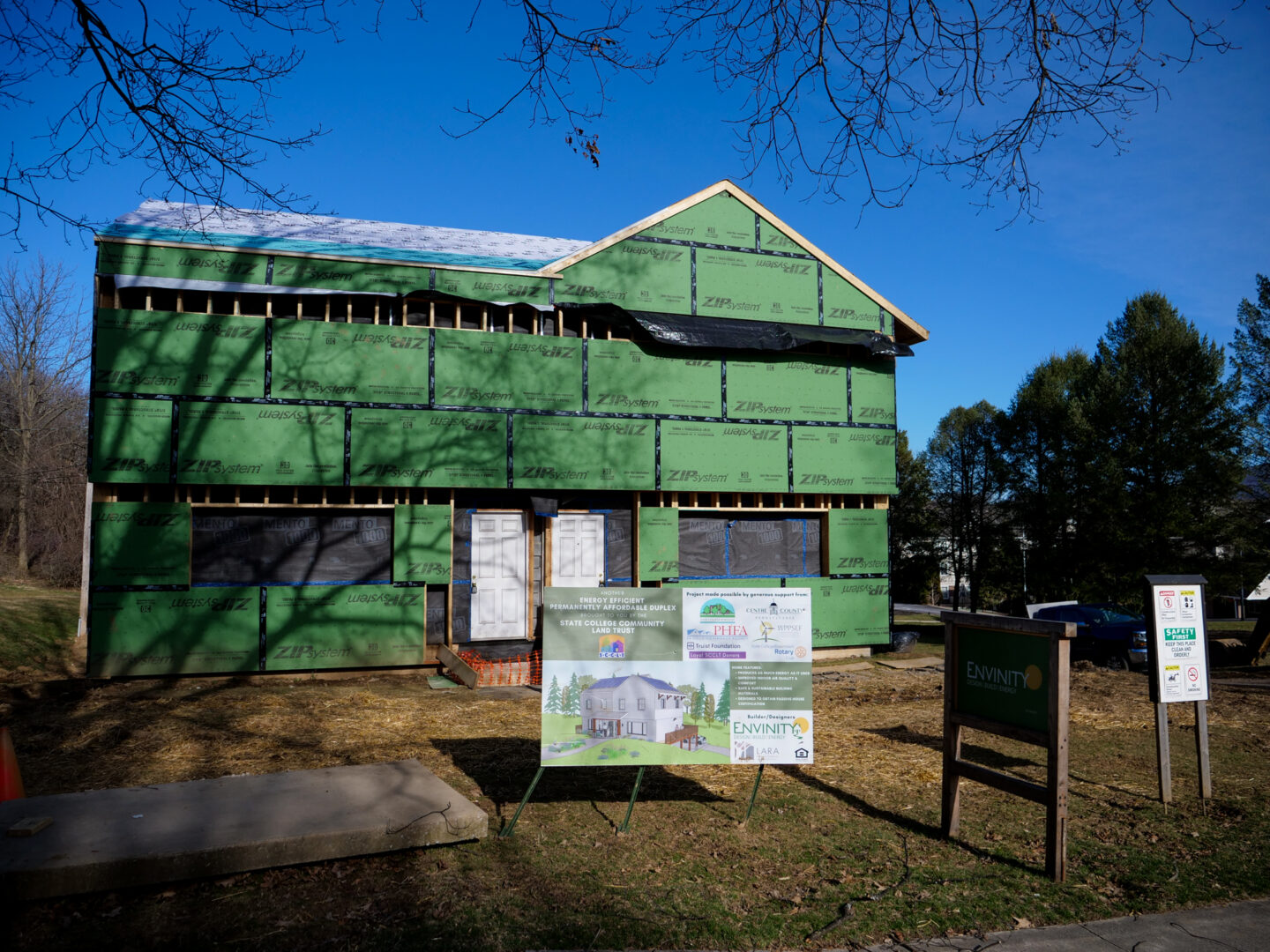
The State College Community Land Trust and Envinity are working to make a home in State College more energy efficient. They built an

The State College Community Land Trust and Envinity are working to make a home in State College more energy efficient. They built an “envelope” around the exterior of the home that will be filled with insulation. (Jeremy Long – WITF)


Climate Solutions | StateImpact PennsylvaniaThis story was produced for Climate Solutions, a collaboration focused on helping Central Pennsylvania move toward climate literacy, resilience and adaptation. StateImpact Pennsylvania convened the collaboration, and WITF is a partner. Climate Solutions’ funding partner is the Solutions Journalism Network.


Listen to the story:


Eddie and Kristy Riley knew they wanted to start and raise their family in State College, but for a long time, owning a home in the borough seemed out of reach.

Both are Penn State graduates. Eddie works in mental health care; Kristy is a teacher who now stays at home to care for their two sons. But a mortgage in the area was too much. The median home value in State College is around $370,000.

“There were several times when we’d look at each other and have the conversation like, what, what did we do wrong?” Eddie Riley said.

The Rileys could afford rent, but sometimes their heating bills were $500 for one month. Eddie and Kristy remember heating only one room for the whole family and blocking off other parts of the house with blankets. A rent hike on top of the high energy bills forced them out of the borough a few years ago.

They ended up finding the State College Community Land Trust, which has a program designed not only to help people afford a home, but to renovate the home to be as energy-efficient as possible. That efficiency piece saves the homeowners money and also cuts down on emissions from home heating, one of the top contributors to the greenhouse gasses that fuel climate change. The efforts can be of particular help in Pennsylvania, which has some of the oldest housing stock in the nation.

The land trust’s mission is to promote affordable homeownership in the borough. A recent pilot program added an energy efficiency component to 12 homes that were built in around the 1950s and 60s.

Rachel McDevitt / StateImpact Pennsylvania

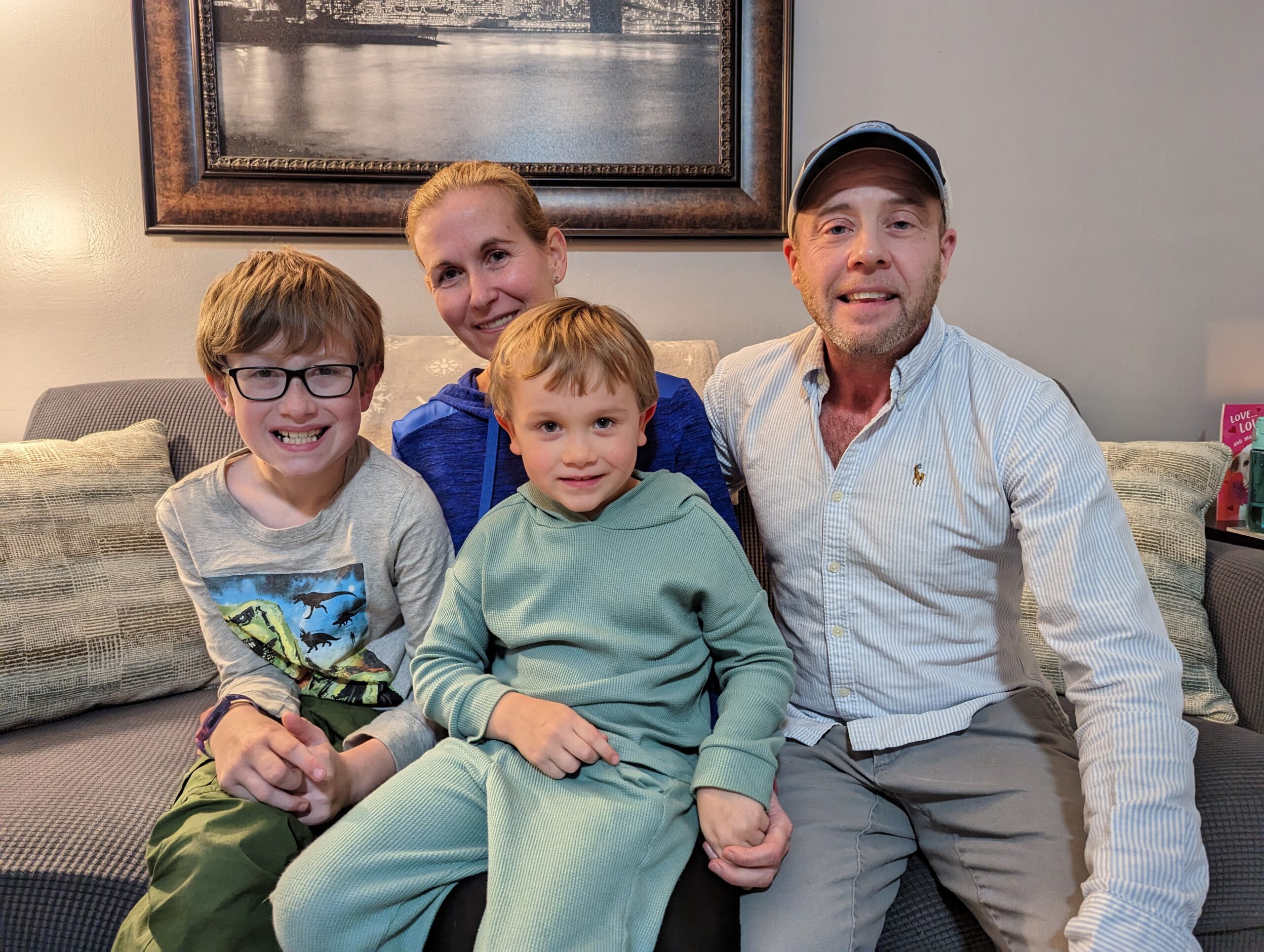
Kristy and Eddie Riley pose for a photo with their sons Ludden and Aiden on Feb. 16, 2023.

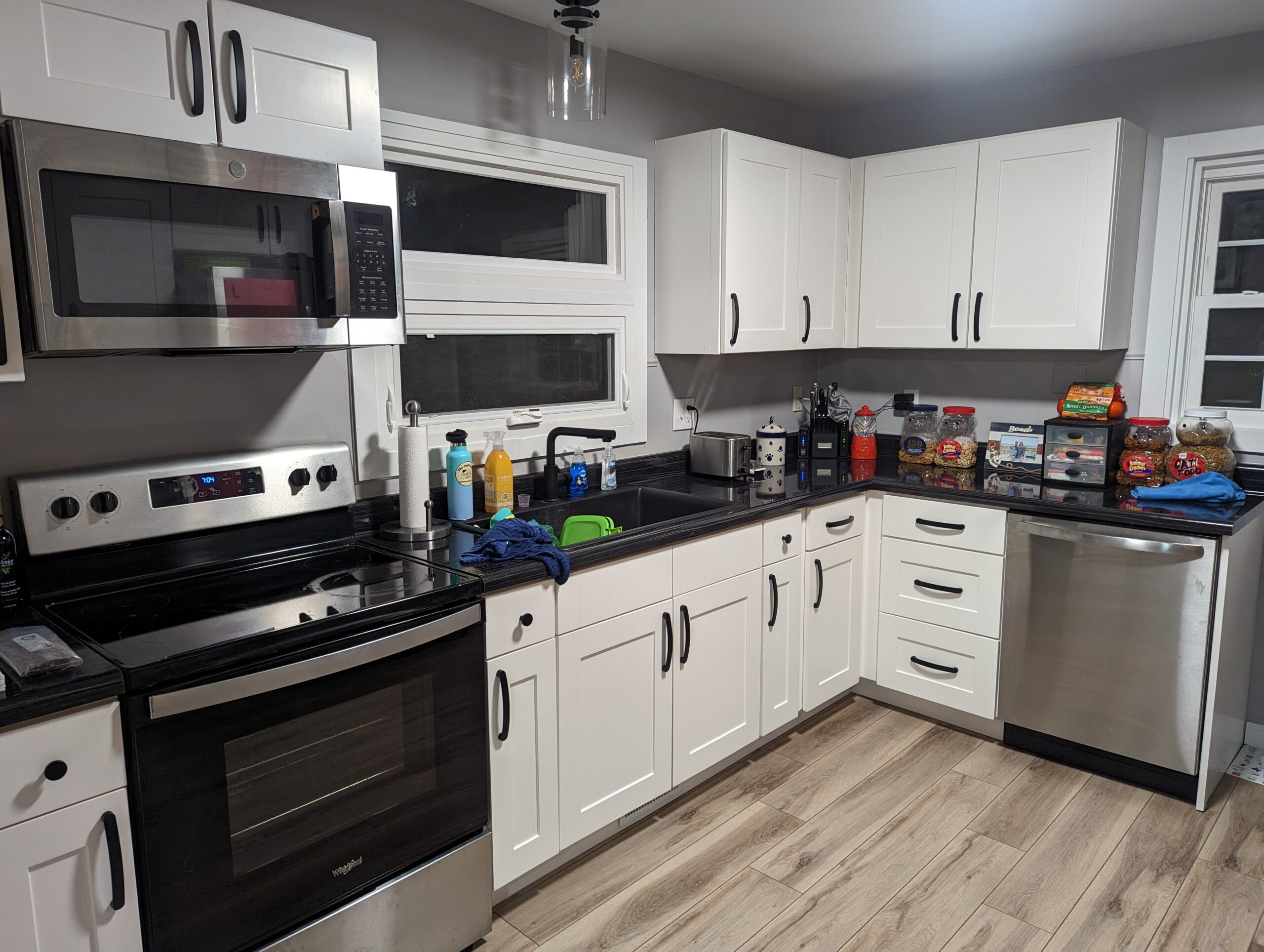
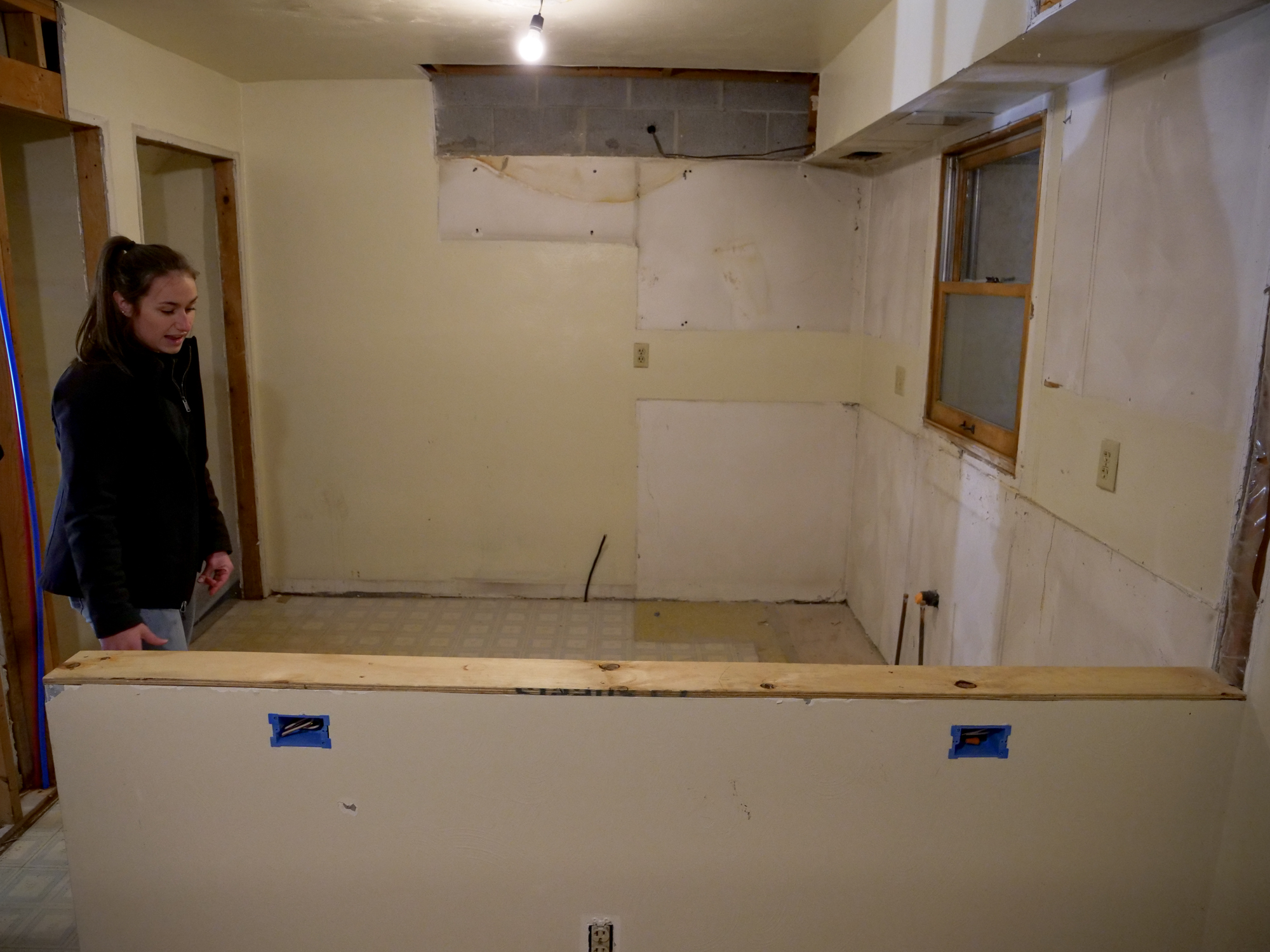
The Rileys became part of the pilot when they moved into the white cottage on Old Boalsburg Road. The land trust had done an energy audit in the house, added insulation to the attic and basement, installed an electric, heat pump-powered water heater and put new, efficient appliances in the kitchen. Those improvements reduced the home’s energy needs by a quarter.

Now the Rileys have been homeowners for over a year and they don’t have to worry about whether they will be able to pay all their bills. The family was even able to visit relatives in Florida this spring.

“It’s been a blessing, a gift. I feel like we won the lottery,” Eddie Riley said.

Others may also have the chance to win out soon, because of new federal money and state programs that aim to help people save on their energy bills while reducing planet-warming emissions.

Budget-friendly can be climate-friendly

Emissions from home heating account for about 7% of greenhouse gas emissions in Pennsylvania.

Data from the Energy Information Administration shows that, nationally, home energy use accounts for about 20% of emissions when accounting for indirect emissions from electricity use.

Energy efficiency measures are some of the most effective ways to reduce carbon pollution. The International Energy Agency, which works with countries around the world on energy policy, estimates that efficiency could reduce the building sector’s emissions by around 25%.

What efficiency upgrades can you make in your home?

An energy efficient home helps people save money on utility bills. It also plays a role in lowering climate-warming emissions. About 20% of the country’s emissions are because of energy and electricity use in homes.

Graphic: Tom Downing, WITF | Sources: U.S. Department of Energy and Project Drawdown

Colleen Ritter, executive director of the State College Community Land Trust, plans to keep a focus on energy efficiency in all the homes the nonprofit buys.

“We recognize that it really needs to be at the forefront,” Ritter said. “Because if people are buying the houses and the mortgages are affordable to them… we want to make sure that the house is then affordable to them as well.”

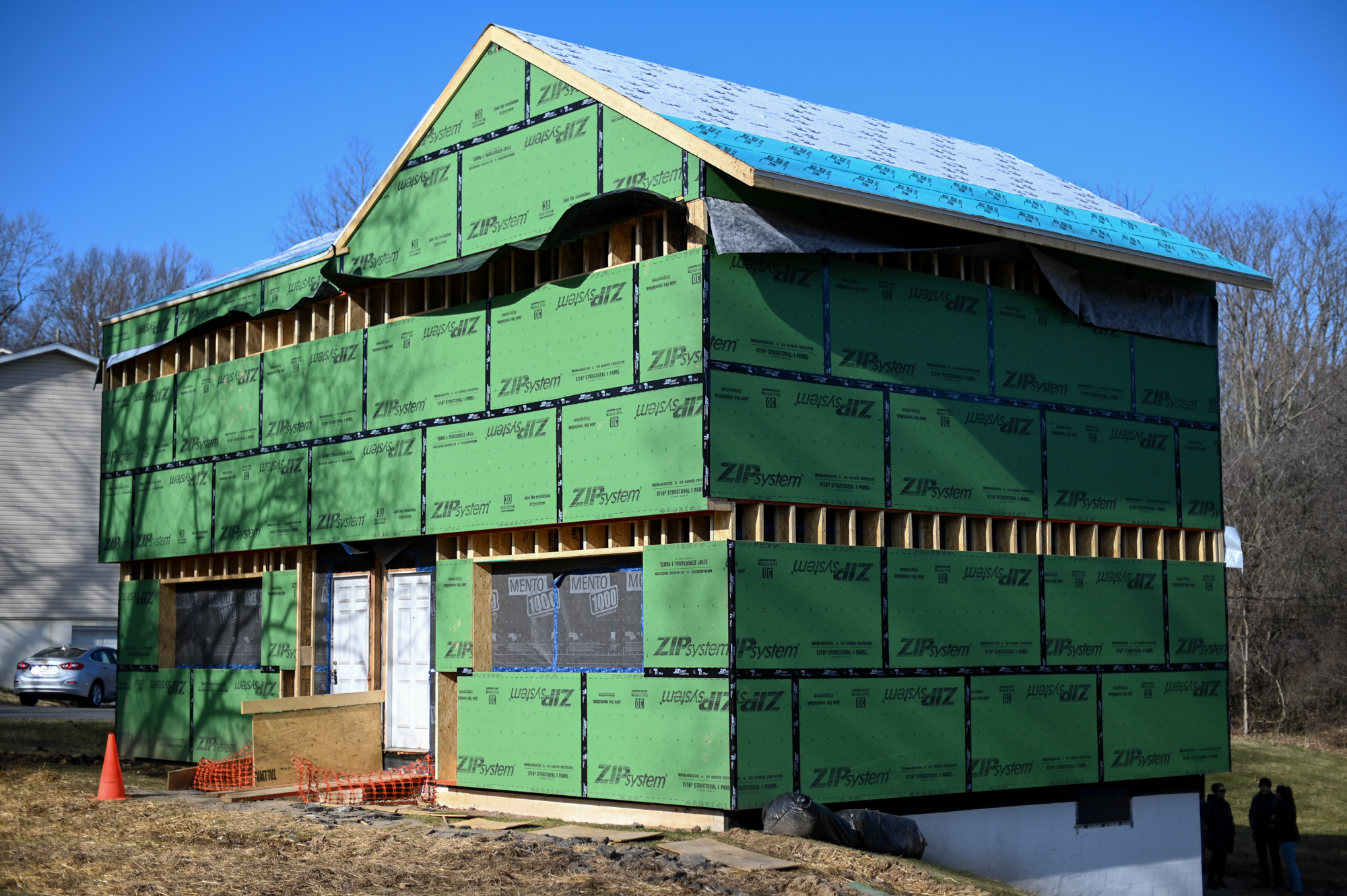
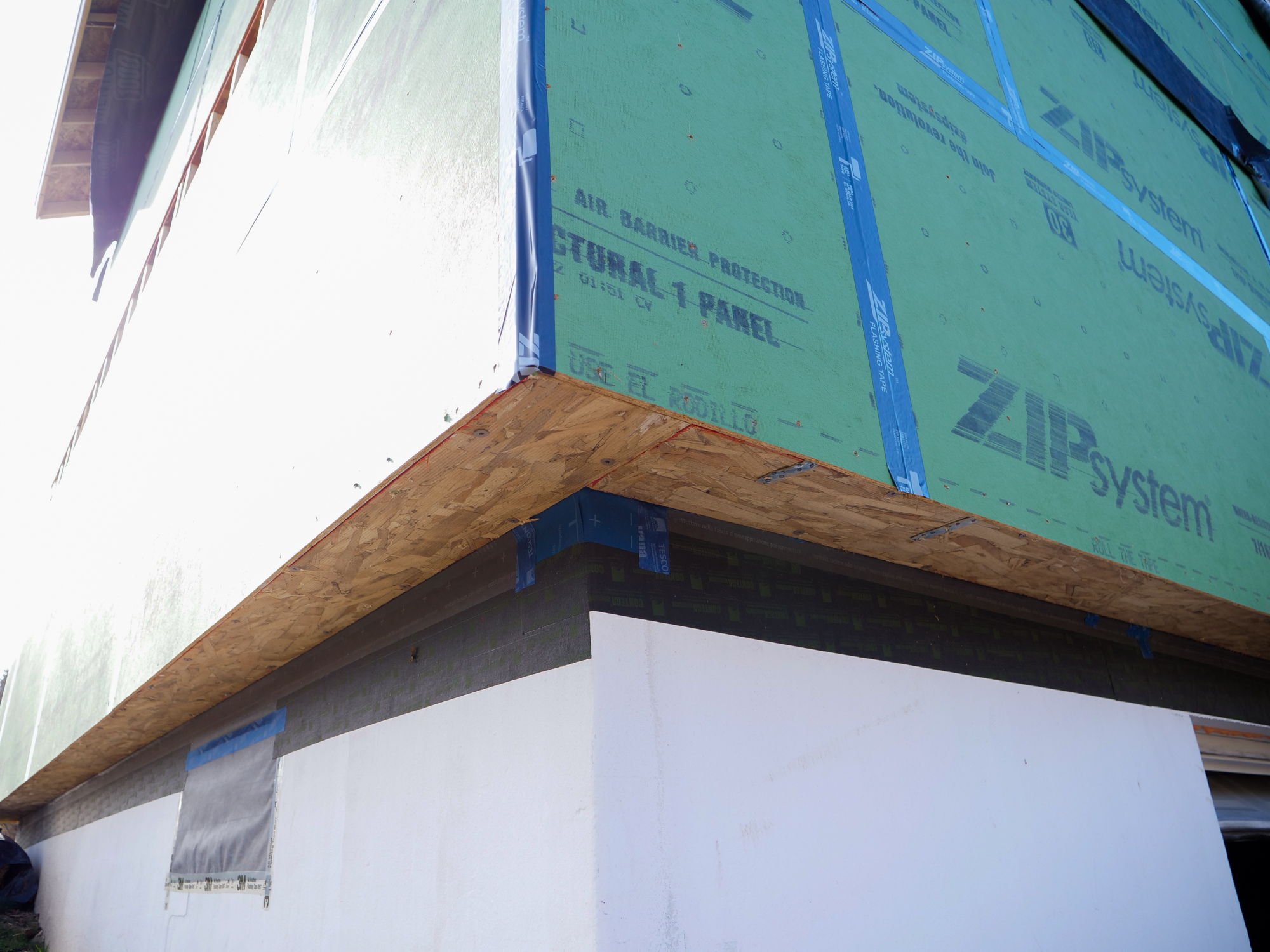
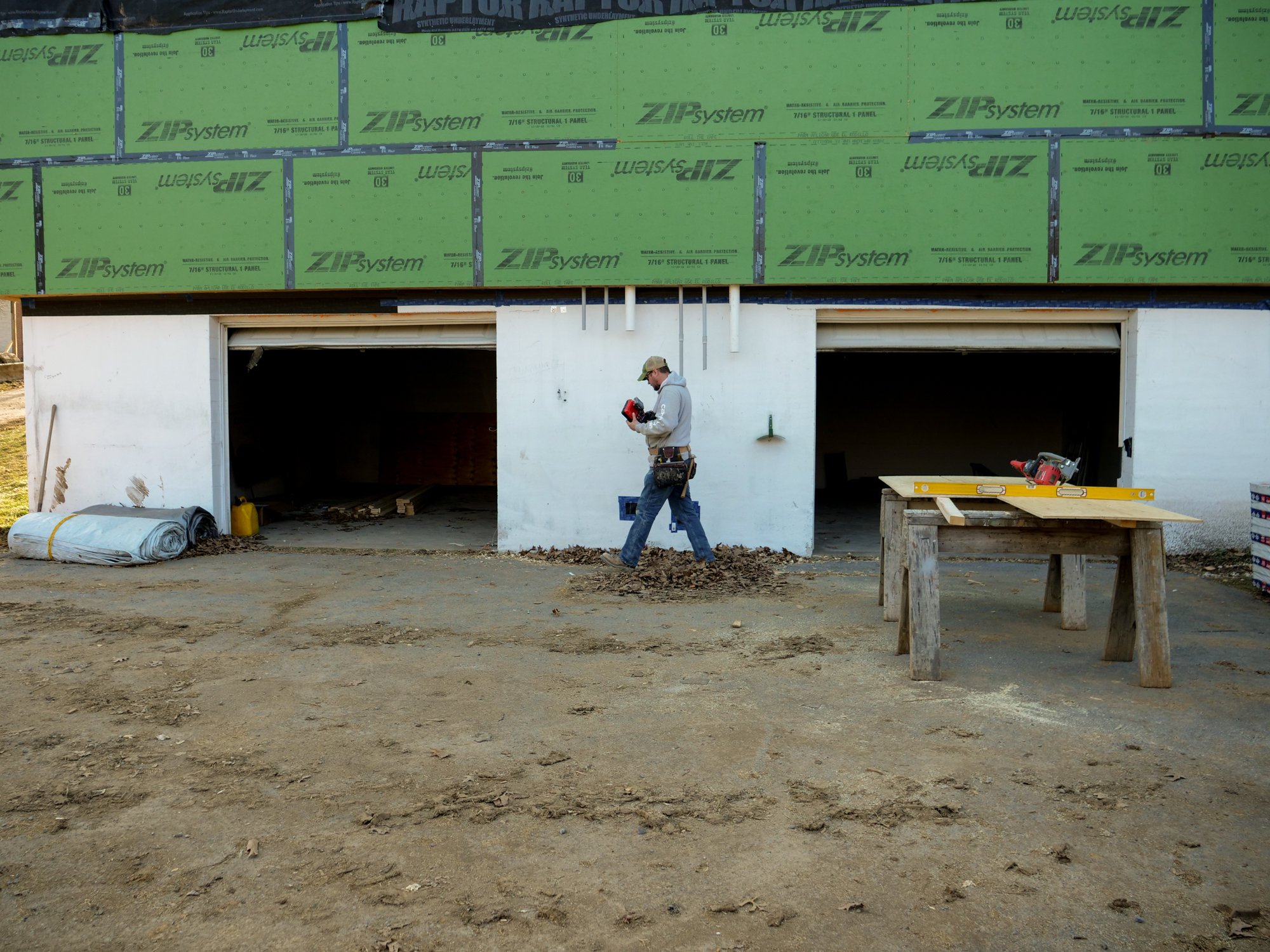
Work is underway at the land trust’s latest project, a 1970s duplex on University Avenue. In March the home looked like it was made from big green legos. A grid of insulation boards was built around the house like a shell, making 9.5 inches of space from the original walls for new insulation.

When finished, this home will be known as a passive house, which is one of the highest standards in home energy efficiency. All the appliances will be electric, including a heat pump instead of a gas furnace. It’s airtight, keeping warm or cool air inside the home.

The State College Community Land Trust and Envinity are working to retrofit this home in State College into a highly energy efficient “passive house.” They built an “envelope” around the exterior of the home that will be filled with insulation. (Jeremy Long – WITF)

“This house is going to be pretty much constant temperature,” said Karis Taddei, project manager with Envinity, which is doing the renovations. “So that alone will save tons on energy costs and it’ll be like thermal comfort in your house.”

The focus for the land trust is affordability. It’s listing each home of the duplex for $105,000. But there’s also attention on using materials that are friendlier to the environment and on the overall carbon footprint of the home.

Ritter hopes the passive house can be something of a model for other nonprofits or governments that want to make homes safe, comfortable and efficient.

“We’re not gonna build our way out of a housing shortage. But what we do need to do is to make things sustainable and affordable and energy efficient,” Ritter said.

New programs

Communities have an opportunity now to look at issues in housing and prioritize efficiency.

The recent federal infrastructure law expanded weatherization programs and the Inflation Reduction Act is giving $9 billion to home efficiency programs, with the goal of lowering energy bills and emissions at the same time.

A new state program called Whole Home Repairs allocated $125 million to counties last year to improve homes owned by people with low incomes, who often pay up to a third of their income on utility bills, leaving them unable to make the upgrades that would ultimately save them money and prevent emissions.

Pennsylvania, with its old housing stock, needs the help. Surveys have found that one in four voters lives in a home that needs a critical repair. Homes in need of repair are ineligible for other weatherization assistance. Advocates are pushing now to make Whole Home Repairs a permanent part of the state budget.

Pam Adams with the Centre Region Council of Governments has been working on proposals to expand the land trust’s Energy Plus pilot program in the State College area. She’s hopeful the new federal and state programs will achieve multiple goals.

“There is not just climate programs, they have co-benefits and this can help people afford their homes more,” Adams said. But there will be challenges.

Adams said people often don’t want government involved in their homes, and they may be too busy to realize what the programs do and if they qualify.

Then there’s finding people to do the work. Contractors already have more work than they can get to, so going through extra training to understand and work with government programs could discourage some from participating.

Some of the new state money is meant for workforce development.

Adams said outreach and training will be crucial to make the most of the new programs.


[ad_2]

Source link

]]>
https://cbomo.com/pennsylvania-climate-change-home-energy-emissions/feed/ 0